
Mice are small, quiet and mostly active at night, so the evidence they leave behind is often the first thing you notice, long before you see one.
A house mouse can squeeze through a gap about the width of a pencil, and it usually comes out when the house is dark and still. That means many householders in Essex live alongside mice for weeks before seeing one. The first clue is more often a small mess in a cupboard or a faint sound in the ceiling than a mouse running across the floor. Learning the signs early matters, because mice breed quickly and a handful can turn into a settled population in a short time.
Droppings are the most common sign. Mouse droppings are small, dark and roughly the size of a grain of rice, with pointed ends. You tend to find them along skirting boards, behind appliances, inside kitchen cupboards and in the back of drawers. Fresh ones look dark and slightly shiny, while older ones turn dry and grey.
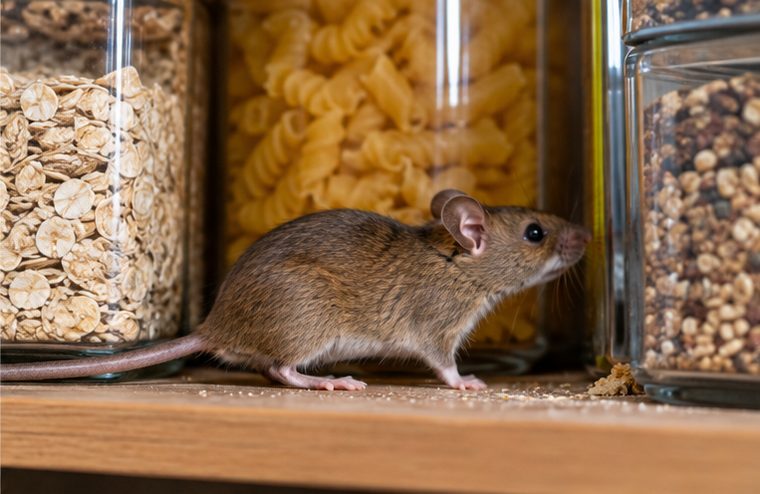
Mice are most active in the evening and overnight, so many people first hear them when the house goes quiet. Listen for light scratching or scurrying in walls, under floors, behind kitchen units and in the loft. Squeaking is sometimes heard too, especially if there is a nest nearby. A well settled infestation also gives off a stale, musty smell, a bit like ammonia, which is strongest in enclosed spaces such as under the sink or inside a cupboard that is rarely opened.
Mice stay close to food, warmth and shelter, and they prefer to run along edges rather than across open floor. Start in the kitchen, looking behind and beneath appliances, in the back corners of base cupboards and around the pipe holes under the sink. Then check the airing cupboard, the loft, the garage and any room where boxes are stored. Use a torch and look low. It is also worth checking pet food, bags of flour and cereal, as mice will chew through paper and thin plastic to reach them.
Put food in hard containers with tight lids, clear up crumbs, and avoid leaving pet bowls out overnight. Reduce clutter where mice could nest, and keep stored items off the floor. Take rubbish out regularly, and keep bins closed. If you find droppings, do not sweep or vacuum them dry, because dust can carry germs. Wear gloves, dampen the area, wipe it up with paper towels, bag it and wash your hands well afterwards. Never handle a live or dead mouse bare handed.
Avoid putting down poison yourself. Poison can be eaten by pets or children, and a poisoned mouse may die inside a wall or under floorboards, causing a smell that lasts for weeks. Loose scattered baits also teach nothing about where the mice are getting in. Blocking holes before you know where the mice are living can trap them indoors, where they may gnaw new routes. It is better to find the cause first, then close entry points in the right order.
Call us if you see droppings in several rooms, hear activity every night, find nests, or spot a mouse in daylight, which often means a larger group. We will find where they are getting in, treat the problem safely and advise on proofing. Whether you live in a new-build estate near a field edge or an older house in a town, it is quicker and safer to deal with mice early than to wait.
If you would rather not deal with it yourself, call us on 01245 327 274 or send an enquiry below. You can also read more about our mice control service.
 BPCA Member
 CHAS Accredited
 Buy With Confidence
 Three Best Rated 2026
We cover towns and villages across Essex. Choose your area to see how mouse control works locally.
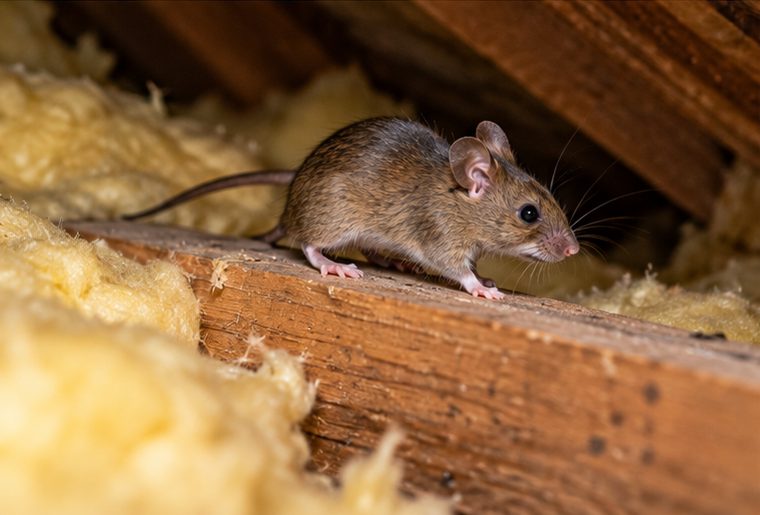
Mice only need a tiny gap to get inside, so stopping them means knowing where homes tend to be weak and tackling the entry points carefully.
Read the guide →
Most household pests leave clues behind, and learning to read droppings, damage, noises and timing will help you decide what you are dealing with and what to do next.
Read the guide →
Rats are secretive and mostly active after dark, so the first clues are usually small marks and sounds rather than a sighting of the animal itself.
Read the guide →Mouse droppings are small, around the size of a grain of rice, and pointed at the ends. Rat droppings are noticeably larger and blunter. Size is a guide rather than a certainty, so if you are unsure what you have found, it is worth asking us to take a look.
Mice can spread germs by contaminating food and surfaces with droppings and urine, and they can damage cables, insulation and stored items. Good hygiene and prompt action reduce the risk. Avoid touching droppings or nesting material directly, and wash your hands thoroughly after cleaning.
Rarely. If a home offers food, warmth and shelter, mice tend to stay and breed. A quiet spell may just mean they have moved to another part of the building. The sensible approach is to deal with the cause and not wait to see whether the signs fade.
As the weather turns colder and fields are harvested, mice look for warm, dry places with food. Homes near farmland, gardens and field edges can see more activity from autumn into winter. Sealing gaps and tidying storage before then helps, but mice can appear at any time of year.
Tell us what you have found and roughly where it is. We will come back to you — or call 01245 327 274 if it is urgent.
