
Rats are secretive and mostly active after dark, so the first clues are usually small marks and sounds rather than a sighting of the animal itself.
Rats do not announce themselves. They are cautious animals that follow the same routes along walls, fences and pipework, and they prefer to feed when the house is quiet. By the time one is seen in daylight, there may already be a busy colony nearby, or a reliable food source drawing them in. In Essex we meet them in every kind of setting: older terraces with gaps around pipes, new-build estates beside open building plots, farm buildings on field edges, and properties near the estuary and creeks where waterways give them cover.
Droppings are the most common clue. Rat droppings are dark, roughly the size of a large grain of rice, and tend to turn up along skirting boards, behind appliances, under the sink and in lofts. Fresh ones look moist and dark, while older ones are dry and crumbly. Gnawing is the second giveaway. Rats must keep wearing their front teeth down, so they chew wood, plastic, pipes, cardboard and sometimes cable, leaving ragged-edged holes and scratched material around pipe entries.
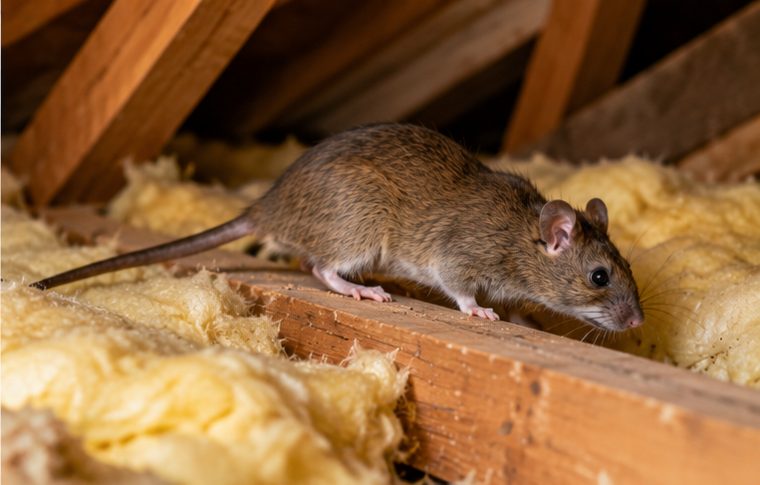
Scratching, scurrying or squeaking in walls, ceilings or under floors, especially at dusk and through the night, is a typical sign of rats indoors. A lighter patter in the loft is more often mice or squirrels, but heavier thumps and dragging sounds suggest rats. A stale, musty smell can build up where rats have been living for a while. Dogs and cats often notice before you do, sniffing, pawing or staring at a skirting board or cupboard. Take that behaviour seriously, particularly if it repeats.
Outdoors, look for burrow holes about the width of a fist, often beside sheds, decking, compost heaps, patios, hedge bases and the foundations of outbuildings. Entrances look worn and smooth where bodies pass in and out. Other clues include runs flattened through long grass, gnawed vegetables or fruit, scattered nutshells and seed husks under feeders, and droppings near bins or chicken runs. Rats living under a shed can move toward the house when the weather turns cold.
Your first aim is to remove what attracts rats and to avoid putting yourself at risk. Rats can carry illness, so never touch droppings, nesting material or the animals with bare hands. If you do need to clear an area, wear gloves, ventilate the space and wash your hands thoroughly afterwards. The steps below make your home and garden less welcoming without any contact with the animals.
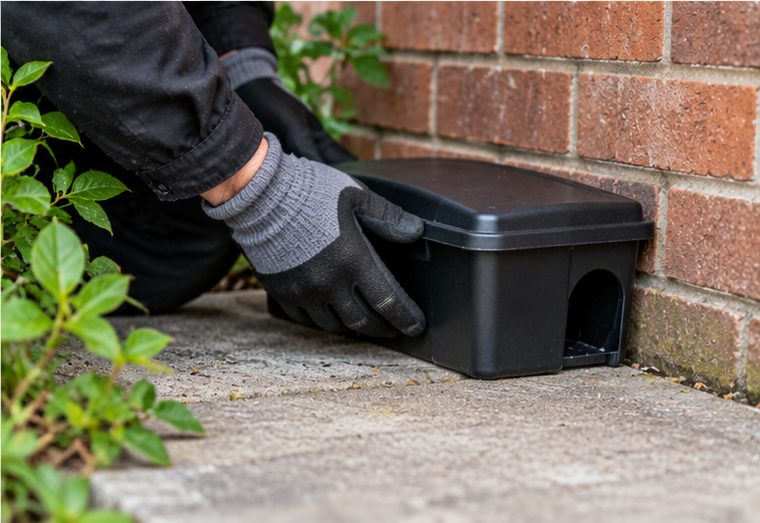
Please do not put down loose poison yourself. It can be eaten by pets, wildlife and children, and a poisoned rat can die in a wall or under floorboards, creating a smell and a fly problem that is hard to resolve. Do not block holes you think are in use either, because trapped rats will simply chew somewhere else. Avoid trying to corner or catch a rat by hand, as a frightened rat can bite. If signs appear where children, pets or food preparation are involved, treat it as more urgent.
Call us if you see droppings in more than one place, hear regular night-time noises, find fresh gnawing, or spot burrows near the house. Rats breed quickly, so a small problem can become a large one within weeks, particularly in autumn when they look for warm shelter. A technician will find where the rats are getting in, deal with them using safe, targeted methods, and advise on proofing so they do not return. We work with homes, shops, restaurants and farms across Essex.
If you would rather not deal with it yourself, call us on 01245 327 274 or send an enquiry below. You can also read more about our rat control service.
 BPCA Member
 CHAS Accredited
 Buy With Confidence
 Three Best Rated 2026
We cover towns and villages across Essex. Choose your area to see how rat control works locally.
Rats come to gardens for food, water and shelter, so the most reliable way to keep them away is to remove all three before they settle in.
Read the guide →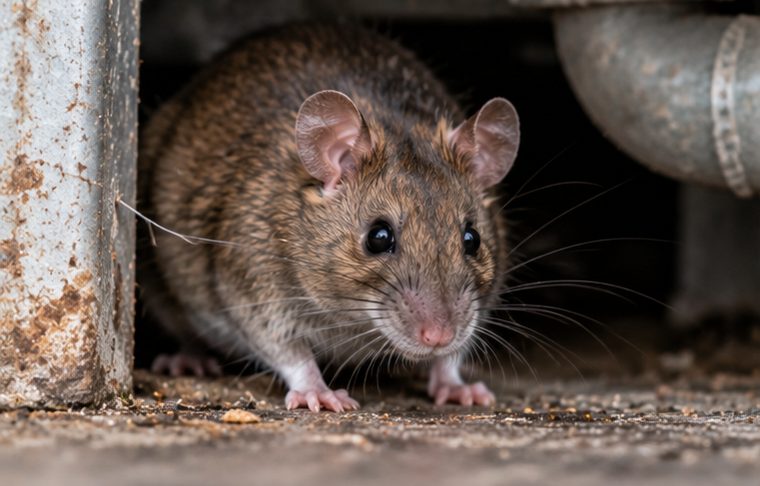
Most household pests leave clues behind, and learning to read droppings, damage, noises and timing will help you decide what you are dealing with and what to do next.
Read the guide →Rat droppings are larger, about the size of a grain of rice, and often blunt or capsule shaped. Mouse droppings are much smaller, thin and pointed at the ends. Size is the easiest guide, but if you are unsure, take a clear photo and ask us, as the answer affects how the problem is treated.
They can be. Rats living under sheds, decking or compost heaps often move into wall cavities, drains and lofts once food or shelter runs short. Acting while they are still outside is usually simpler. Drain damage can also let them travel between neighbouring properties, so it is worth checking early.
Rats are mostly active at night, but you may see them by day if the colony is large, food is short or they have been disturbed. A daytime sighting is therefore often a sign of a bigger problem rather than a lone visitor, and it is a good reason to ask a professional to take a look.
It is better to leave them in place. They show the technician where the rats travel and feed, which makes the treatment more accurate. Keep children and pets away from the area, avoid touching anything with bare hands, and do not sweep or vacuum dry droppings, as that spreads dust.
Tell us what you have found and roughly where it is. We will come back to you — or call 01245 327 274 if it is urgent.