
Fleas are one of the most stubborn household pests we deal with across Essex. A few bites around your ankles can quickly become a home full of jumping insects and a pet that will not stop scratching. We treat the property as a whole, because the fleas you can see are only a small part of the problem.
Our technicians work from our base near Chelmsford and cover the towns and villages across the county. Whether you have a family house, a flat, a rental or a holiday let, we explain what we find in plain language and agree the price with you before any work starts.
 BPCA Member
 CHAS Accredited
 Buy With Confidence
 Three Best Rated 2026
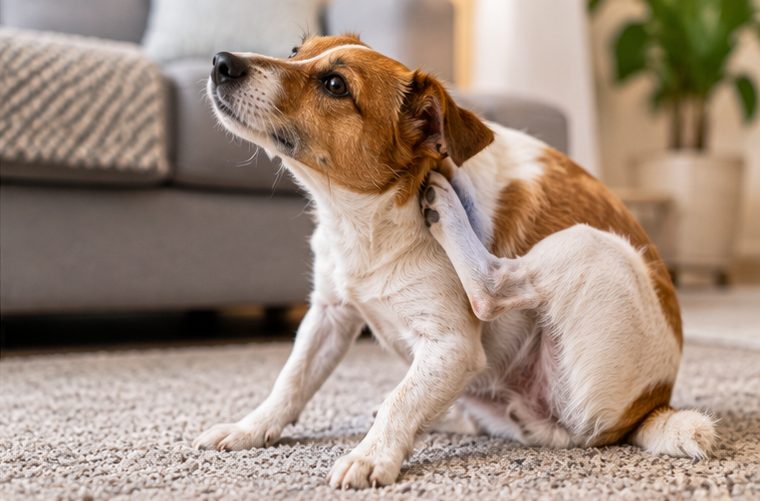
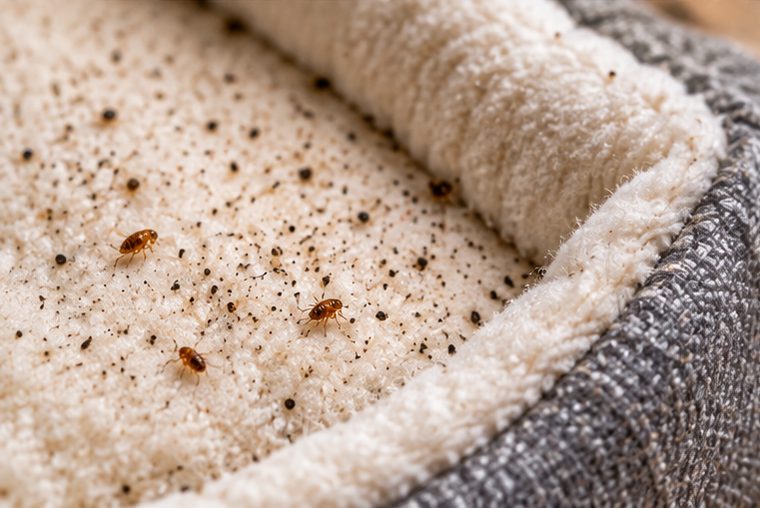
The first sign is usually itchy red bites, often in clusters around the ankles and lower legs. Pets may scratch, lick or chew themselves more than normal. Look closely at pet bedding, the sofa and the edges of carpets for flea dirt, which appears as tiny black specks. Press a speck onto damp white kitchen paper and it will smear reddish brown, which tells you it is flea dirt and not ordinary household dust. Bites that appear overnight, especially after a night with a pet on the bed, are a strong hint.
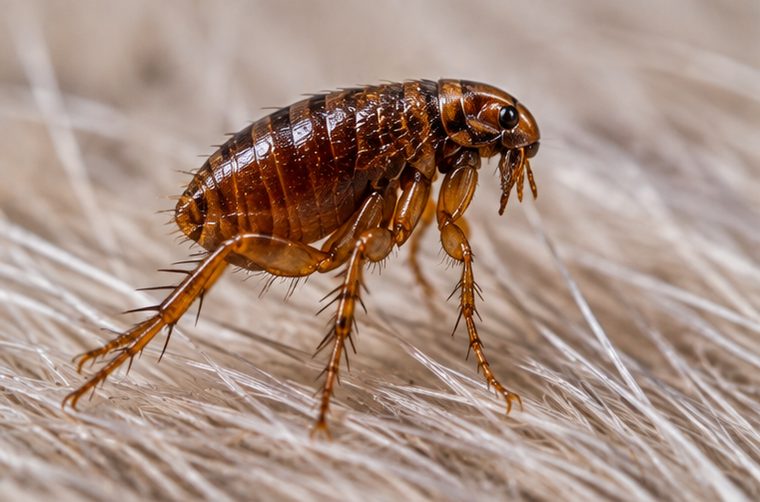
You may also see small dark insects jumping when you walk across a carpet or disturb a rug. Fleas can arrive on your own pet, on a visiting animal, or from a wild animal that has been nesting under a shed or floor. A home that has stood empty for a while can also suddenly come alive when someone moves back in and the warmth and vibration return, so bites in a new tenancy are a common call for us.
Only a small share of a flea population lives on the animal at any one time. Most of it is eggs, larvae and pupae hidden in carpets, rugs, sofas, bedding and the cracks between floorboards. Pupae can stay dormant for weeks, then hatch when they sense warmth or vibration, which is why a problem can seem solved and then return without warning, often just as the household has stopped worrying about it. Treating every stage of the life cycle, not only the adults, is what finally breaks the cycle.
That is why treating the pet alone rarely works, and why spraying one room is not enough. We deal with every area your pet uses, along with the places people sit and sleep. Skirting edges, soft furnishings and the space under furniture all matter, because the young stages gather wherever there is shelter, darkness and plenty of warmth to help them develop. Missing one favourite spot can undo the rest. We also look at car interiors or pet carriers if the animal travels in them regularly.
We begin with an inspection, talking through where the pets sleep and where the bites happen. We then treat the affected rooms with a targeted product, applied carefully and explained to you first. Before we arrive, vacuum thoroughly, wash bedding on a hot setting and clear floors so we can reach the edges. Vacuum again afterwards and empty the bag or bin outside the home, so any stray fleas are not kept indoors. We will tell you which rooms need extra attention beforehand.
Please ask your vet to recommend a suitable treatment for your pets, as that works alongside ours. We usually arrange a follow-up check, because fleas that hatch later still need dealing with. Landlords, letting agents and holiday let owners often book us between tenants, and we can look at several rooms or units in one visit to keep disruption low. We also give simple advice on keeping the problem from returning. Quotes are given plainly, with nothing added later.
We cover towns and villages across Essex. Choose your area to see how flea control works locally.
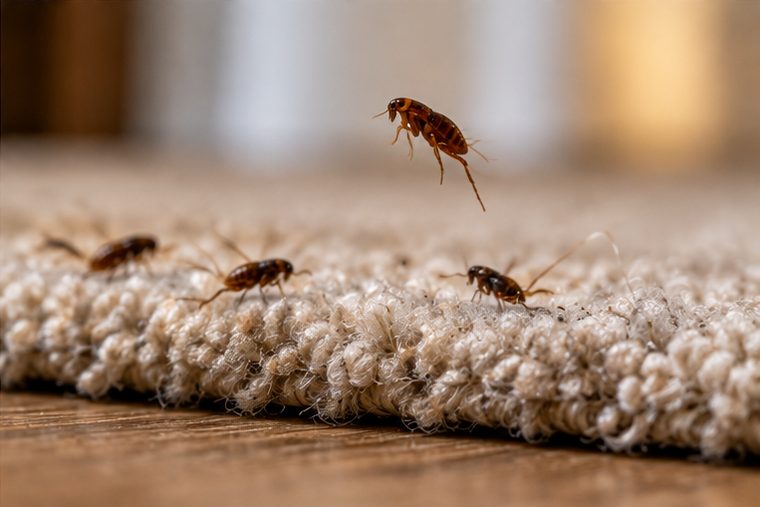
Fleas are small, fast and surprisingly persistent, but a calm and thorough routine, plus professional help when needed, will clear them from your home.
Read the guide →If fleas reappear after you thought the problem was over, the reason is usually in the life cycle or the routine, and it can be put right.
Read the guide →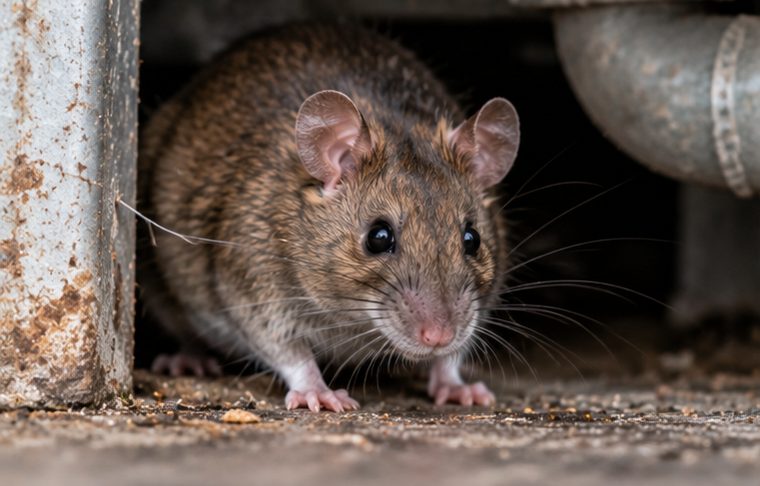
Most household pests leave clues behind, and learning to read droppings, damage, noises and timing will help you decide what you are dealing with and what to do next.
Read the guide →Usually not. We will tell you how long to keep people and pets out of treated rooms and when it is safe to return, and we ask that you wait until the surfaces have dried. We will confirm the details when we agree the job, so you can plan around it.
Some pupae are protected inside their cocoons and hatch days or weeks later. It is common to see a few fleas after a visit. Keep vacuuming daily and avoid disturbing treated areas, and tell us if they continue so we can arrange a follow-up.
Yes, ideally. Fleas will keep returning if the animal is still carrying them. Speak to your vet about a suitable product and use it on every pet in the home. We treat the property, and the two steps together give you the strongest chance of a lasting result.
Yes. We regularly treat flats, houses and lets where fleas have appeared between occupants, or where a previous tenant kept pets. Tell us how many rooms are involved when you get in touch and we will agree the price before anything starts.
Tell us what you have found and roughly where it is. We will come back to you — or call 01245 327 274 if it is urgent.