
Large buildings with loading doors, stored goods and quiet corners suit pests perfectly, so this guide explains how to spot trouble early and keep your site protected.
Warehouses and industrial units give pests plenty of what they want: shelter, undisturbed corners, warmth and often a steady supply of stored goods. Loading doors are open for much of the day, pallets create countless hiding places and large roof spaces are hard to see into. Many Essex units sit on estates beside fields, ditches, the river or the estuary, so rats and mice have natural cover close by. The size of the building makes early detection harder, which is why routine checking matters.
In a big building, a pest problem can run for weeks before anyone connects the clues. Staff on forklifts, pickers and cleaners see more of the floor than anyone, so it helps to tell them exactly what to look for and who to report it to. Treat every small sign as worth noting, because the first one you notice is rarely the first one that happened.
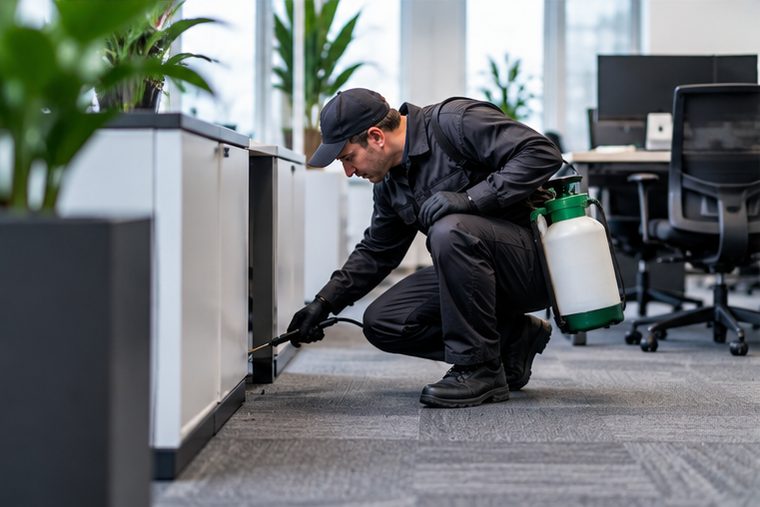
Pests usually enter at ground level and then spread unseen. Gaps beneath roller shutters and around loading doors are common routes, along with service penetrations, damaged cladding and drains. Goods arriving from elsewhere can bring insects in with them. Once inside, rodents follow walls and use cable trays and pipework as runways, while insects settle in warm, damp or dusty spots. Staff areas such as canteens and rest rooms often hold the food that keeps a population going all year.
Simple housekeeping makes a real difference. Keep goods off the floor and leave a clear gap between stock and walls so that inspection is possible. Sweep up spilled product promptly, keep waste in closed containers well away from the building and close doors whenever loading is not under way. Break up long-standing piles of packaging and pallets, which give pests cover. Staff food should be stored in sealed containers and canteen waste emptied daily. Report what you see rather than dealing with it yourself.
Do not scatter poison or set traps across the floor yourselves. Bait can be picked up and moved into stock, other staff may come into contact with it and animals may die in places you cannot reach. Spraying insects without knowing the species often just pushes them elsewhere in the building. Also avoid ignoring the problem until it affects a customer order. Stored goods contaminated by pests may have to be written off, so acting early costs far less in every sense.
Call us once you see droppings, damage or live pests, or when the same sign keeps returning. We survey the whole site including roof spaces and outbuildings, identify what is present, find where it is entering and plan treatment around your operating hours. For larger units, regular visits and a site map showing monitoring points are often the most practical approach, giving you a written record of findings and the actions taken. That is helpful for customers and auditors who ask how pests are controlled.
Lasting control comes from fixing the building as well as treating the pests. Repair damaged doors, seals and cladding, keep drains clear, tidy the external areas and keep vegetation cut back from walls. Check the site after any building work or change in layout, as new openings and storage patterns change how pests move. Share findings between shifts so nothing is missed. A site that is checked regularly and kept tidy gives pests far fewer reasons to stay.
If you would rather not deal with it yourself, call us on 01245 327 274 or send an enquiry below. You can also read more about our commercial pest control service.
 BPCA Member
 CHAS Accredited
 Buy With Confidence
 Three Best Rated 2026
We cover towns and villages across Essex. Choose your area to see how commercial pest control works locally.

A food business cannot afford to share its kitchen with pests, so this guide covers the warning signs, everyday habits and the point at which to call us.
Read the guide →
Most household pests leave clues behind, and learning to read droppings, damage, noises and timing will help you decide what you are dealing with and what to do next.
Read the guide →
Rats are secretive and mostly active after dark, so the first clues are usually small marks and sounds rather than a sighting of the animal itself.
Read the guide →Rats and mice are the usual concern because they damage packaging, contaminate stock and gnaw cables. Stored product insects, flies, cockroaches and in some buildings nuisance roosting animals can also appear. What you find depends on what is stored, how the building is used and what surrounds the site.
For most warehouses and industrial units, regular visits are more practical than waiting for a problem. They allow monitoring points to be checked, early signs to be spotted and records to be kept. We will suggest a pattern that suits the size of the building, the goods stored and the local risk.
We plan work around your shifts and loading schedule wherever possible, and most visits cause very little disturbance. If an area needs to be cleared or kept free for a short time, we tell you in advance so goods and people are not affected.
Yes. Rodents also want shelter, warmth and nesting material, and they damage insulation, cabling and packaging even where no food is kept. Staff areas, bins nearby and neighbouring units can supply food, so an empty-looking site can still attract pests. A survey will show what is drawing them in.
Tell us what you have found and roughly where it is. We will come back to you — or call 01245 327 274 if it is urgent.
