
Rats are a regular worry for people in Great Dunmow, where an older town centre sits beside newer estates and open farmland. If you can hear scratching in the loft, see droppings in the garage or notice holes dug beside a shed, it is worth acting early, because rats breed quickly and rarely go away on their own.
We carry out rat control for homes, shops, pubs and farms across Great Dunmow. A technician looks at the property, works out how the rats are getting in and what is feeding them, and then sets up a treatment that keeps pets and children safe.
 BPCA Member
 CHAS Accredited
 Buy With Confidence
 Three Best Rated 2026
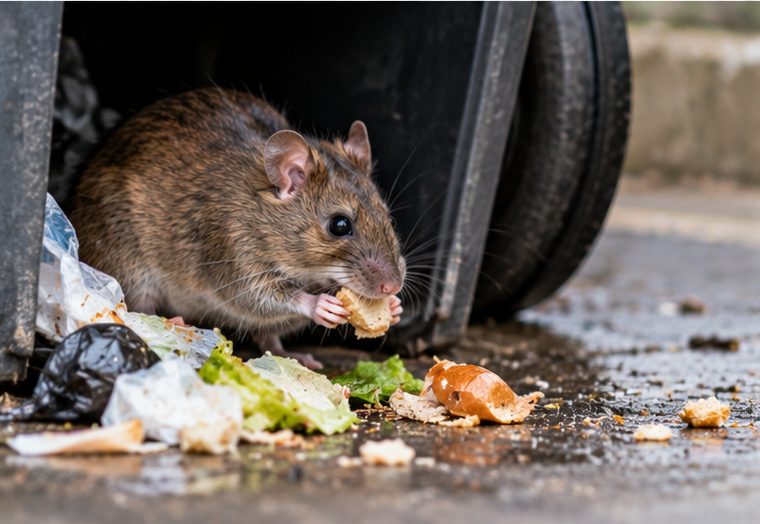
Great Dunmow has fields and hedgerows close to most roads, and that matters. Rats living along field edges move towards houses when the weather turns cold or when crops are cut, looking for shelter and an easy meal. Gardens backing onto open land often see them first, especially where there is a compost heap, a pile of logs, a chicken run or a stack of feed sacks in an outbuilding.
Newer estates bring their own pattern. Building work and drainage changes can disturb existing burrows, and gaps around pipes or under decking are easy to miss when a house is new. In the older streets, brick walls, sheds and shared yards give rats plenty of cover. Wherever you live in the town, the cause is almost always food and shelter within easy reach.

The first visit in Great Dunmow is about looking properly. We check the loft, under floors, kitchens, garages, gardens and drains for droppings, greasy runs along walls, gnawed cables and fresh burrows. Rat droppings are larger than mouse droppings, and the marks they leave on pipes and timber tell us how long they have been active and roughly how many animals we may be dealing with at the property.
Treatment uses baiting and trapping placed carefully in tamper-resistant boxes or in spots that pets and children cannot reach. We return to check progress and remove whatever has been caught, because one visit is rarely the end of it. Once activity stops we look at proofing, sealing the gaps and pipe entries that let rats in, so the same route is closed for good.
Prevention is mostly tidy habits. Keep bins closed, clear up fallen fruit and spilt seed, store animal feed in metal containers and do not leave pet food out overnight. If you keep hens or feed wild animals in your Great Dunmow garden, place feeders where leftovers cannot build up on the ground. We will point out what we see at your property, and we also cover Braintree, Saffron Walden and Chelmsford if you look after a second site.
We cover towns and villages across Essex. Choose your area to see how rat control works locally.
Rats are secretive and mostly active after dark, so the first clues are usually small marks and sounds rather than a sighting of the animal itself.
Read the guide →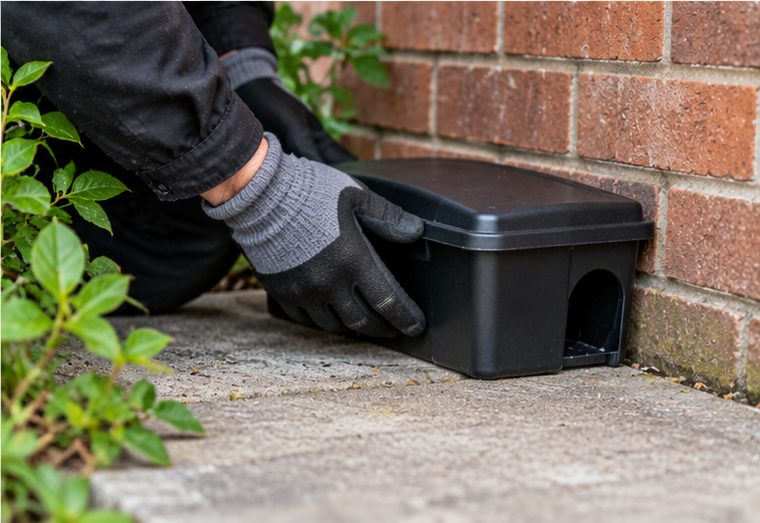
Rats come to gardens for food, water and shelter, so the most reliable way to keep them away is to remove all three before they settle in.
Read the guide →Most household pests leave clues behind, and learning to read droppings, damage, noises and timing will help you decide what you are dealing with and what to do next.
Read the guide →Cleanliness inside the house does not always matter to rats. They are drawn by food outside, such as compost, seed, poultry feed or open bins, and by cover like dense shrubs or piles of timber. Fields nearby also mean a steady supply of newcomers.
Bait is only placed where pets and children cannot reach it, usually inside locked, tamper-resistant boxes or in sealed voids. Tell the technician about every animal you keep, including pets that roam, and we will plan the layout around them and check it on each return visit.
It depends on how many rats there are and how easily they can still find food. Most jobs need a few visits over a couple of weeks, so we can check bait take, remove catches and see whether activity has stopped. We will explain the plan once we have seen the property.
Tell us what you have found and roughly where it is. We will come back to you — or call 01245 327 274 if it is urgent.
