
We are based near Chelmsford, so mice here are part of our everyday work. A typical call is a kitchen with droppings, a loft with scratching or an office with chewed cabling. Each one gets the same sound approach: find the entry points, trap and bait with care, check the results over several visits and then proof the building.
Chelmsford is a county city with a busy centre, rivers running through it, older terraces, newer estates and business parks. Across CM1 and CM2 that gives mice a wide choice of buildings, and a treatment that suits a Victorian terrace is quite different from one for a modern office floor.
 BPCA Member
 CHAS Accredited
 Buy With Confidence
 Three Best Rated 2026

Terraced streets are the classic case. Mice can travel along the voids shared between neighbouring houses, using gaps around pipes, the cavity in a party wall or the roof space that runs the length of the row. A house may have no obvious entry point of its own and still see droppings, because the mice are using next door as a doorway.
That is why we look past the room where you saw the problem. In a Chelmsford terrace we examine the loft hatch, the floor beneath the bath, the cupboard under the stairs and the back of fitted kitchens. We also tell you when the likely source is on the other side of a wall, so you can have a friendly word with the neighbours.
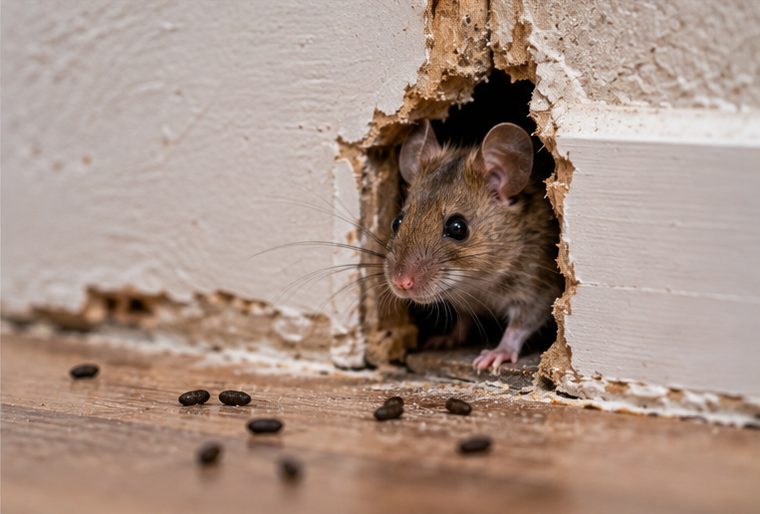
Commercial sites in Chelmsford bring different demands, and they need a plan that suits the working day as well as the building. Staff are around during the day, food is often kept in kitchenettes, and mice find their way through service ducts, cable trays and gaps at fire doors. We place traps and secured bait stations in ceiling voids, plant rooms and storage areas, away from people, and mark every position on a plan.
Monitoring is what makes a business treatment reliable. We visit on a regular pattern over several weeks, check each station and note what was found. If an area shows continued activity, we look harder at that part of the building. Each visit builds a record of the premises. When the checks stay clear, we agree whether occasional visits would be worthwhile for your premises, with no pressure either way.
Closing the building matters as much as the trapping. We fill gaps round pipes and cables, fit mesh across vents and ask landlords or managers to repair damaged doors and air bricks. At home, keep food in tubs, clear under appliances and use lidded bins. We also cover Maldon and Braintree, so businesses and households there can ask for the same programme.
We cover towns and villages across Essex. Choose your area to see how mouse control works locally.
Mice are small, quiet and mostly active at night, so the evidence they leave behind is often the first thing you notice, long before you see one.
Read the guide →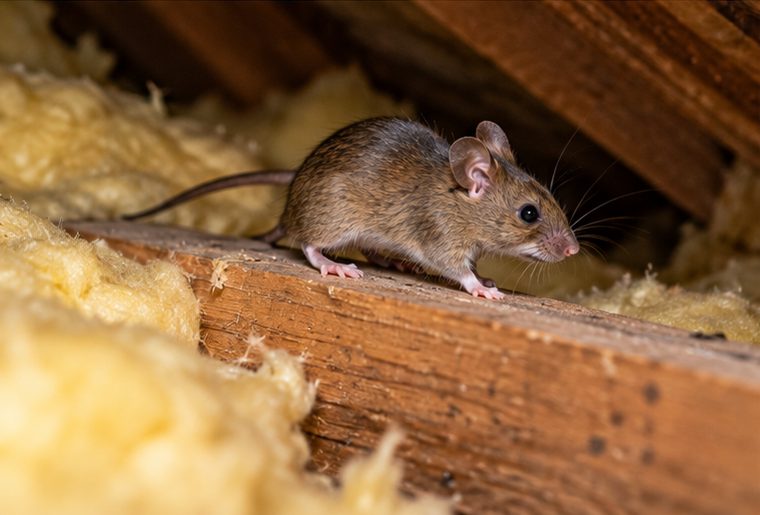
Mice only need a tiny gap to get inside, so stopping them means knowing where homes tend to be weak and tackling the entry points carefully.
Read the guide →
Most household pests leave clues behind, and learning to read droppings, damage, noises and timing will help you decide what you are dealing with and what to do next.
Read the guide →In a terrace, mice can travel through shared walls and roof spaces, so a neighbour's problem can become yours. We inspect the whole route, seal your side properly and track what the traps catch. If the source is next door, it helps for both homes to be treated together.
Yes. We work around your day, place traps and bait in ceiling voids, cupboards and plant rooms, and keep everything out of reach. Visits are short, and we explain to the building contact what we found so staff know what to do if they spot droppings.
They are small, dark and roughly the size of a grain of rice, often found in groups along walls, in cupboards and behind appliances. Fresh ones look dark and slightly soft. Wear gloves when cleaning up, wash your hands afterwards and tell us where you found them.
Tell us what you have found and roughly where it is. We will come back to you — or call 01245 327 274 if it is urgent.
