Chelmsford is a county city with a busy centre, rivers running through it, older terraces, newer estates and business parks, and pigeons are at home in almost every part of it. They roost in the shelter of multi-storey buildings, nest on commercial roofs and leave droppings across pavements, cars and entrances. We help owners and managers stop it humanely.
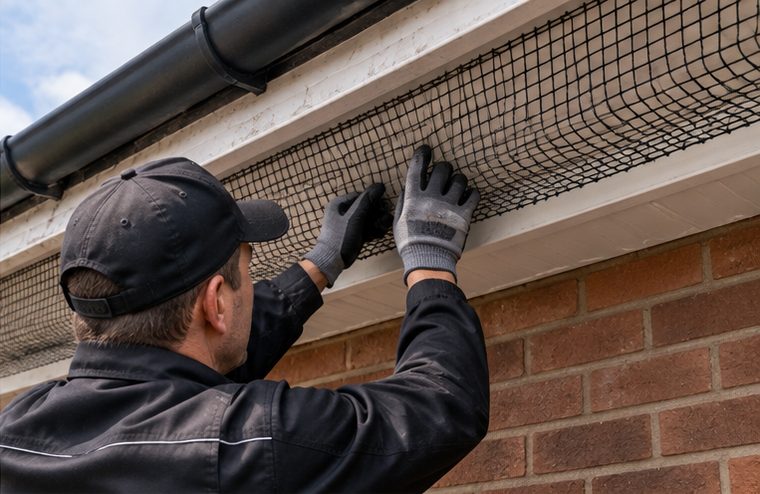
Every job starts with a survey, so the proofing matches the building rather than being a standard kit. We look at roosting spots, nesting areas, gutters and access, and then recommend netting, spikes, wire or mesh. The pigeons are moved on, not harmed, and the building stays clean and in good working order.
 BPCA Member
 CHAS Accredited
 Buy With Confidence
 Three Best Rated 2026
Car parks are one of the places pigeons love most: roof structures overhead, plenty of dry ledges, and shelter from wind and rain. In Chelmsford, covered parking, undercrofts and walkways attract flocks that roost on beams and drop mess onto windscreens and bays below. Customers notice it quickly, and managers are left arranging cleaning that never seems to stay done for long.
We look at the steelwork and ledges above, then net the open sections where the birds enter and fit spikes or wire on the beams they like to perch on. The aim is to keep the area open and well lit for users while leaving the birds with nowhere to settle. Access equipment may be needed, which we assess at the survey.
Business parks around Chelmsford have wide flat roofs, plant areas, parapets and loading doors, all of which suit nesting pigeons. Roofs collect feathers and droppings that block outlets, and blocked drainage on a flat roof can lead to ponding and leaks. Plant rooms with open louvres can also let birds inside, which is a problem for any tenant, caretaker or facilities team.
We inspect the roof edges and outlets, fit spikes along parapets and net or mesh vulnerable plant and louvre openings. Gutter and outlet guards help keep drainage clear. We work to the building manager's access arrangements, and larger sites can be handled in stages so the work causes minimal disruption to the people working inside, and so each stage is signed off before we move on.
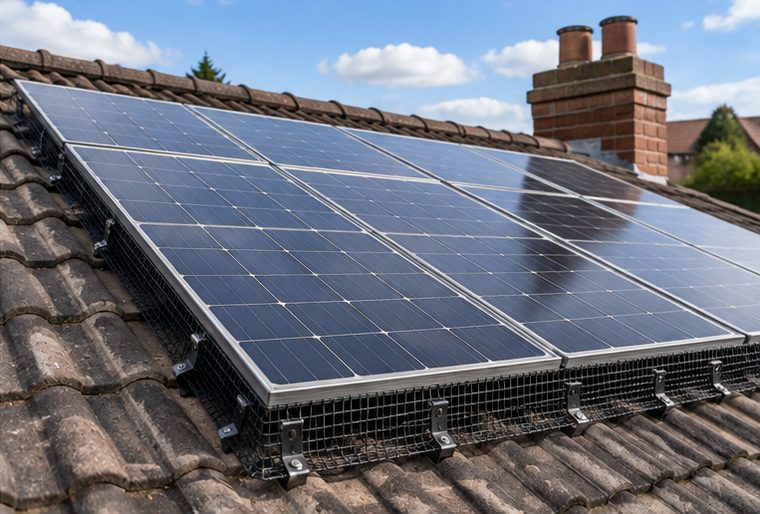
In residential Chelmsford, we see birds nesting under tiles on older terraces and settling beneath solar panels on newer estates. Mesh around the array, gutter guards and neat sealing at the eaves usually solve it. We cover CM1 and CM2, and also work in Braintree and Great Dunmow. Describe what you can see and we will arrange a survey of the property.
We cover towns and villages across Essex. Choose your area to see how pigeon proofing works locally.
The warm, sheltered gap under rooftop solar panels is very attractive to pigeons, and the fouling and nesting material they leave behind can cause real problems.
Read the guide →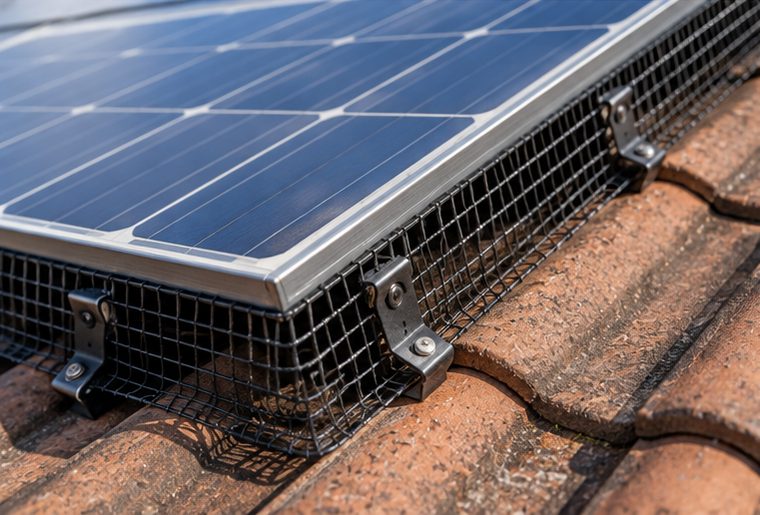
Netting and spikes are the two main humane ways to keep pigeons off commercial buildings, and each suits different parts of a roof.
Read the guide →
Most household pests leave clues behind, and learning to read droppings, damage, noises and timing will help you decide what you are dealing with and what to do next.
Read the guide →We survey the structure to find the roosting beams and entry points, then fit spikes or wire on perches and net open sections. The work can be planned around opening times, and we discuss access equipment before starting.
Indirectly, yes. Nesting material and droppings can block outlets, causing water to pond on the roof. Birds can also disturb insulation or get into plant areas. Outlet guards and edge proofing reduce the risk, and we check drainage during the survey.
We fit mesh around the edge of the array so birds cannot get beneath, using clips designed not to damage panel frames. Nests under panels can be removed first if needed. A survey confirms the right mesh and fixings for your system.
Tell us what you have found and roughly where it is. We will come back to you — or call 01245 327 274 if it is urgent.
