
Chelmsford has rivers and green corridors running through the city, and grey squirrels use them like roads. From riverside gardens they move to older terraces, newer estates and the edges of business parks, looking for a warm roof space. If you hear scampering above the ceiling at first light, we can help you get it dealt with.
A technician carries out a survey, identifies where the squirrel is getting in and explains what needs to happen. Work for homes and commercial premises across the CM1 and CM2 postcodes only starts once you have agreed the plan.
 BPCA Member
 CHAS Accredited
 Buy With Confidence
 Three Best Rated 2026
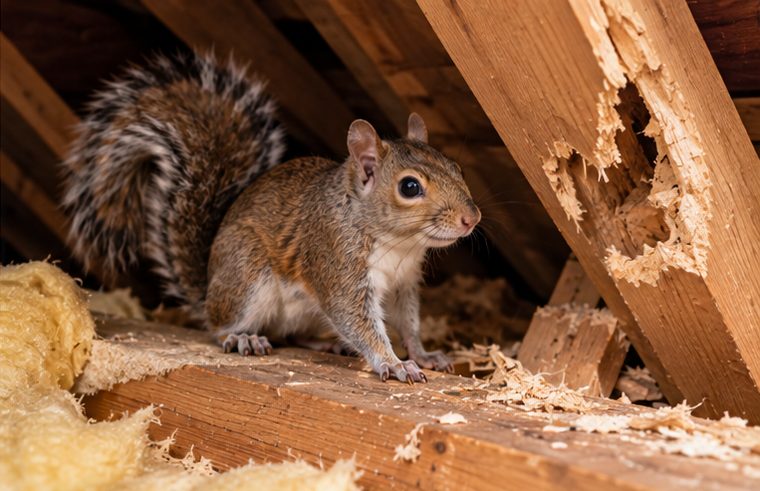
Older terraces in Chelmsford often have ageing fascias, shared roof runs and small gaps where the party walls meet the tiles. A squirrel finding one weak point can move along a terrace, which is why the noise sometimes seems to follow the roofline. Newer estates have their own weak spots, such as vents, bargeboards and the junctions between extensions and the main roof.
Business parks and offices are not immune either. Squirrels will use flat roofs, plant rooms and cable trays, and chewed wiring in a commercial building can be costly and disruptive. Whatever the building, the signs are similar: scratching and running at dawn and dusk, shredded insulation, droppings and gnawed timber around the eaves. If you spot any of these in a Chelmsford building, it is worth acting before the nest grows.
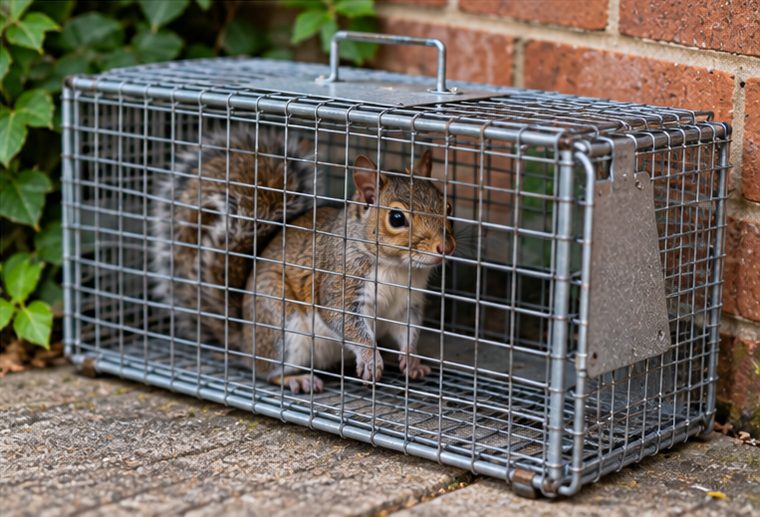
Our technician starts by inspecting the loft or roof void, then the outside of the building, to find the nest and the route in and out. That tells us whether we are dealing with one animal or several, and how the work should be planned in a busy city location where neighbours are close, and whether the roofs next door are likely to be affected as well.
Rules apply to grey squirrels, so the work is done lawfully. In Chelmsford we normally use humane live-capture traps placed where the squirrel runs, along with other lawful methods when suitable. Traps are checked regularly and we explain what is happening at each visit. A captured grey squirrel cannot be released elsewhere, so we handle that part for you and make sure it is done properly and with as little fuss as possible.
The final stage is proofing. We repair damaged timber, fill gaps and fit durable mesh to vents and openings, matching the work to the age and type of building, whether it is a Chelmsford terrace or a commercial unit. Squirrels are persistent, so nothing is permanent, but careful proofing makes a return very unlikely. We also cover Maldon, Braintree and Great Dunmow for anyone with property further out.
We cover towns and villages across Essex. Choose your area to see how squirrel control works locally.
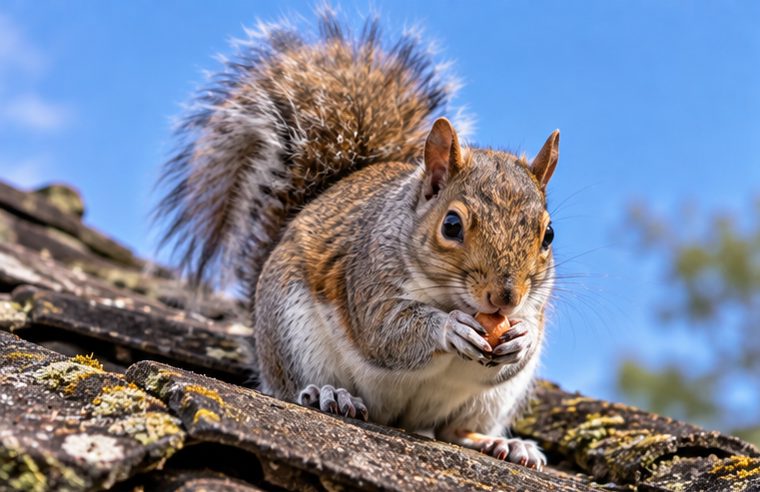
If something heavy is scampering across your ceiling in daylight, grey squirrels are a likely cause, and acting early limits the damage they can do.
Read the guide →Squirrels gnaw constantly, and in a loft that can mean damaged timber, soiled insulation and chewed cables long before anyone sees the animal.
Read the guide →
Most household pests leave clues behind, and learning to read droppings, damage, noises and timing will help you decide what you are dealing with and what to do next.
Read the guide →Yes. Terraces often share a roof run, and a squirrel that has found a gap can move between lofts. If you have a neighbour with the same noise, it helps to mention it so we can look at the whole roofline rather than one house.
Avoid blocking holes yourself, because that can trap an animal inside or push it deeper into the building. Keep pets and children out of the loft, stop leaving food out in the garden, and note when you hear the noise to help the survey.
Yes. Squirrels use flat roofs, ducting and cable runs on commercial buildings as well as house lofts. We survey the premises, deal with the animals lawfully and humanely, and proof the entry points while keeping disruption to staff and visitors low.
Tell us what you have found and roughly where it is. We will come back to you — or call 01245 327 274 if it is urgent.
