
Old buildings are wonderful to live in, but they give mice a lot to work with. In Saffron Walden we approach every mouse problem as a programme: a careful inspection, traps and bait placed where they are safe, return visits to monitor, and sensible proofing that respects the character of the building.
We cover the CB10 and CB11 postcodes, including town centre homes, shops, cafes and countryside properties. Whatever the age or layout of the building, the process is the same, and we explain each stage so you know what to expect.
 BPCA Member
 CHAS Accredited
 Buy With Confidence
 Three Best Rated 2026

Saffron Walden is a historic market town with medieval streets and many older, timber-framed properties. Those buildings often have uneven floors, hidden voids, shifting joints and gaps where beams meet walls. Mice can use all of these, and they can move between rooms, floors and even neighbouring buildings without being seen for weeks, which is why a noise in one room may be coming from somewhere else entirely.
Because of that, our inspection is slow and thorough. We check beneath stairs, in roof spaces, inside cupboards and along the edges of rooms for droppings, gnaw marks and nests. We also look at how the building is used, since a quiet room with stored boxes can be a perfect nesting place that nobody has opened in months, such as a spare room, store cupboard or the space under a staircase.
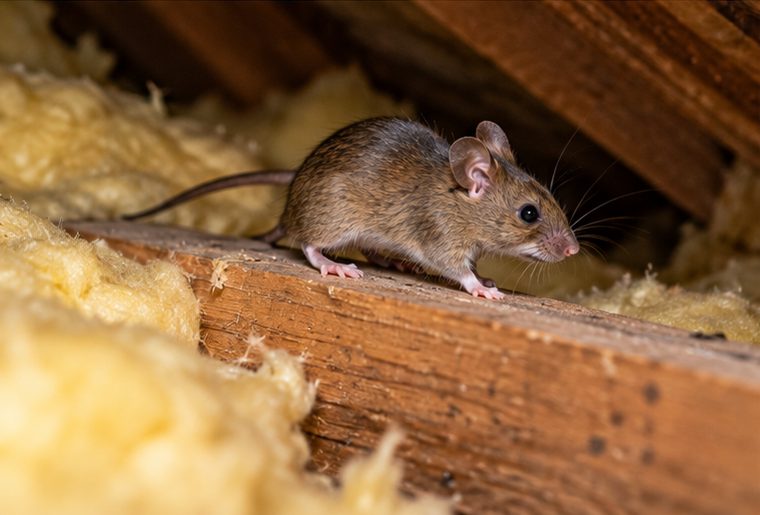
In an older building, proofing needs care. We would rather seal a gap neatly than force something in that spoils the look of a historic fabric. Where holes are in a place that affects the structure, we will tell you honestly and suggest you involve a builder who understands older properties and their materials, rather than guess or promise something we cannot properly deliver.
Throughout the treatment, we keep monitoring. Traps and bait are checked on return visits, and we change positions if the activity moves. In Saffron Walden, the countryside around the town means mice can reach buildings from several directions, so we keep going until the checks are clear, not just until the noise stops, because silence on its own does not prove they have gone.
Town centre shops and cafes bring food storage and deliveries into old buildings, which is a hard mix to manage. We help with practical routines for stock, bins and doors. We also cover homes outside Saffron Walden, and work in Great Dunmow, Harlow and Braintree if that is closer to you, and the same programme applies wherever you are.
We cover towns and villages across Essex. Choose your area to see how mouse control works locally.

Mice are small, quiet and mostly active at night, so the evidence they leave behind is often the first thing you notice, long before you see one.
Read the guide →Mice only need a tiny gap to get inside, so stopping them means knowing where homes tend to be weak and tackling the entry points carefully.
Read the guide →
Most household pests leave clues behind, and learning to read droppings, damage, noises and timing will help you decide what you are dealing with and what to do next.
Read the guide →They do not need to gnaw through anything if there are gaps, and older timber-framed buildings often have plenty where beams, plaster and floors meet. Mice can use very small openings, so we look closely at junctions, voids and service routes.
We aim to seal gaps neatly using suitable materials and without altering the look of the building. If a repair needs a specialist, such as a builder familiar with older properties, we will say so honestly rather than attempt something unsuitable.
Yes. Mice are mostly active at night, so scratching in walls or ceilings after dark is typical. If you hear it in the day, numbers may be higher. Either way, an inspection will tell us where they are and how they are moving.
Tell us what you have found and roughly where it is. We will come back to you — or call 01245 327 274 if it is urgent.
