
Saffron Walden is full of old and timber-framed buildings, and period homes tend to hold exactly what carpet beetle larvae want: wool rugs, tapestries, upholstered furniture and treasured textiles that stay put for decades. Damage often goes unnoticed until a rug is lifted or a chair is turned over.
We provide carpet beetle control in Saffron Walden and the CB10 and CB11 postcodes. The technician inspects carefully, with respect for older fabrics and furnishings, finds the source of the larvae, applies a targeted treatment and explains how to look after your textiles so they remain protected.
 BPCA Member
 CHAS Accredited
 Buy With Confidence
 Three Best Rated 2026
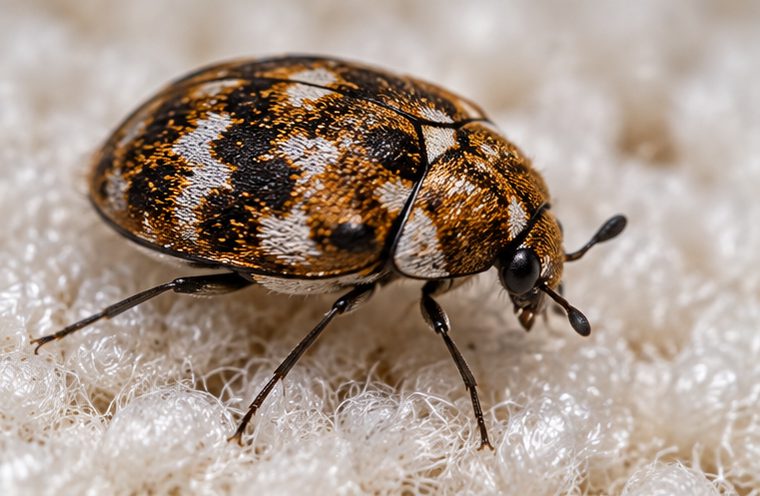
In Saffron Walden, medieval streets and old timber frames mean uneven floors, deep skirting gaps, boxed-in beams and lofts with generations of dust. Carpet beetle larvae can live in all of them, feeding on wool, silk, fur and feathers as well as the debris that settles in hidden gaps. Family heirlooms, antique rugs and stuffed furnishings are especially exposed because they are valued, left alone and rarely cleaned underneath.
If you own something of value, check it gently and regularly. Look at the back of a rug, under cushions, inside wool-lined cupboards and behind wall hangings for papery skins or tiny bristly larvae. Early action matters more with delicate items in Saffron Walden, so if you find signs, avoid vigorous handling, keep the item away from other fabrics and call us before the damage spreads any further.
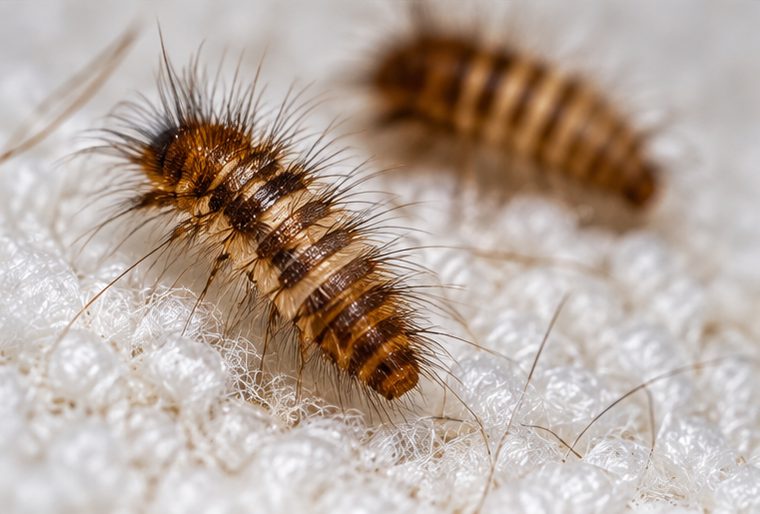
Old properties need patience. The technician works methodically through each room, using a torch to check floor edges, the undersides of furniture, window seats, airing cupboards and loft spaces, and looks for larval skins, live larvae, adult beetles and fine fibre loss. In a timber-framed house the pattern of damage often shows where the larvae are travelling from, and we note each place we look so nothing is overlooked or repeated.
Treatment is targeted rather than widespread, which suits older homes where we would rather not disturb more than necessary. We explain what has been applied, where, and what you should avoid for a short while. For valuable textiles we suggest practical steps such as professional cleaning or sealed storage, because only you can decide what is worth saving, and we would rather you made that choice knowing the facts.
Keep wool and silk clean, since larvae are drawn to body oils and food marks. Rotate rugs now and then, vacuum underneath, and avoid leaving textiles against cold outside walls. Store spare items in breathable cotton wrapped in sealed boxes, and clear old nests from eaves and lofts. If you live in Saffron Walden and have a prized item at risk, ask for advice. We also cover Great Dunmow, Harlow and Braintree.
We cover towns and villages across Essex. Choose your area to see how carpet beetle control works locally.
Carpet beetle damage is often found before the insects are, so knowing what small holes, shed skins and thinning patches mean helps you act early.
Read the guide →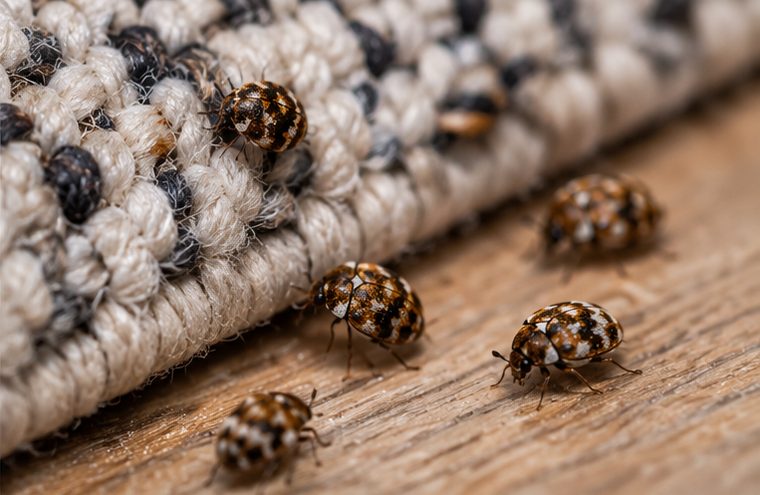
Once carpet beetles have been dealt with, steady cleaning habits, tidy storage and a few small repairs make it much harder for them to settle again.
Read the guide →
Most household pests leave clues behind, and learning to read droppings, damage, noises and timing will help you decide what you are dealing with and what to do next.
Read the guide →We aim to treat the area around a rug and the hiding places beneath it rather than soaking the fabric. For a valuable piece, a specialist rug cleaner may be a sensible extra step. We will explain the options and leave the decision with you.
Old houses have gaps, voids and quiet corners where dust, hair and dead insects collect, which gives larvae a steady supply of food. The age of the timber itself is not the issue. It is the hidden space and the amount of undisturbed fabric stored there.
Take them down gently and look at the back and along the top edge for shed skins, fine dust and small holes. Do it in good light and shake nothing hard. If you see signs, put the item in a sealed bag and ask us for advice.
Tell us what you have found and roughly where it is. We will come back to you — or call 01245 327 274 if it is urgent.
