
Scratching in the roof at first light is the usual sign that a grey squirrel has moved in. In Great Dunmow, with older buildings in the centre, newer estates on the edges and farmland and mature trees close by, squirrels have plenty of ways to reach a roofline. We deal with them properly, and we explain every step.
A technician visits, finds out where the squirrel is getting in and what it has been up to, then agrees a plan with you. The work is carried out lawfully and humanely, and the aim is to stop the problem coming back rather than simply clear the loft once.
 BPCA Member
 CHAS Accredited
 Buy With Confidence
 Three Best Rated 2026
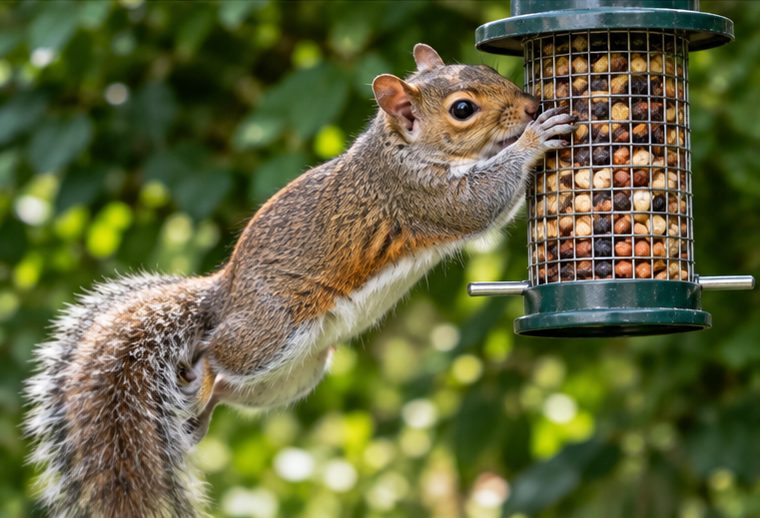
A grey squirrel looking for a warm, dry place to build its nest, called a drey, will happily use a loft, the gap under the eaves or a quiet corner of a roof void. Once inside, it gnaws timber, strips insulation for bedding and can chew through cables, which is a real concern for the wiring in the roof space of any CM6 house.
Older Great Dunmow properties often have small gaps where roof tiles, fascias and soffits have settled over the years, and newer homes can have loose vents or poorly sealed joints. Squirrels are agile climbers, so a neighbouring tree branch or a fence and shed roof is often all they need to reach the building without any trouble at all, particularly where a roof edge is already worn or a vent cover has come loose.
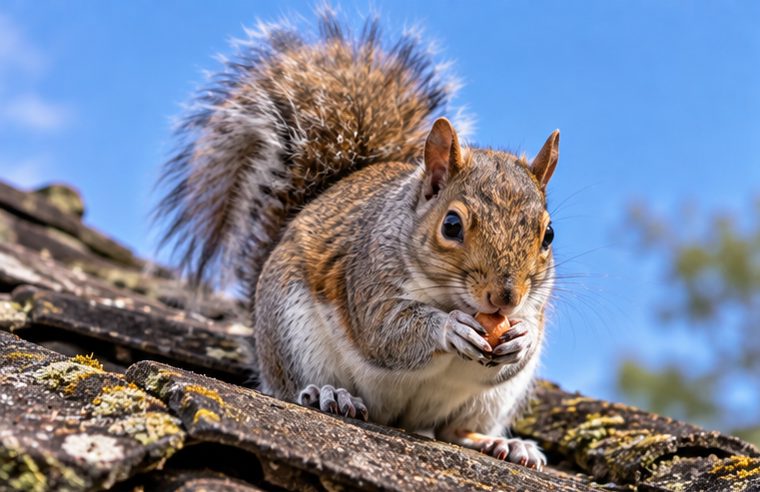
We begin with a survey of the loft and the outside of the building. We look for droppings, chewed wood and nesting material, and we work out exactly where the squirrel is getting in. Without that step, any removal is only temporary, because another animal can follow the same route into the empty space a few weeks later, and the damage then carries on as before.
Removal uses humane live-capture and other lawful methods, chosen to suit the property. Laws apply to grey squirrels, including what may be done with one once it has been caught, and our technician handles all of that correctly on your behalf. Once the loft is clear we seal the entry point and proof the roofline, and we also cover Braintree and Saffron Walden.
Squirrels are not only a loft problem. In Great Dunmow gardens they dig up bulbs, strip bark from young trees, raid feeders and sometimes chew garden furniture or pipework. Trimming back branches that touch the roof, tidying spilt seed and keeping bins closed all help, and we can talk through what is realistic for your plot and your trees.
We cover towns and villages across Essex. Choose your area to see how squirrel control works locally.
If something heavy is scampering across your ceiling in daylight, grey squirrels are a likely cause, and acting early limits the damage they can do.
Read the guide →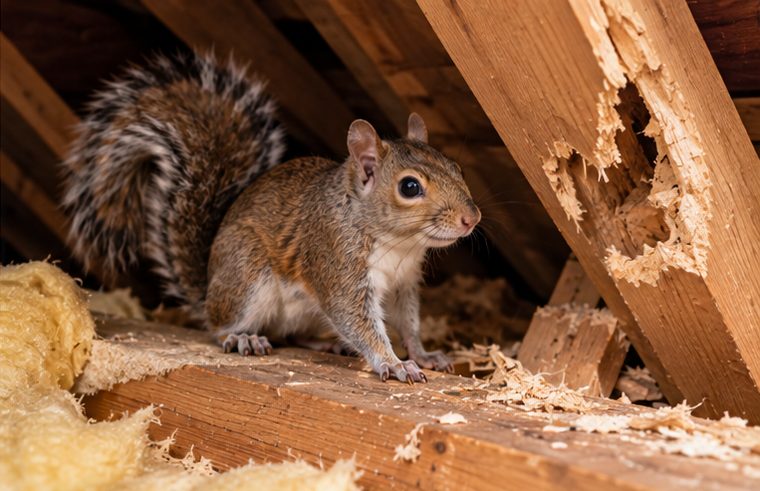
Squirrels gnaw constantly, and in a loft that can mean damaged timber, soiled insulation and chewed cables long before anyone sees the animal.
Read the guide →
Most household pests leave clues behind, and learning to read droppings, damage, noises and timing will help you decide what you are dealing with and what to do next.
Read the guide →Squirrels are active in daylight, usually at dawn and dusk, and you hear scampering and thumping rather than night-time scratching. Grey squirrels also leave larger, chunkier droppings and build a ball of leaves and twigs. Our technician will confirm which animal it is during the survey.
Proofing the roofline and filling gaps makes it much harder for them to return, but no one can promise it never happens. We seal the entry point we find, check the other likely weak spots, and advise on overhanging branches that give them easy access.
Laws apply to grey squirrels, including how they are caught and what happens afterwards. That is one reason to use a professional. Our technician carries out squirrel control lawfully and humanely, so you do not have to worry about getting the rules wrong.
Tell us what you have found and roughly where it is. We will come back to you — or call 01245 327 274 if it is urgent.
