Feral pigeons are a familiar sight across Essex, from town centre shop fronts and railway stations to farm buildings and seaside promenades. A few birds are no trouble, but when they settle on a roof, a ledge or beneath solar panels the problems build quickly. Droppings, nesting material, noise and blocked gutters all follow. We provide pigeon proofing and solar panel proofing for homes and businesses across the county, using humane methods that keep the birds out.
Our approach is to look at the building first, work out where the birds are landing and nesting, and then fit the right kind of proofing so they move on without being harmed. We explain what we found and what we recommend, and we agree the price with you before any work begins. This page covers the problem, the methods we use and the kinds of property we help.
 BPCA Member
 CHAS Accredited
 Buy With Confidence
 Three Best Rated 2026
Feral pigeons descend from domestic and racing birds and have adapted well to life alongside people. They nest and roost wherever a building offers shelter and a flat surface, including ledges, flat roofs, gutters, loading bays, roof voids and the gaps beneath solar panels. They can breed through much of the year, so a pair that finds a good spot can soon become a small flock. Once birds have a favoured place they return to it day after day, which is why acting early matters.
The signs are easy to recognise. Look for droppings on pavements, window sills, cars and roofs, twigs and straw sticking out of gutters or vents, feathers collecting in corners, and cooing or scratching sounds from the roof space at dawn. You may also notice damp patches where a blocked downpipe has overflowed. If you see birds returning to the same spot every day, they are probably nesting or roosting there, and it is worth having the area looked at before the problem spreads to neighbouring roofs.
Droppings are more than an eyesore. They are acidic enough to mark paintwork, stonework and roof coverings over time, and they make paths and entrances slippery. Dried droppings can carry germs, so clearing them needs care and the right protective equipment. Nesting material is another concern, because it blocks gutters, drains and outlets, and that can lead to water finding its way into walls and ceilings. Birds in a roof void may also bring mites into the living space.
For businesses the effect is often on reputation and safety. Fouling at a shop front or entrance puts customers off, and droppings in a warehouse can affect stock and food handling areas. Landlords and managing agents also find that repeated complaints from tenants and neighbours become a time-consuming issue. Dealing with the cause, rather than cleaning up again and again, is almost always the sensible long-term choice, and it saves a good deal of repeated effort for whoever looks after the building.
We begin with a survey of the building, inside and out where access allows. We look at where the birds land, where they nest, what they are feeding on nearby and how they get in. We then explain what we have found in plain terms, talk through the options, and give you a price in writing. Nothing is started until you have agreed it. Where droppings or nests have built up, we explain what clearing is needed first, as proofing holds up better on a clean surface.
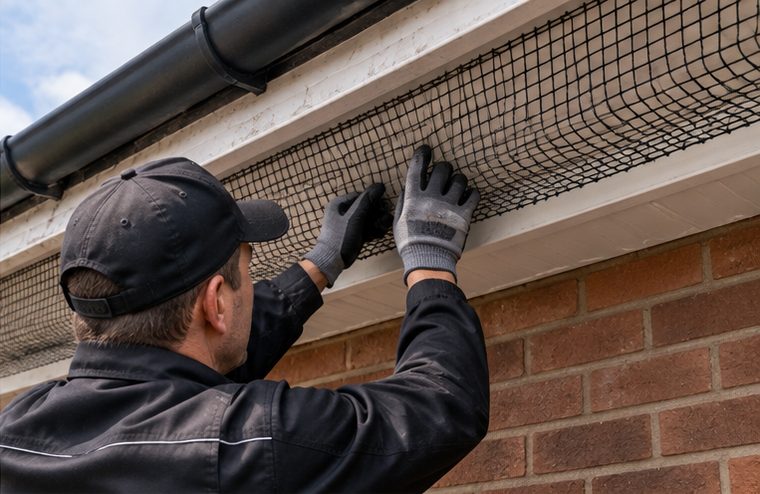
The proofing itself depends on the building. It may be netting across an open area or roof space, spikes or wire along ledges and parapets, gutter guards, or mesh around solar panels. All of it is designed to stop birds landing or nesting, not to harm them. Afterwards we give you simple advice on keeping the area unattractive to birds, such as not leaving food waste out, and we tell you what to look for if they return.
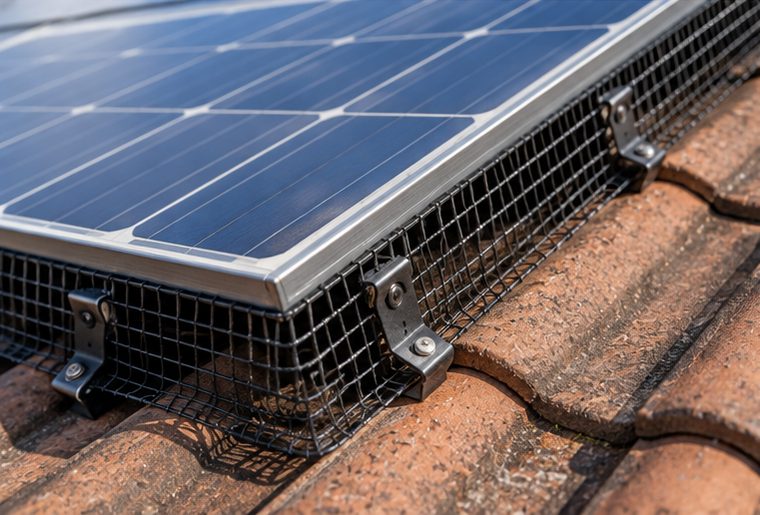
Solar panels create a sheltered, warm space between the panel and the roof, and pigeons find it very attractive for nesting. Over time the nests, feathers and droppings build up, which can block drainage, attract mites and make routine maintenance difficult. Birds can also chew or peck at cabling, and noise from below the array can be a nuisance for the people living underneath. Left alone, the problem usually grows rather than going away, so it is far more sensible to deal with it sooner than later, before a whole season of nesting has built up.
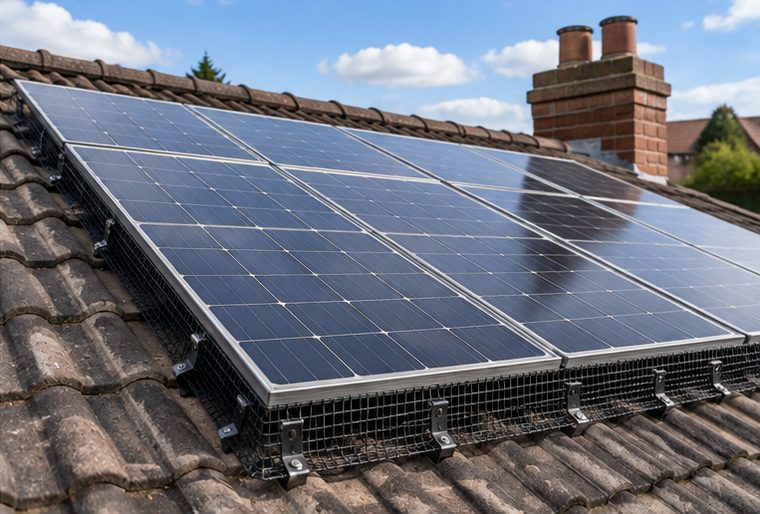
We start by cleaning out nests and droppings from beneath the array, using suitable protective equipment. We then fit a strong mesh around the edge of the array so birds cannot get underneath. It is attached with clips that hold to the panel frame, so there is no drilling through panels and no damage to the panels or the roof. The aim is a tidy finish that you will hardly notice from the ground. The mesh sits neatly against the array, keeps its shape in wind, and is designed to be removed by an installer if the panels ever need servicing, so the system stays easy to look after.
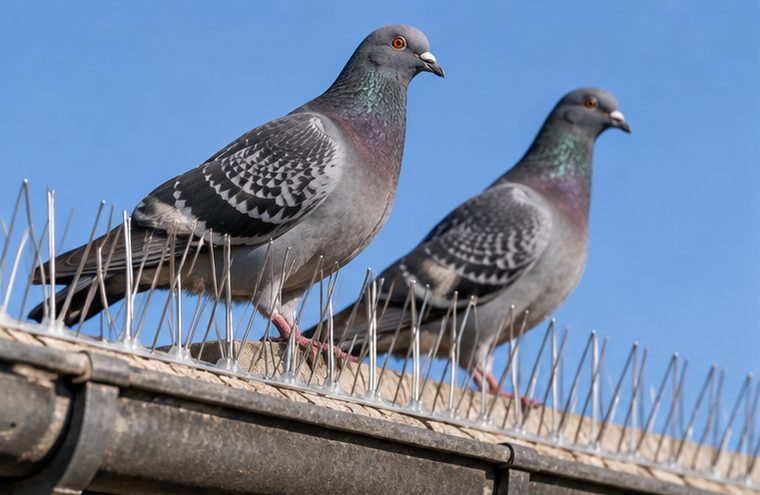
Spikes are one of the most widely used ways to stop pigeons landing. We fit them along ledges, parapets, signs, window heads, beams and the tops of pipes and lighting, wherever birds like to perch. They suit narrow or flat surfaces where a bird would otherwise stand. They are fitted in continuous rows with no gaps, so there is nowhere left to land. The points are blunt and flexible, so they are a humane deterrent that simply makes the spot uncomfortable to stand on, and they do not injure birds. Colour and height can be chosen to suit the building.
Spikes are not right for every situation. On wide ledges or open flat areas birds can sometimes land between rows or build nests on top, and in those cases netting or a wire system is a better choice. Spikes also need a clean surface to fix to securely, so we clear old nests first. Where a ledge faces a public street, we also choose a neat finish. During the survey we tell you honestly where spikes will do the job and where another method would last longer and look neater.
Larger commercial buildings give pigeons plenty of places to settle. We fit netting over plant areas on flat roofs, in warehouse and factory roof voids, across loading bays, on car park decks and within atriums and covered walkways. A well fitted net removes the space the birds want to use, so they cannot get in to nest or roost. This protects stock, machinery, staff and customers, and it cuts down the cleaning that fouling would otherwise require. It also helps keep rainwater outlets and roof drainage clear of nesting material.
The work follows a clear order. We survey the area and measure it, then plan a framework of fixings and wires so the net can be held tight. The netting is then fitted and tensioned so there are no sagging areas or gaps where a bird could become trapped. After fitting, we check the installation and recommend periodic inspections so any damage is spotted early. Exclusion of this kind is humane because the birds are simply kept out of the space and move on elsewhere, unharmed, and the netting is chosen to be visible and safe for birds flying nearby.
We cover towns and villages across Essex. Choose your area to see how pigeon proofing works locally.
The warm, sheltered gap under rooftop solar panels is very attractive to pigeons, and the fouling and nesting material they leave behind can cause real problems.
Read the guide →Netting and spikes are the two main humane ways to keep pigeons off commercial buildings, and each suits different parts of a roof.
Read the guide →
Most household pests leave clues behind, and learning to read droppings, damage, noises and timing will help you decide what you are dealing with and what to do next.
Read the guide →No. Our work is about proofing, which means stopping birds landing, nesting or getting into a space, rather than harming them. Netting, spikes, wire and mesh all keep birds out humanely. If there are active nests we will talk through the sensible timing with you first, and we will not do anything that puts the birds at risk.
It should not. The mesh is fitted around the edge of the array using clips that hold to the panel frames, so we do not drill through the panels or the roof covering. We clean beneath the panels first, and the mesh can be taken off by an installer if the array needs servicing later.
Often, yes. Proofing needs a clean surface to fix to, and old nests and droppings can attract new birds. Dried droppings can carry germs, so we clear them carefully with suitable protective equipment. We will tell you at the survey whether cleaning is needed and include it in the price you agree.
We work on houses, flats, shop fronts, offices, warehouses, factories, schools and car parks across Essex. Landlords and managing agents often ask us to look at several buildings at once. Whatever the property, we survey first, explain the options and agree the price with you before starting any work.
Tell us what you have found and roughly where it is. We will come back to you — or call 01245 327 274 if it is urgent.
