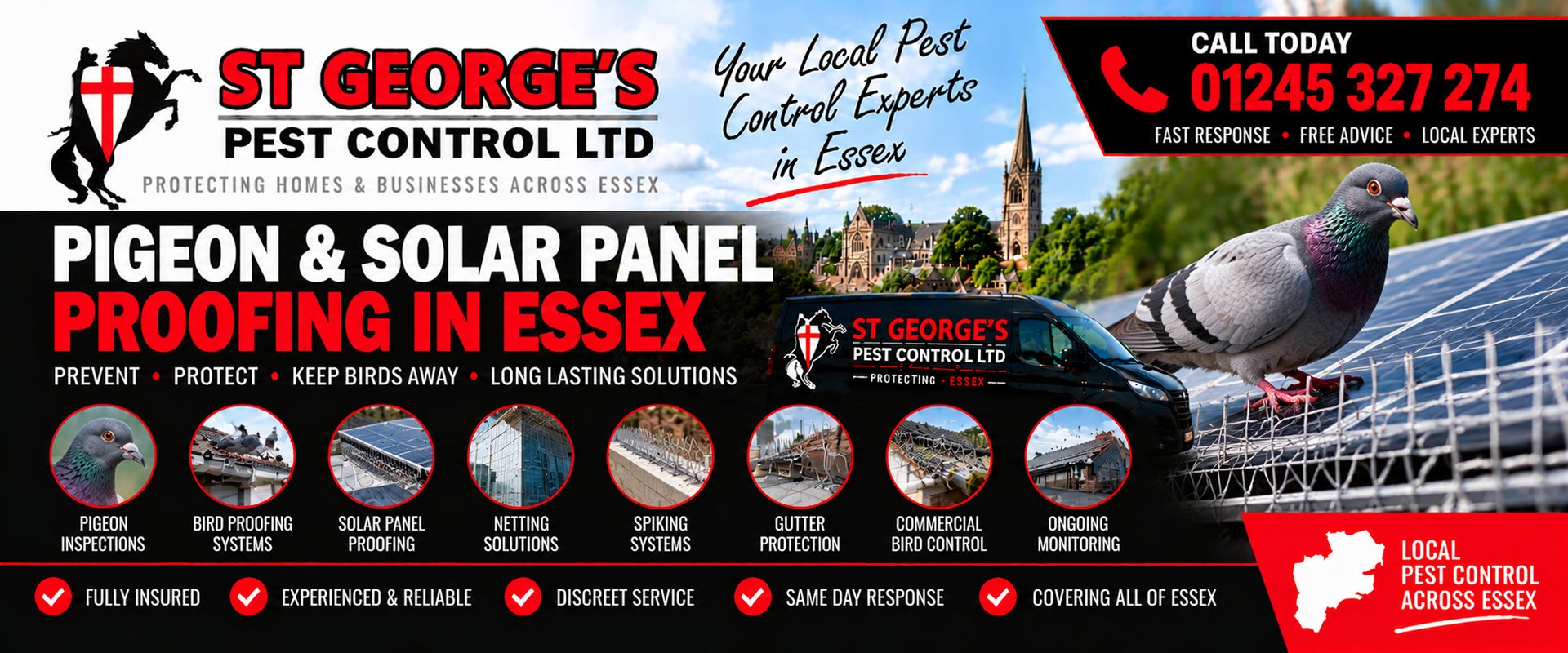
Canvey Island sits low in the Thames estuary, with a seafront, rows of bungalows and dense housing, and a lot of flat or shallow-pitched roofs. Pigeons find these easy to settle on, and the open coastal air carries plenty of visiting birds. If your roof, gutters or shop front have become a roost, we can fit humane proofing.
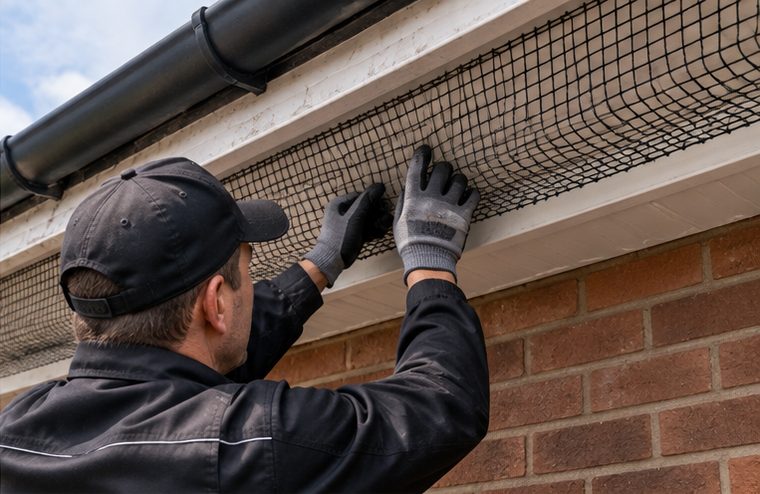
We always survey first. That means checking the roofline, the gutters and any ledges, finding the places birds land and nest, and agreeing a plan that suits the building. Spikes, netting and mesh keep birds away without harming them, and we explain each choice so you know exactly what is being fitted and why.
 BPCA Member
 CHAS Accredited
 Buy With Confidence
 Three Best Rated 2026
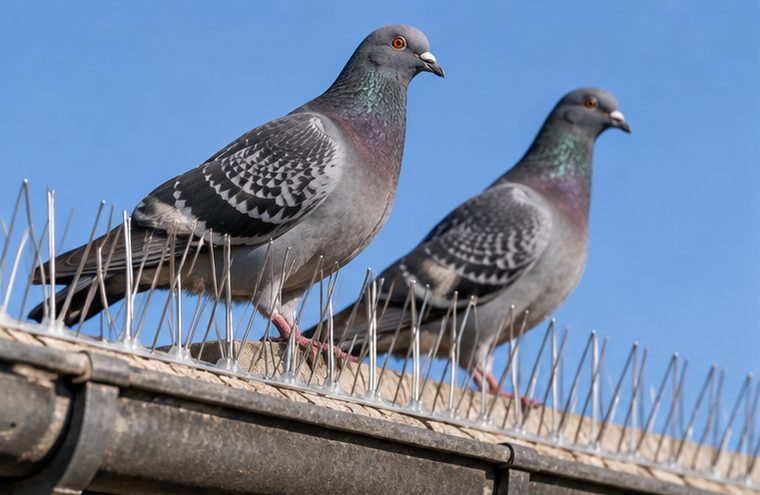
Buildings along the Canvey Island seafront have plenty of ledges, signs and canopies, and sea winds mean fixings have to be done properly. Pigeons gather near cafes and takeaways where food is dropped, and their droppings can spoil pavements, outdoor seating and shop entrances. Flats above the shops can suffer too, with birds roosting on balconies and window sills overhead throughout the year.
We use proofing that stands up to exposed conditions. Spikes fixed along parapets and sills, wire systems on signs and netting across recesses all suit coastal buildings when installed correctly. We also advise on bins and outdoor food areas, because fewer scraps mean less reason for pigeons to stay once the ledges are proofed, and the seafront stays cleaner and more pleasant for everyone.
Many Canvey Island homes are bungalows, and a low roof is easy for pigeons to land on and nest under. Flat roofs on extensions and garages collect nesting debris, and low gutters fill with twigs and feathers, leading to overflow at the first heavy rain. The gap between roof and wall is also a common way into the loft, and it is often missed from the ground.
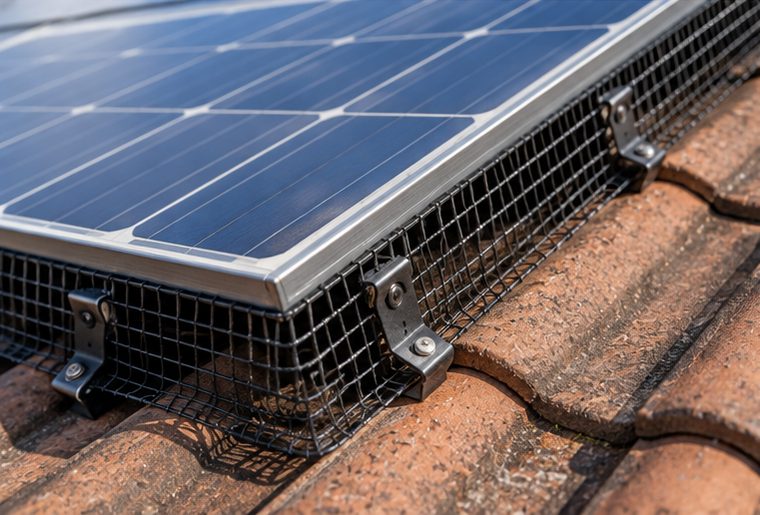
Gutter guards stop nesting material from gathering, and mesh closes gaps at the eaves. On flat roofs, we may recommend spikes along the edges or netting over a sheltered corner. If solar panels have been fitted, birds will often settle underneath in the shade and warmth, so we add mesh around the array to block that space. Each fix is chosen after seeing the roof itself.
Canvey Island's creeks and marsh around the edge bring plenty of wildlife, which is part of its charm, but pigeons are different. They roost on buildings, and proofing the roofline is the only reliable way to move them on. We cover the SS8 area and also visit Leigh-on-Sea and Basildon. Call us with details and we will arrange a survey.
We cover towns and villages across Essex. Choose your area to see how pigeon proofing works locally.
The warm, sheltered gap under rooftop solar panels is very attractive to pigeons, and the fouling and nesting material they leave behind can cause real problems.
Read the guide →Netting and spikes are the two main humane ways to keep pigeons off commercial buildings, and each suits different parts of a roof.
Read the guide →
Most household pests leave clues behind, and learning to read droppings, damage, noises and timing will help you decide what you are dealing with and what to do next.
Read the guide →They can if netting is poorly fitted. We use tensioned systems and secure fixings suited to exposed coastal locations, and we check them during the survey. Spikes and wire are also options where netting would not suit the building.
It can be. Nests and droppings block gutters, and birds can find a way into the loft. We would check the eaves and roof edge, remove what needs removing and fit proofing so they do not simply return.
Yes. Spikes along the edge or a wire system stops birds landing, and netting can cover a sheltered corner where they nest. We look at the roof surface first so the fixings do not damage the waterproof layer.
Tell us what you have found and roughly where it is. We will come back to you — or call 01245 327 274 if it is urgent.
