Pigeons suit a market town like Great Dunmow well. The older centre has ledges, window heads and canopies where they can sit out of the weather, while the newer estates and farmland around the town give them food and plenty of rooftops to return to. When a few birds turn into a regular roost, the droppings and noise soon become a problem for homes and businesses alike.
We carry out pigeon proofing across Great Dunmow and the CM6 postcode area. Every job starts with a survey, so we can see where the birds are landing and nesting before recommending anything. The aim is always to stop them settling, never to harm them.
 BPCA Member
 CHAS Accredited
 Buy With Confidence
 Three Best Rated 2026
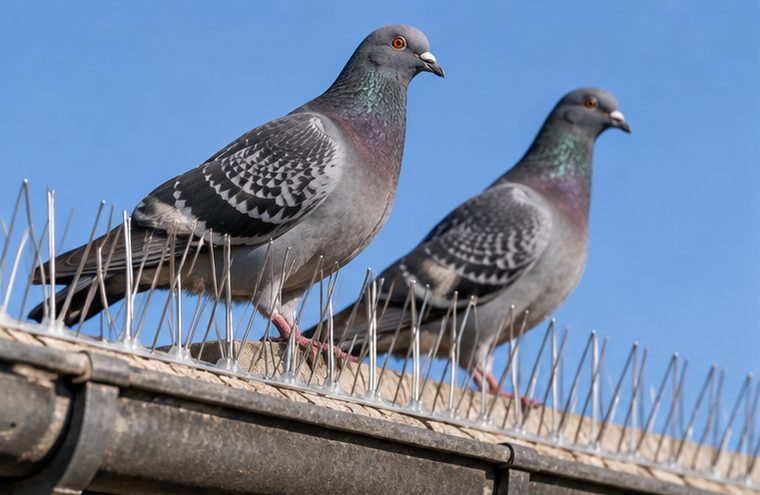
Older shop fronts and period buildings are a favourite with pigeons because of the many small flat surfaces: fascia tops, window heads, canopy edges and the gaps behind signs. In Great Dunmow a single ledge can become a nesting spot that is used season after season, with droppings landing on the pavement below and staining the frontage. We look at each building from street level and, where needed, from above, to see exactly where the birds are getting a grip.
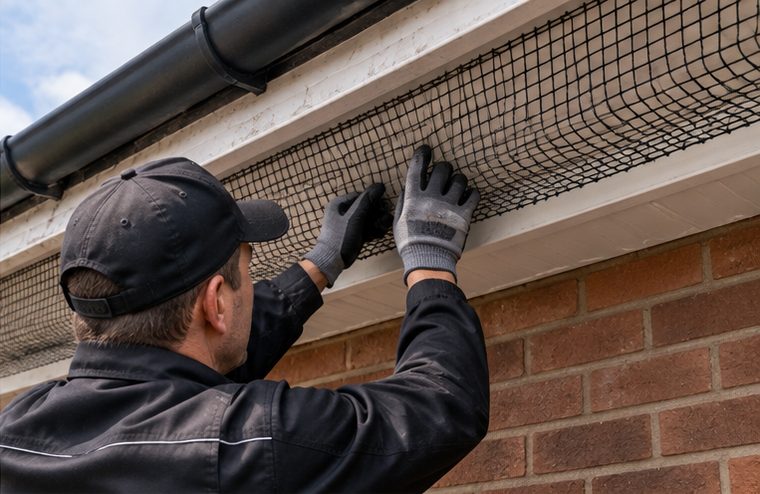
Once we know the landing points, we fit spikes or a tensioned wire system along the ledges so the birds cannot stand there, and net over any recess where they have been nesting. The fittings are chosen to sit neatly on the building rather than shout at the street. Where droppings have built up we clean them away with proper care first, because they can spread germs.
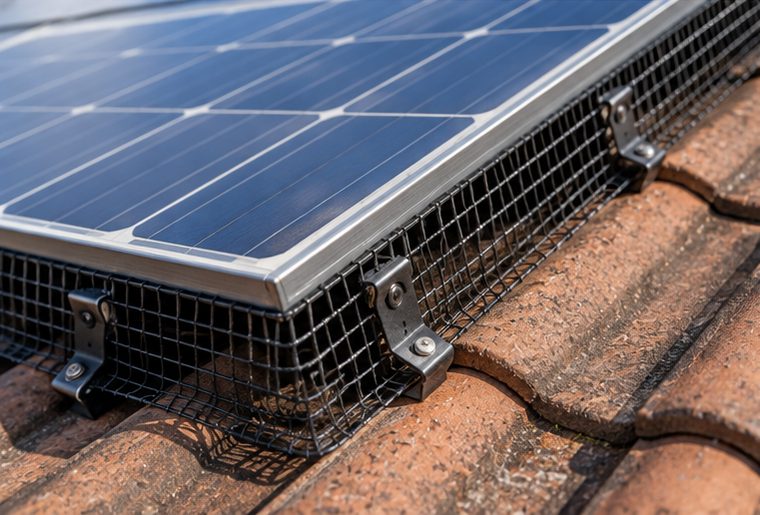
The newer estates in Great Dunmow have plenty of roofs with solar panels, and the gap between a panel and the tiles is a warm, sheltered space that pigeons find very attractive. Once birds get under the array they nest, and the mess and debris can collect around the panels and in the gutters beneath. Many owners only notice when they hear scratching or see feathers and droppings dropping down the roof slope.
The usual answer is solar panel mesh, a strong wire skirt clipped around the edge of the array so birds cannot reach the space underneath. It is fitted without drilling through the panels or disturbing the tiles, and it is hardly visible from the ground. We clear out any nesting material and droppings from under the panels before the mesh goes on.
Away from the centre, Great Dunmow also has business premises with loading bays, canopies and flat roof edges that birds use as a roost. Netting across an open bay or spikes along a parapet usually solves it. After the survey you get a clear plan, and the work is booked in around your opening times. We also cover Braintree, Saffron Walden and Chelmsford if you have premises there.
We cover towns and villages across Essex. Choose your area to see how pigeon proofing works locally.
The warm, sheltered gap under rooftop solar panels is very attractive to pigeons, and the fouling and nesting material they leave behind can cause real problems.
Read the guide →Netting and spikes are the two main humane ways to keep pigeons off commercial buildings, and each suits different parts of a roof.
Read the guide →
Most household pests leave clues behind, and learning to read droppings, damage, noises and timing will help you decide what you are dealing with and what to do next.
Read the guide →Spikes are normally fixed to a strip that is glued or clipped to the ledge, so they do not harm the surface. On older buildings we choose the gentlest fixing for the material and tell you what to expect before we start.
Yes, if there is a gap between the panel edge and the roof. It makes a sheltered nesting space. Solar panel mesh is clipped around the array to close that gap, and it can be fitted without drilling the panels.
Where there is a build-up we clean it away first, wearing the right protection, because dried droppings can spread germs. Proofing over a dirty ledge or under a panel would leave the problem behind, so cleaning is part of the plan.
Tell us what you have found and roughly where it is. We will come back to you — or call 01245 327 274 if it is urgent.
