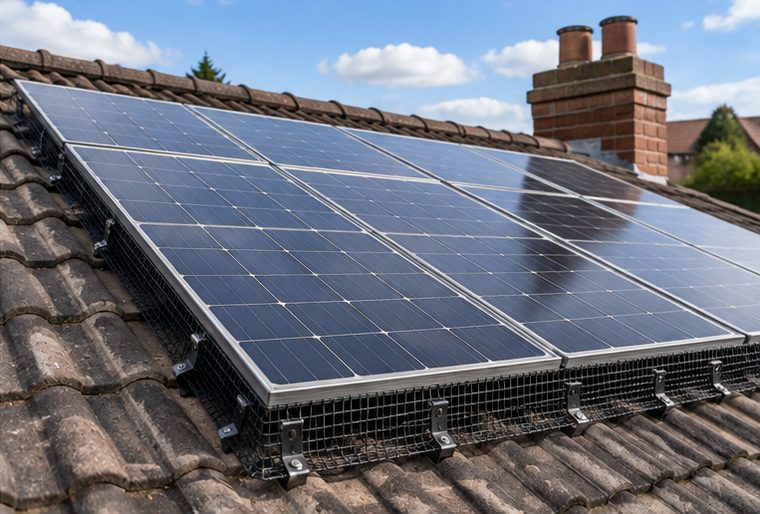
The warm, sheltered gap under rooftop solar panels is very attractive to pigeons, and the fouling and nesting material they leave behind can cause real problems.
Panels fixed a short distance above a roof create a dry, shaded and draught-free space that pigeons find ideal for roosting and nesting. The roof beneath stays warm, predators struggle to reach them, and the gap is hard for people to see into. Once one pigeon settles, others tend to follow, so a small problem can grow quickly through a season. Because the space is hidden from the ground, many owners only notice the issue when droppings appear on the panel edges, or when they hear scratching on warm mornings.
Droppings, feathers and nesting material build up beneath the array, and some of it spills out onto the panel edges and the roof. Droppings are acidic and messy, and a blocked gutter or flat roof outlet nearby can follow. Noise from cooing and scratching under the panels can be a nuisance inside the house or office below.
Dried droppings and old nests can carry dust and parasites that are unpleasant to breathe in or handle. Anyone cleaning under panels should treat it as a job for protective equipment and proper working at height. Most householders should not go on a roof for this, and commercial sites usually need it done by trained people with the right controls in place. If you are unsure whether a cleaning job is safe, ask us before anyone climbs up, because roofs with panels have limited footing and cables to avoid.
Active nests with eggs or young should be left alone until a professional has assessed them. Disturbing them is stressful for the birds, and reaching under panels can be dangerous for you. Pigeons can nest in most months of the year, so timing matters. Never use harmful methods; the right approach is humane exclusion once any active nesting has finished.
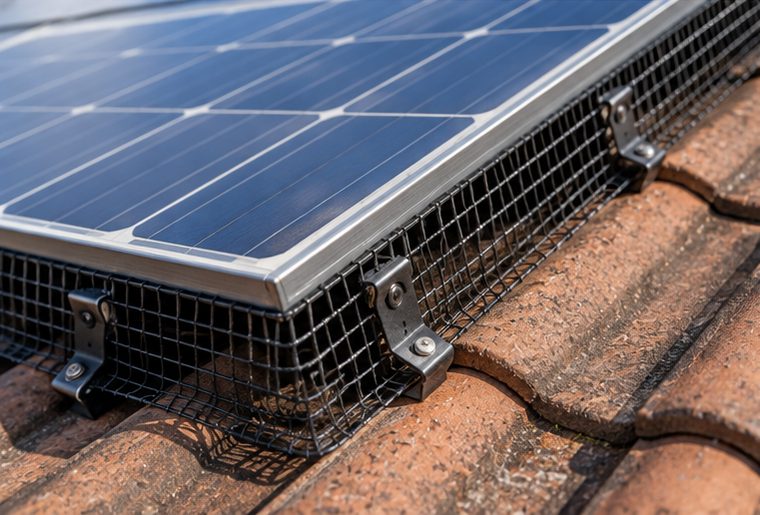
The standard answer is solar panel mesh, a discreet wire screen fixed around the edge of the array so pigeons cannot get in underneath. It is fitted with clips that avoid drilling into panels or the roof, and it is designed to keep the system clear without harming the birds. On nearby ledges and ridges, spikes or netting can discourage landing and roosting.
Before any proofing goes on, the roof should be surveyed. We check the size of the array, where birds are getting in, whether there are active nests and what cleaning is needed first. Meshing over an area that still has birds trapped underneath causes distress and fails quickly, so the order of work matters. Essex homes and businesses, from coastal rooftops to estate roofs, all follow the same principle. A written plan means everyone knows what happens and in which order.
Proofing is most effective when it is done early, before a flock has settled. Keep roofs and gutters clear, avoid leaving food waste near the building, and have the mesh checked after storms or roof work in case clips have shifted. If you spot birds going in and out under your panels, get in touch sooner rather than later. Keeping a record of dates and photographs helps us understand how the birds are using the roof and what is needed. Early action is gentler on the birds and on your roof.
If you would rather not deal with it yourself, call us on 01245 327 274 or send an enquiry below. You can also read more about our pigeon and solar panel proofing service.
 BPCA Member
 CHAS Accredited
 Buy With Confidence
 Three Best Rated 2026
We cover towns and villages across Essex. Choose your area to see how pigeon proofing works locally.
Netting and spikes are the two main humane ways to keep pigeons off commercial buildings, and each suits different parts of a roof.
Read the guide →
Most household pests leave clues behind, and learning to read droppings, damage, noises and timing will help you decide what you are dealing with and what to do next.
Read the guide →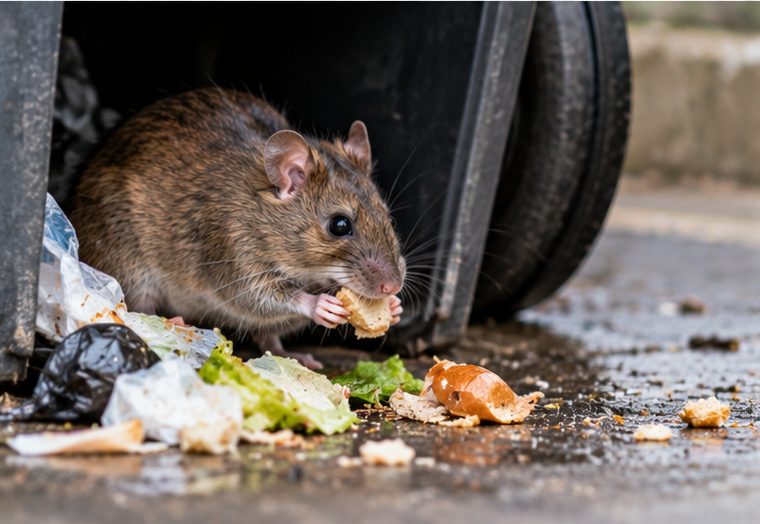
Rats are secretive and mostly active after dark, so the first clues are usually small marks and sounds rather than a sighting of the animal itself.
Read the guide →Birds with eggs or young in an active nest should be left alone until nesting has ended, and we only use humane methods. The safe route is to have the site surveyed first, wait for nests to finish where needed, then proof the area so birds cannot return.
Properly fitted mesh is designed to attach with clips that grip the panel frame, so there is no need to drill into the panels or the roof. It should be fitted by someone who knows the array type, since poor fitting can leave gaps for birds or put strain on the edges.
Droppings that land on or around the panels can shade the glass and make cleaning harder, and heavy build-up under the array can trap debris against cabling. It is a good idea to have the area checked and cleaned before fitting mesh, so nothing is sealed in.
The right time is when no active nests are present, which a survey will confirm. Pigeons can breed through much of the year, so there is no single date. Fitting mesh before birds move in is easiest, but it can be done after nests have finished and the space is cleaned.
Tell us what you have found and roughly where it is. We will come back to you — or call 01245 327 274 if it is urgent.
