
Ants in the kitchen are one of the most common calls we take in Great Dunmow, and they are usually black garden ants following a trail from a nest outside. Whether you live near the older centre or on one of the newer estates, the pattern is much the same: a few scouts find something sweet, then the rest follow in a line. We trace that line back and deal with the nest itself.
A handful of ants on a worktop is easy to wipe away, but it rarely ends there. If you are seeing a steady stream, or the ants keep coming back to the same spot after cleaning, it is worth having a technician take a look. We explain what we find in plain terms and agree the plan before any treatment starts.
 BPCA Member
 CHAS Accredited
 Buy With Confidence
 Three Best Rated 2026
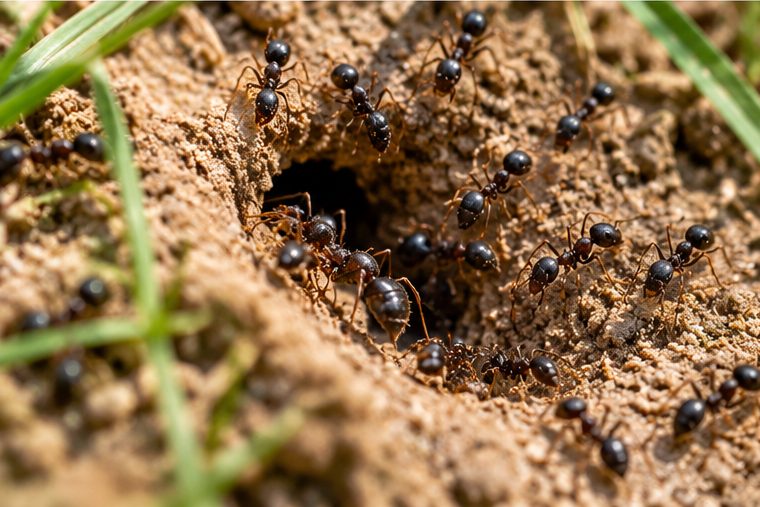
With farmland on the edge of town and plenty of gardens in between, black ants have no shortage of places to settle. The usual nest sites are under paving slabs, patios and path edges, in lawns, beneath sheds and in the soil along house walls. Some colonies go further and nest in wall cavities or under kitchen floors, which is when ants seem to appear from nowhere inside the house.
Older properties in the centre tend to have more gaps around pipes, airbricks and door thresholds, while the newer estates often have patios laid on sand, which ants like very much. Neither is a fault. It simply tells us where to look first. We follow the trail outdoors, find where it disappears and note every point where ants are getting in, so that nothing is missed later.
Once the trail and nest are found, we use targeted treatments placed where the ants will carry them back to the colony, rather than spraying across the whole room. This matters in Great Dunmow as anywhere, because the workers you see are only a small part of the nest, and removing the visible ones alone just means more arrive. Treatment is applied with care around food areas, children and pets, and we tell you what to leave undisturbed.
Where ants are coming through a particular crack or around a pipe, we seal it or advise you on how to. Sometimes the nest is next door or under a shared path, in which case it can take a little longer to settle. We will say so honestly, and we can return to check progress if the ants are still showing after the first visit.
Ants go where the food is. Keep sugar, honey, jam and cereal in sealed containers, wipe up crumbs and sticky rings straight away, and do not leave pet bowls of food down overnight. Rinse out recycling before it goes in the bin. If you are in Great Dunmow (CM6) and spot a trail starting up again, wipe it with soapy water rather than spraying, then give us a call. We also cover Braintree and Saffron Walden.
We cover towns and villages across Essex. Choose your area to see how ant control works locally.
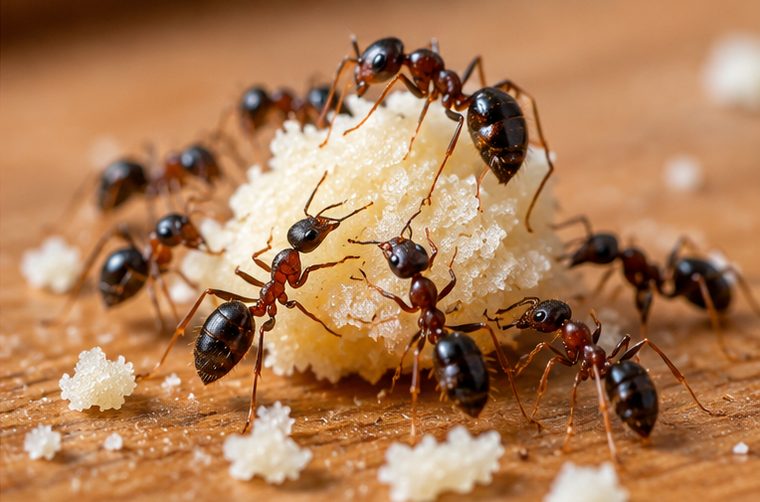
A line of ants across the worktop usually means a scout found food and told the nest, and a few simple habits can break that chain.
Read the guide →Flying ants are the winged males and young queens of an ant colony, and their sudden summer swarms are usually short lived and harmless.
Read the guide →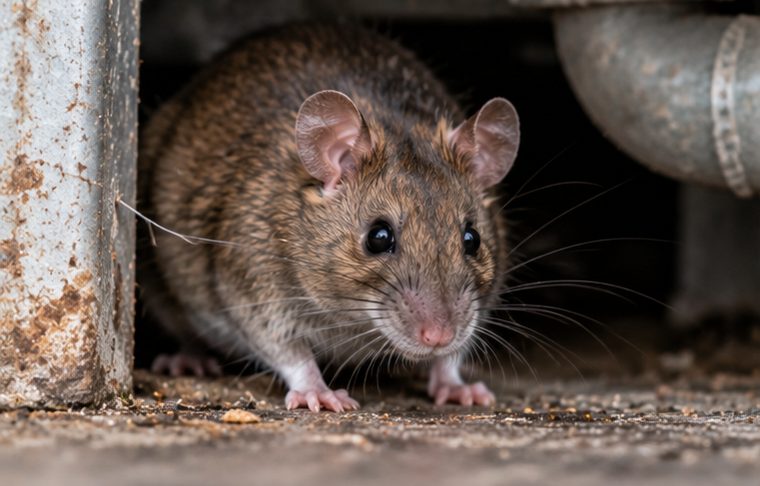
Most household pests leave clues behind, and learning to read droppings, damage, noises and timing will help you decide what you are dealing with and what to do next.
Read the guide →Flying ants are the winged males and new queens leaving a mature nest to mate, usually on warm, humid days in summer. They are the same black garden ants you see on the ground. They fly for a short time and then disperse. It does not always mean the nest is in your house, but large numbers indoors are worth checking.
Black garden ants do not damage timber or wiring in the way some pests do, but their nests can loosen soil under paving and they contaminate food they walk over. Large colonies in wall cavities can also be hard to live with. Dealing with them early is simpler than waiting until a trail has settled in indoors.
Usually yes, because the treatment is placed where workers find it and carry it down to the colony beneath the slabs. We first confirm where the trail leads. Results depend on the size of the nest and the weather, so we do not promise one visit will be enough, and we will tell you if a follow-up makes sense.
Tell us what you have found and roughly where it is. We will come back to you — or call 01245 327 274 if it is urgent.