
Small holes in a woollen jumper, a bald patch in the carpet or tiny buff moths fluttering out of a wardrobe all point to the same thing. We provide moth control in Great Dunmow for homes and businesses, starting with working out which moth you have and where the larvae are feeding.
Great Dunmow has an older centre, newer estates and farmland around it, so we see everything from deep-pile carpets in period houses to fitted wardrobes in recent builds. The treatment depends on the moth and the room, not on the age of the property.
 BPCA Member
 CHAS Accredited
 Buy With Confidence
 Three Best Rated 2026
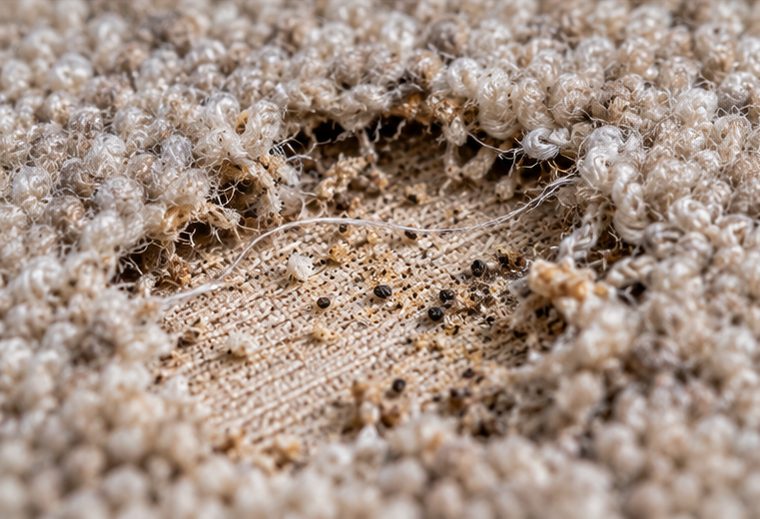
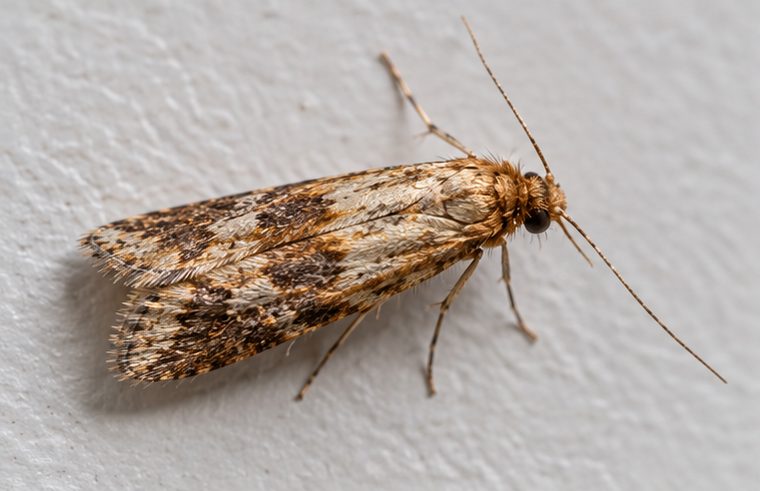
People often blame the wrong moth. Clothes moths and carpet moths are small, buff coloured and avoid light, so you tend to see them in wardrobes, drawers and dark corners. Their larvae do the damage, eating wool, cashmere, silk, felt and fur and leaving irregular holes with silky webbing nearby. The adults do little feeding themselves, so killing a few flying moths never solves it.
Pantry moths are a different problem. They live in dry food such as flour, cereals, rice and dried fruit, and you notice them flying around the kitchen or spot webbing inside packets. Before we treat anything in Great Dunmow we confirm which type we are dealing with, because the fix for one will not touch the other, and guessing wastes your time and money.
We inspect wardrobes, drawers, carpet edges, under furniture, behind skirting and any loft space where old blankets or stored clothing might be sitting. Larvae like undisturbed spots with a little fluff, hair or dust to feed on, so in Great Dunmow homes the source is often a forgotten box, a spare-room wardrobe or a rug beneath a heavy sideboard that has not moved in years.
Treatment is targeted at the places we find, using professional products applied carefully and kept away from food and children. We pair it with practical steps you can take yourself: vacuuming thoroughly, hot washing what will take it, freezing small items, and putting clothes into sealed bags. Pheromone traps then help us see whether activity is dropping over the following weeks and whether a return visit is needed.
We are based near Chelmsford and travel to homes and businesses across CM6, whether that is a terrace in the older centre, a family house on a newer estate or a farmhouse on the edge of Great Dunmow. We also cover Saffron Walden and Braintree. Moths can return if infested items come back into the house, so we explain how to stop that happening.
We cover towns and villages across Essex. Choose your area to see how moth control works locally.
Clothes moths damage natural fabrics quietly, so by the time holes appear the problem has often been developing for weeks in a dark, undisturbed corner.
Read the guide →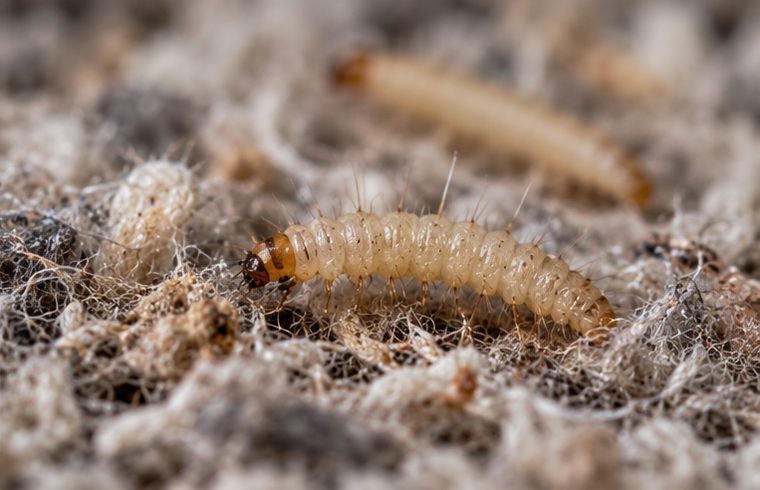
Moth larvae thrive on natural fibres left in dark, still places, so protecting wool and carpets comes down to cleanliness, airflow and sensible storage.
Read the guide →
Most household pests leave clues behind, and learning to read droppings, damage, noises and timing will help you decide what you are dealing with and what to do next.
Read the guide →Moth damage is usually irregular holes or thin, worn patches, often with fine silky webbing or tiny cases near the fabric. Clean round holes are more likely from something else. If you are unsure, we can look at the garment and check the wardrobe for larvae and droppings.
Often yes. Carpet moth larvae tend to feed along edges and under furniture, so we treat those areas directly and advise on deep vacuuming. Badly damaged patches may still need repair, but replacing the whole carpet is rarely the first step.
No. Moths in the kitchen are usually pantry moths, which feed on dry food rather than fabric. The cure is clearing and checking cupboards, discarding infested packets and cleaning shelves, with treatment where needed. We can tell you which moth it is.
Tell us what you have found and roughly where it is. We will come back to you — or call 01245 327 274 if it is urgent.
