
Small holes in a wool jumper, a bare patch at the edge of the carpet, or tiny pale skins on a windowsill are the usual first clues of carpet beetle in Great Dunmow homes. The adults look harmless, but it is the bristly larvae that do the damage, quietly feeding on natural fibres for months before anyone notices.
We carry out carpet beetle control across Great Dunmow and the CM6 postcode area. A technician inspects to find where the larvae are living, treats the affected areas in a targeted way, and tells you what to wash, vacuum and store so the problem does not simply come back.
 BPCA Member
 CHAS Accredited
 Buy With Confidence
 Three Best Rated 2026
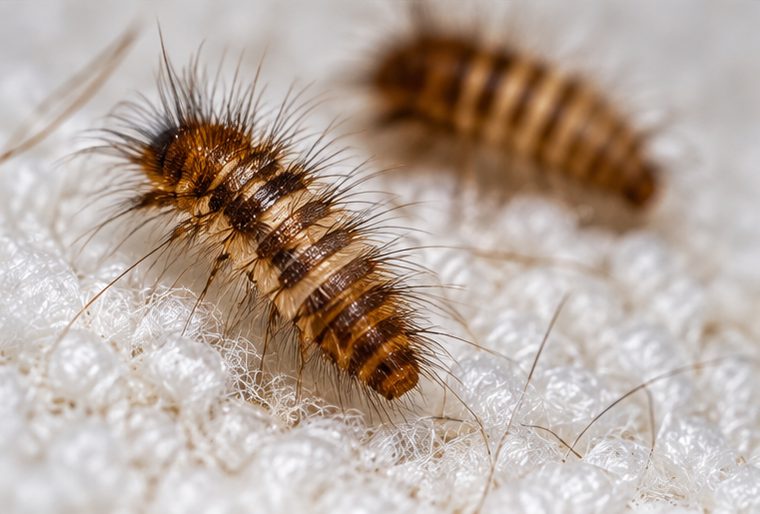
Great Dunmow has an older centre and a good deal of newer housing, and carpet beetle turns up in both. In newer homes with fitted carpets the larvae often work along the edges, under sofas and beds, and in the gap beside the skirting board where fluff and hair collect. In older properties they also find their way into lofts, where an old nest or dead insects in the insulation can feed a population for a long time.
The farmland around the town matters too. Adult beetles live outdoors on flowers in spring and summer and fly in through open windows, so you may find them dead or crawling on a sunny windowsill. They then lay eggs in quiet, undisturbed corners. That is why a house that looks spotless can still have larvae feeding under a bed or inside a wardrobe nobody has emptied for a while.
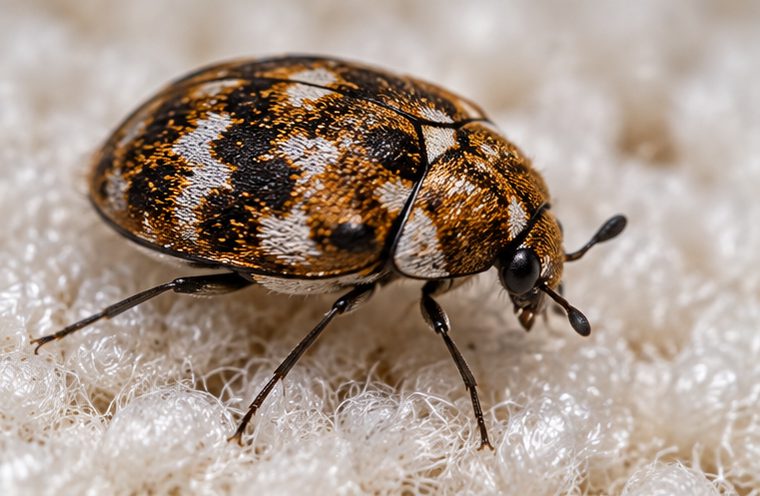
We start by looking rather than spraying. The technician checks carpet edges, under heavy furniture, airing cupboards, wardrobes, the loft and any stored rugs or blankets, searching for shed larval skins, live larvae, damaged fibres and adult beetles. Finding the source matters most, because treating the visible damage while an old nest or a bag of wool sits untouched in the loft would simply leave the beetles with a food supply.
Once we know where they are, we use a targeted treatment on the carpet edges, floor cracks and hiding places we found, and we explain what children and pets should avoid afterwards. We ask you to vacuum thoroughly, empty the cleaner outside, and wash anything washable on a hot cycle. A follow-up visit can be arranged if you are still seeing activity.
Prevention is mostly housekeeping. Vacuum edges and under furniture regularly, shake out and air rugs, and clean wool and silk before putting them away, since body oils and food marks attract larvae. Store woollens in sealed bags or lidded boxes, check pet bedding for hair build-up, and clear old nests from roof spaces. If you live in Great Dunmow and keep finding damage after cleaning, call us and we will look properly. We also cover Braintree, Saffron Walden and Chelmsford.
We cover towns and villages across Essex. Choose your area to see how carpet beetle control works locally.
Carpet beetle damage is often found before the insects are, so knowing what small holes, shed skins and thinning patches mean helps you act early.
Read the guide →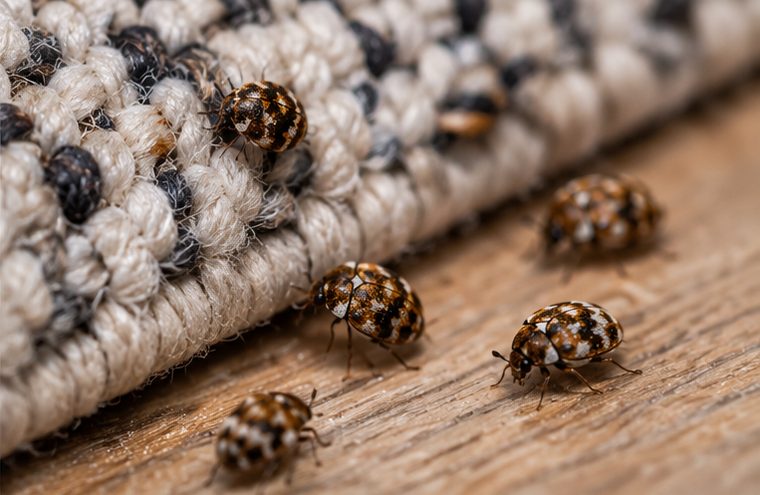
Once carpet beetles have been dealt with, steady cleaning habits, tidy storage and a few small repairs make it much harder for them to settle again.
Read the guide →
Most household pests leave clues behind, and learning to read droppings, damage, noises and timing will help you decide what you are dealing with and what to do next.
Read the guide →Yes. Larvae feed on wool and wool blends, and also on the dust, hair and food debris trapped at carpet edges, so a new carpet is not safe by itself. Synthetic carpets are less attractive, but underlay, felt and nearby fabrics can still be damaged. An inspection shows where they are really feeding.
Moth larvae leave silky webbing and tubes, while carpet beetle larvae are small and bristly and leave papery shed skins. Adult beetles are small, round and often found on windowsills. If you are unsure, send a clear photo or let the technician identify what is feeding, since the advice differs.
Not always. Washable items can be washed hot, and small items can sometimes be frozen to kill larvae. Badly eaten pieces are usually better thrown away. Rugs and upholstery that cannot be washed can be treated in place. We will tell you what is worth saving once we have seen it.
Tell us what you have found and roughly where it is. We will come back to you — or call 01245 327 274 if it is urgent.
