
Once carpet beetles have been dealt with, steady cleaning habits, tidy storage and a few small repairs make it much harder for them to settle again.
Carpet beetles return for three main reasons: something in the home is still feeding them, adults are flying in from outside, or a hidden source has been missed. A single dead insect trapped in a light fitting, a nest in the loft or a forgotten box of old woollens can sustain a population for a long time. Because the larvae live unseen under furniture and in cupboards, an outbreak can seem to disappear and then reappear months later. Preventing a repeat means removing food and hiding places, not just killing what you can see.
Dust, pet hair, skin flakes and lint are all food for the larvae, so the strongest long-term defence is removing them. Vacuum the full length of every skirting board, under beds and sofas, inside wardrobes and along the edges of carpets, where fluff collects. Move furniture occasionally rather than cleaning around it. Rugs that rarely get lifted deserve a turn over and a vacuum on both sides. Empty the cleaner outside into a sealed bag, because larvae and eggs can survive inside the dust container.
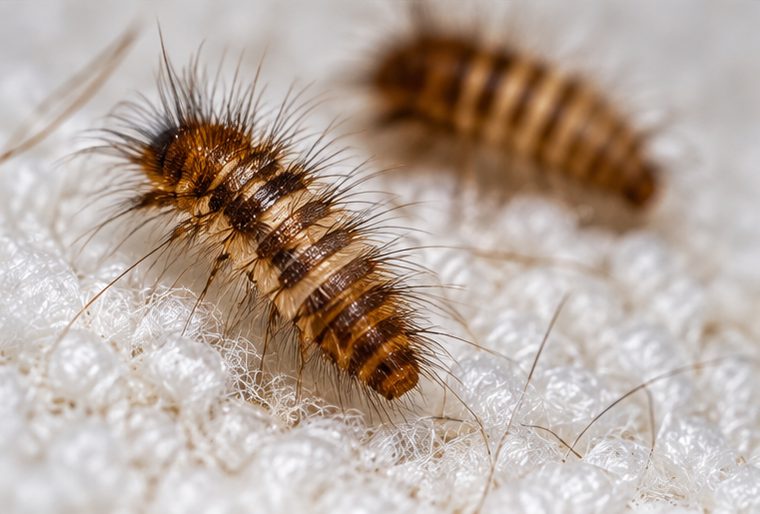
Clean items before they go into storage, because soiled or sweaty fabric is more attractive to pests. Wash or dry-clean wool, silk and fur, let them dry fully, and then keep them in sealed containers or tightly closed zip bags rather than loose in a drawer. Cardboard boxes are easy for larvae to enter, so plastic boxes with tight lids are a better choice. Check stored items at the change of each season, and do not forget the items kept for years, such as wedding clothes, old rugs and heirloom blankets.
Adult carpet beetles feed on pollen and nectar, so in spring and summer they are often found outdoors on flowers and may drift in through open windows. Cut flowers brought indoors can carry them too. Keep window screens or fly mesh in good repair where you can, and check the frames for gaps. Essex homes close to field edges, gardens and the Epping Forest fringe may see more adults at flowering time. Also look at the loft and eaves, since old nests and dead insects there can quietly feed larvae.
Pet hair collects in baskets, sofas and the corners of rooms, giving larvae a steady supply of food. Wash pet bedding regularly at a temperature the fabric allows, and vacuum the spots where your pets sleep and sit. Wash and air spare bedding and throws that sit unused in cupboards. If you are clearing out a relative's home or buying second-hand furniture, rugs or textiles, shake and inspect them outdoors and look for cast skins before bringing them into your house.
Do not rely on strong-smelling products or on spraying chemicals around the house as a way of keeping beetles away. Such products are no substitute for removing food and finding the source, and some are unsuitable for homes with children, pets or asthma. Avoid piling clothes and textiles on the floor of a wardrobe, where dust gathers underneath. Also resist ignoring one or two beetles on a window sill, because that can be the first sign of larvae feeding elsewhere in the building.
If beetles or cast skins keep appearing despite a good clean and sensible storage, there is probably a source you cannot reach, such as inside a wall cavity, under floorboards or in the roof space. That is the point to ask us to take a look. We can identify what you have, trace where it is feeding and carry out a proper treatment, and we will tell you plainly what you can do afterwards to keep it from returning.
If you would rather not deal with it yourself, call us on 01245 327 274 or send an enquiry below. You can also read more about our carpet beetle control service.
 BPCA Member
 CHAS Accredited
 Buy With Confidence
 Three Best Rated 2026
We cover towns and villages across Essex. Choose your area to see how carpet beetle control works locally.
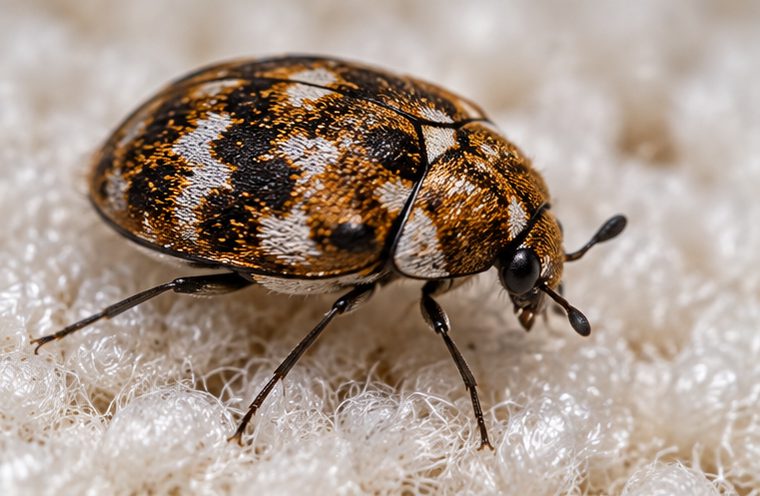
Carpet beetle damage is often found before the insects are, so knowing what small holes, shed skins and thinning patches mean helps you act early.
Read the guide →
Most household pests leave clues behind, and learning to read droppings, damage, noises and timing will help you decide what you are dealing with and what to do next.
Read the guide →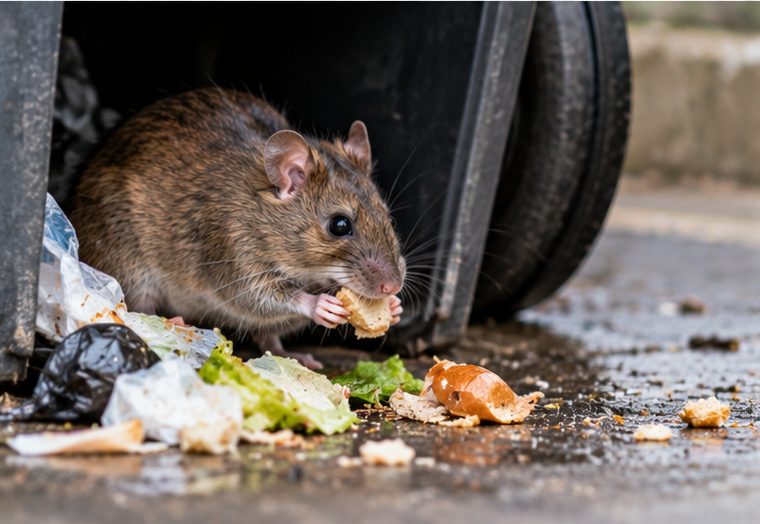
Rats are secretive and mostly active after dark, so the first clues are usually small marks and sounds rather than a sighting of the animal itself.
Read the guide →A quick check of the usual places every few weeks is enough for most homes: skirting edges, wardrobe floors, window sills and the underside of rugs. Look more closely in spring and summer, when adults are active, and whenever you take stored woollens or textiles out of a box or cupboard.
Scented sachets and similar products may be pleasant, but they do not remove the dust, hair and fabric that the larvae feed on, and they do not kill an existing problem. Treat them as a minor extra only. Regular cleaning and sealed storage make a far bigger difference.
Yes, vintage rugs, upholstered furniture, fur and old woollens can all carry larvae or eggs. Inspect these outdoors before bringing them in, look in folds and along seams for cast skins, and wash or clean washable items straight away. Isolate anything doubtful until you are confident it is clear.
Not necessarily. Flats and new-build homes can still have pet hair, textiles and dust, and beetles can travel between neighbouring properties through shared voids and ducts. Houses with lofts have extra places for hidden sources, but good cleaning and storage habits help in every type of home.
Tell us what you have found and roughly where it is. We will come back to you — or call 01245 327 274 if it is urgent.
