
Grays is a Thames-side town with a town centre, large residential estates and a busy riverside, with industrial and logistics sites close by. Carpet beetles can turn up in all of these settings, in family homes, rented flats, warehouses and offices. The signs are the same: tiny hairy larvae, hollow skins and holes in natural fibres.
We inspect to find the source, treat where larvae are active and give plain advice on laundering and storage. We cover both domestic and commercial customers in the town and around Thurrock, and we keep our advice plain and practical.
 BPCA Member
 CHAS Accredited
 Buy With Confidence
 Three Best Rated 2026

On large residential estates, houses and flats often share a similar layout across whole streets, with fitted carpets, built-in wardrobes and airing cupboards. If larvae establish themselves in one such area, they spread to rooms nearby. Carpet edges, under beds and behind sofas are where we usually find them first, along with wardrobe floors and the dusty gap beside a radiator, which are easy to overlook when cleaning.
In Grays, we also hear from people who find damage after moving in to a Grays property, because second-hand rugs, furniture or stored belongings can carry beetles with them. If something has been in storage or brought over from another house, check it before it goes into a bedroom or wardrobe, and wash or vacuum it first. Bagging suspect items until we have seen them stops larvae wandering into other rooms.
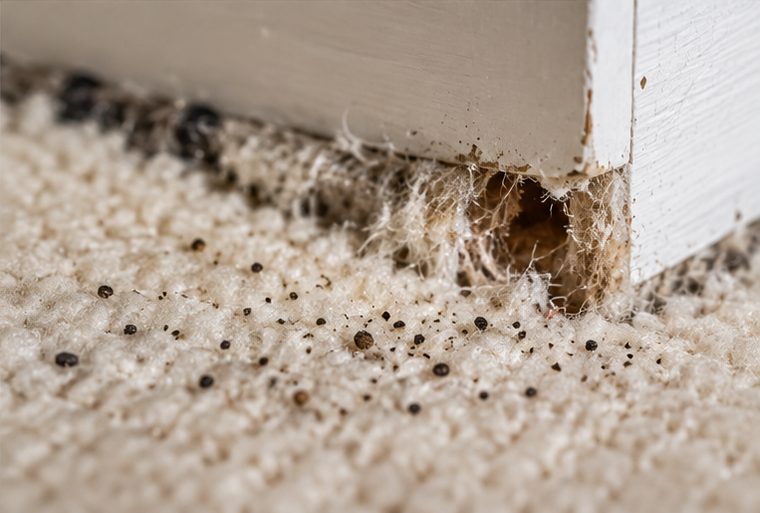
Industrial and logistics sites near the river handle large volumes of goods, packaging and sometimes natural-fibre products such as sacking, felt or wool. Carpet beetles can use stored dried goods, textiles, rugs and dust build-up as food, often in corners that are cleaned only rarely. An office with carpets and soft furnishings is no different from a home in this respect, particularly where cleaners cannot reach under heavy furniture or racking.
We inspect the premises, find where larvae are active and treat those areas. We then suggest practical changes to storage, stock rotation and cleaning so the site is easier to keep clear. Grays businesses with several units can ask us to check each in one visit. Our service covers RM16 and RM17, and we also cover Brentwood, Basildon and Billericay for customers just outside Grays, so just tell us where you are.
After we treat, vacuum thoroughly along edges and under furniture, then empty the cleaner outside. Wash what you can on a hot setting, and keep clean woollens in sealed containers. In a Grays home or workplace, repeat the checks a few weeks later. If you see more shed skins or larvae, get in touch and we will look again.
We cover towns and villages across Essex. Choose your area to see how carpet beetle control works locally.

Carpet beetle damage is often found before the insects are, so knowing what small holes, shed skins and thinning patches mean helps you act early.
Read the guide →Once carpet beetles have been dealt with, steady cleaning habits, tidy storage and a few small repairs make it much harder for them to settle again.
Read the guide →
Most household pests leave clues behind, and learning to read droppings, damage, noises and timing will help you decide what you are dealing with and what to do next.
Read the guide →Adult carpet beetles are about the size of a pinhead to a few millimetres, round and often patterned. Other small beetles exist, so a sample helps. If you can catch one in a tissue or tape, we can identify it, and we can inspect for larvae too.
Yes. They can feed on natural fibres, dried goods and dust build-up in stores. We inspect storage areas, look at stock and packaging, treat where needed and give advice on cleaning and rotation that can be built into normal routines.
It helps if clothing is accessible, but you do not need to empty everything. We will look in wardrobes, at the floor edges and in storage. Items you suspect are affected can be bagged beforehand so they are easy to check.
Tell us what you have found and roughly where it is. We will come back to you — or call 01245 327 274 if it is urgent.
