
Carpet beetle damage is often found before the insects are, so knowing what small holes, shed skins and thinning patches mean helps you act early.
Carpet beetle larvae feed on natural fibres and animal-based materials, so the damage turns up wherever those are found. Wool carpets and rugs, woollen jumpers, silk, felt, fur, feathers and old upholstery are all targets, as are the dust, pet hair and lint that gather in forgotten corners. Because the larvae prefer dark, undisturbed places, the first sign is usually under furniture, along skirting boards, inside wardrobes or at the back of a drawer. Older Essex houses with suspended timber floors and gaps beneath the skirting give them plenty of quiet places to settle.
Feeding damage is usually irregular rather than neat. You may see small ragged holes in a woollen garment, a thinning or bald patch in a rug where the pile has been grazed down to the backing, or a bare strip along the edge of a carpet where it meets the wall. Unlike a tear or a snag, the edges look chewed and slightly frayed. The damage is often hidden on the underside of a rug or in the folds of stored clothing, so lift and turn items over when you check.
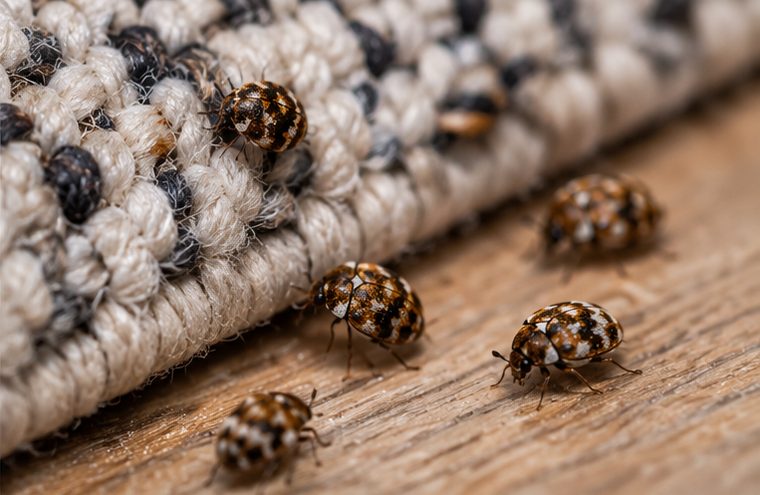
The insects leave evidence as they grow. Larvae are small, hairy and brownish, often with pale bands, and they shed their skins several times before becoming adults. These papery cast skins, sometimes shaped like a tiny empty larva, are one of the most reliable signs and tend to collect in corners, on window sills and at the bottom of wardrobes. You may also notice tiny dark specks of droppings. The adult beetles are small and rounded, and are sometimes found on window sills in spring and summer, drawn towards the light.
Clothes moth damage can look similar, which is why people often blame the wrong insect. Moth larvae tend to leave silky webbing or small tubes of silk and fibre on the cloth, while carpet beetle larvae do not spin webbing. Beetle larvae are also bristly and move about freely, whereas moth caterpillars are smooth and pale. Identifying the culprit matters because the clean-up differs a little, and a wrong guess can mean you keep treating the wrong problem while the damage continues. If you are unsure, keep a shed skin or larva in a sealed container.
Start by finding the source. Vacuum thoroughly along skirting boards, under furniture, inside wardrobes and in the gaps where floorboards meet walls, paying particular attention to places with pet hair and dust. Empty the vacuum outside afterwards and seal the contents in a bag. Wash washable fabrics at the hottest temperature the label allows, and tumble dry where suitable, since heat kills the larvae. Items that cannot be washed can be sealed in a bag and left in a freezer for a couple of weeks.
Avoid scattering shop-bought powders or spraying chemicals across carpets and bedding. They can be unpleasant to breathe, unsuitable around children and pets, and they rarely reach the hidden places where larvae live. Do not throw out whole wardrobes of clothing without checking first, as damage is often limited to a few items. Equally, do not ignore a handful of cast skins: they mean larvae have been feeding nearby, and the problem is unlikely to resolve itself without attention.
Get in touch if you keep finding larvae or skins after a proper clean, if the damage is spreading from room to room, or if you suspect a hidden source such as a nest or a build-up of dead insects in a loft or wall cavity. These are hard to reach safely and are often what keeps an outbreak going. We will identify the insect, find where it is coming from and treat it carefully, then advise on keeping the problem from coming back.
If you would rather not deal with it yourself, call us on 01245 327 274 or send an enquiry below. You can also read more about our carpet beetle control service.
 BPCA Member
 CHAS Accredited
 Buy With Confidence
 Three Best Rated 2026
We cover towns and villages across Essex. Choose your area to see how carpet beetle control works locally.
Once carpet beetles have been dealt with, steady cleaning habits, tidy storage and a few small repairs make it much harder for them to settle again.
Read the guide →
Most household pests leave clues behind, and learning to read droppings, damage, noises and timing will help you decide what you are dealing with and what to do next.
Read the guide →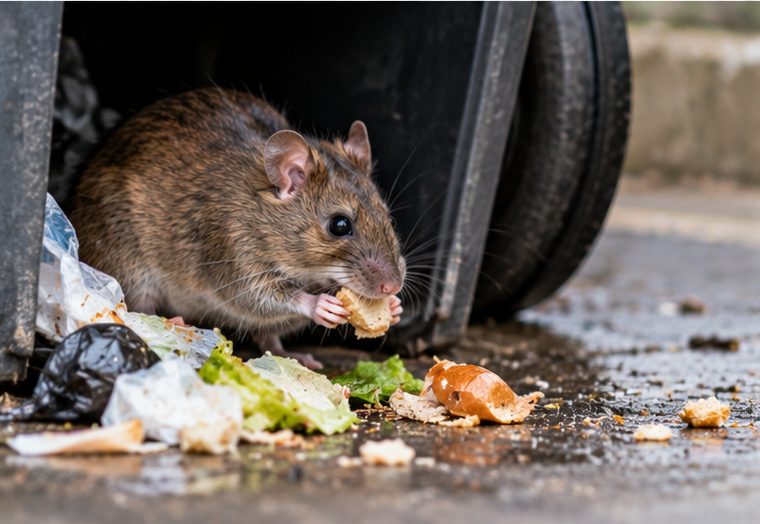
Rats are secretive and mostly active after dark, so the first clues are usually small marks and sounds rather than a sighting of the animal itself.
Read the guide →Synthetic fibres are rarely eaten on their own, but larvae will still feed on the dust, hair and lint trapped within them. Mixed fabrics, such as wool blends, are at more risk. Damage to a purely synthetic carpet is usually a sign that something else nearby, such as an underlay or stored woollens, is feeding them.
Carpet beetles do not bite or sting and do not carry disease. Some people react to the tiny hairs on the larvae, which can cause itchy red marks on the skin that are sometimes mistaken for bites. If you have a persistent rash and cannot explain it, speak to your doctor.
Fresh cast skins, new droppings or newly chewed fibres after you have cleaned mean larvae are still feeding. Old damage does not spread, so mark the edge of a bare patch or place a clean piece of dark cloth nearby and check again in a couple of weeks.
Chewed fibres cannot regrow, so holes and bald patches are permanent, although a skilled repairer may be able to mend valued items. The important step is stopping further damage. Once the source is dealt with and the area cleaned, the remaining items can be kept safely.
Tell us what you have found and roughly where it is. We will come back to you — or call 01245 327 274 if it is urgent.
