
Carpet beetles are small, rounded beetles, but it is their larvae that cause the trouble. They feed on wool, fur, feathers, silk, leather, dried food and pet hair, and they do it quietly, often out of sight. By the time holes appear in a jumper or a carpet edge, the problem has usually been building for a while.
We help householders, landlords and holiday let owners across Essex. Our technicians travel from our base near Chelmsford, find where the beetles are living, explain it in plain terms, and agree the price with you before any work starts. Then we tell you what to clean.
 BPCA Member
 CHAS Accredited
 Buy With Confidence
 Three Best Rated 2026
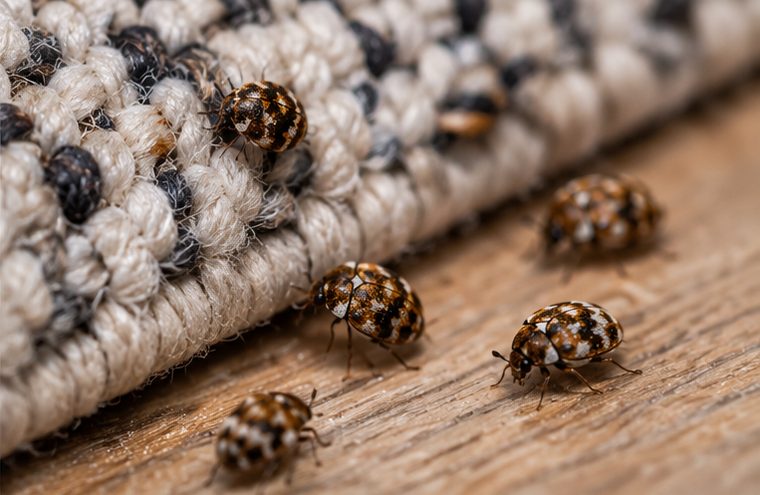
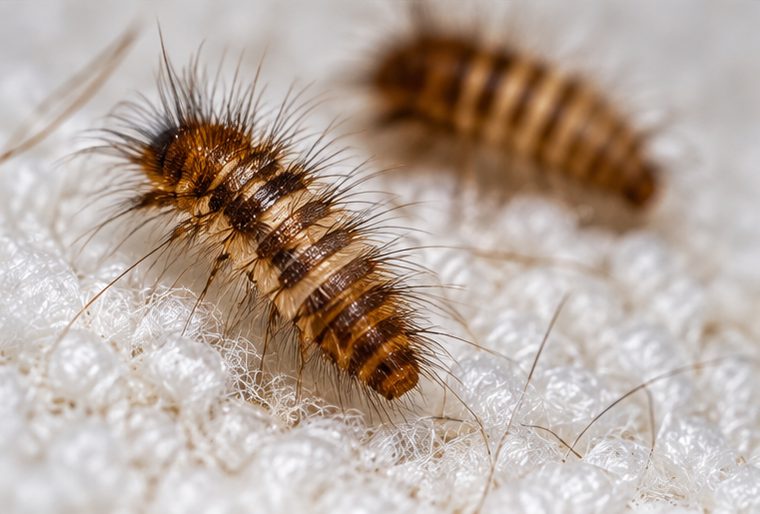
Look for small, bristly, brownish larvae and for shed larval skins, which look like tiny pale husks, often in corners and along skirting boards. Damage tends to show as ragged carpet edges, thin patches under furniture, and irregular holes in woollens, rugs, throws and stored clothing. The damage is often found in places that rarely get moved or cleaned, so check under sofas and beds. Clothes stored in a spare room for years are another favourite spot for them.
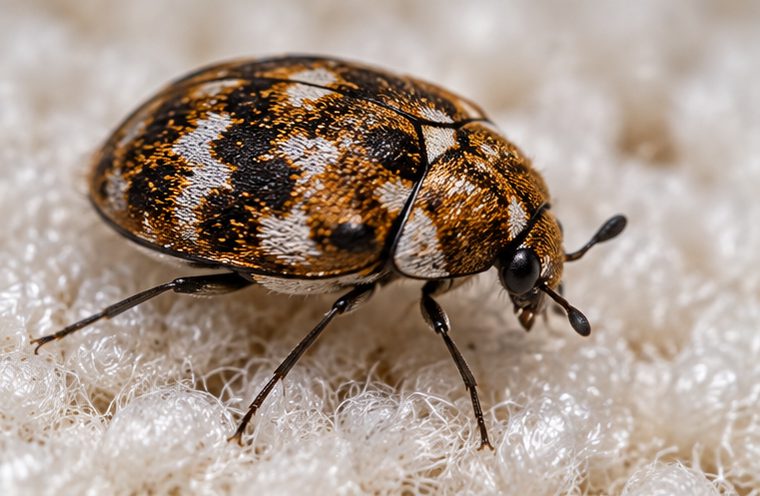
Adult beetles are tiny and often turn up on windowsills in spring and summer, as they head for light and flowers. Seeing a few adults indoors is a sign that eggs may have been laid nearby. They do not bite, but the larval hairs can irritate some skin, so it is worth dealing with the problem early rather than waiting for the damage to spread. Spotting a handful early makes treatment simpler and cheaper to carry out. Keep any larvae you find in a sealed pot so we can identify them.
They favour undisturbed places: under heavy furniture, along skirting boards, in airing cupboards, behind radiators, and in loft insulation where old nests of other creatures have left feathers and debris behind. Pet bedding and lint in floor gaps give them plenty to eat, and a single forgotten box of wool or fur can keep a colony going for months. Dead insects collecting in light fittings and window frames can also feed them. Wardrobe floors are worth checking too.
We begin with an inspection to find the source, since treating the wrong area wastes everyone's time. We then apply a targeted treatment to the affected spots, and explain what vacuuming and cleaning you should do around it. If the source is a loft nest or a stored item, we say so plainly and help you decide what to do next. Because larvae are slow and hidden, we usually suggest a check afterwards to confirm that the activity has stopped.
Thorough, repeated vacuuming is one of the most useful tools, especially along edges, under furniture and in cupboards. Wash what can be washed at a hot setting, and store woollens and other natural fibres cleaned, dry and sealed in containers or bags. Clear out old fabric and stored items you no longer need, as they only give larvae somewhere to feed. Do the same with rugs, which can be shaken out, vacuumed on both sides and aired.
Essex has older houses with floor gaps and lofts, newer homes with fitted carpets, and plenty of rented flats and holiday lets where items may be left in storage between guests. The same approach suits each of them, and we can plan follow-up checks if the activity looks like it has settled in for the long term in a property. Tell us how long a room has been empty or how the building is used, as that helps us decide where to look first.
We cover towns and villages across Essex. Choose your area to see how carpet beetle control works locally.
Carpet beetle damage is often found before the insects are, so knowing what small holes, shed skins and thinning patches mean helps you act early.
Read the guide →Once carpet beetles have been dealt with, steady cleaning habits, tidy storage and a few small repairs make it much harder for them to settle again.
Read the guide →
Most household pests leave clues behind, and learning to read droppings, damage, noises and timing will help you decide what you are dealing with and what to do next.
Read the guide →No. Both damage natural fibres, but they are different insects with different larvae. Carpet beetle larvae are small and bristly, while clothes moth larvae live in silky webbing. We identify which one you have, because the treatment and the cleaning advice differ.
Vacuuming helps a great deal, particularly along edges and under furniture, but it often leaves hidden sources behind, such as a loft nest or stored fabric. We find the source first, treat the right areas, and then advise on cleaning so it works.
Wash what you can at a hot setting, and seal cleaned woollens in bags or containers afterwards. Items that cannot be washed should be bagged and kept apart until we have inspected. Throw out anything badly damaged that you do not need.
Yes. Landlords and holiday let owners often find beetles in carpets and stored bedding between stays. We inspect, treat and explain what the property needs, so you can pass practical advice on to cleaners, caretakers and tenants without any confusion. We are happy to explain it all.
Tell us what you have found and roughly where it is. We will come back to you — or call 01245 327 274 if it is urgent.