
Witham has a town centre, retail areas, a railway station, industrial units, newer estates and farmland around it, and moths turn up in all of them. We provide moth control in Witham for households, shops and businesses, and we start by identifying whether you have clothes moths, carpet moths or pantry moths.
A good result starts with finding where the larvae are feeding, not with spraying at random. We look carefully, tell you what we have found and agree a sensible plan before any treatment is carried out in your Witham home or premises.
 BPCA Member
 CHAS Accredited
 Buy With Confidence
 Three Best Rated 2026
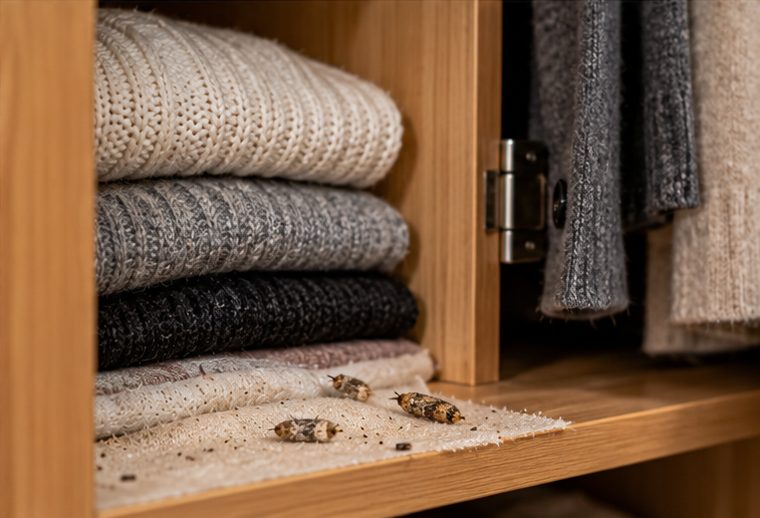
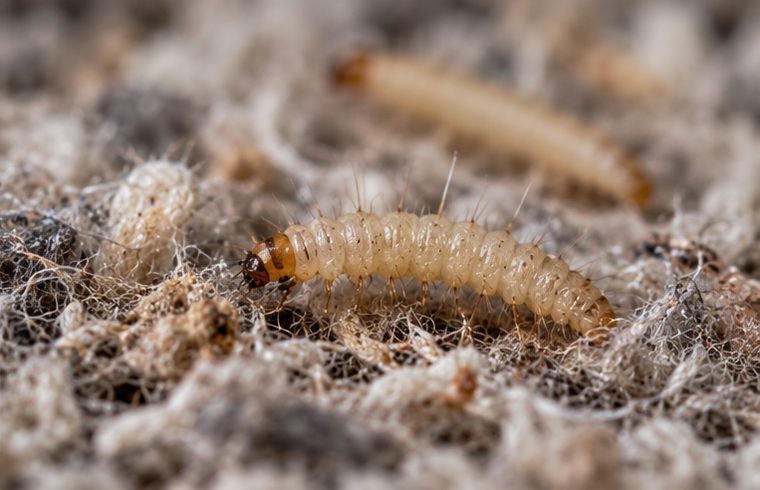
With a railway station in town, many Witham households have people out all day, and rooms such as spare bedrooms or box rooms may be opened rarely. Moth larvae thrive in that stillness. They feed on wool, cashmere, silk, felt and the lint and pet hair along carpet edges, leaving ragged holes, silky webbing and small cases that are easy to miss unless you know exactly what you are looking for and where to look.
We check wardrobes, drawers, under beds, stair carpets, sofas and lofts. Seasonal storage is a regular culprit: winter coats put away in spring, or wool blankets in a chest all summer. If a rug or piece of second-hand furniture came into the house shortly before the damage appeared, we pay particular attention to it, because it is often the starting point for the whole infestation.
Commercial premises have their own moth risks. Retail units holding woollen clothing, soft furnishings or carpet stock can suffer slow, hidden damage that only shows when goods are moved or sold, while storerooms with flour, grain, seeds or pet food attract pantry moths. In Witham's industrial units, dry goods stored on pallets for long periods are easy to overlook until webbing appears.
We inspect stock, shelving, storage racks and packaging, advise on rotation and cleaning, and treat the affected areas carefully. Pheromone traps give a running picture of activity, which is useful for businesses that need to show they are keeping on top of things. We keep our written findings clear and brief so managers can act on them quickly, and we explain anything that needs to be thrown away, cleaned or moved before treatment.
In the meantime, bag up any clothing you suspect and hot wash or freeze what will take it, vacuum carpet edges and wardrobe floors, and bin any open food packets with webbing in them. Do not throw everything out before we have looked. We cover Witham, CM8, and the surrounding area including Maldon and Braintree, and are happy to talk through your situation first.
We cover towns and villages across Essex. Choose your area to see how moth control works locally.
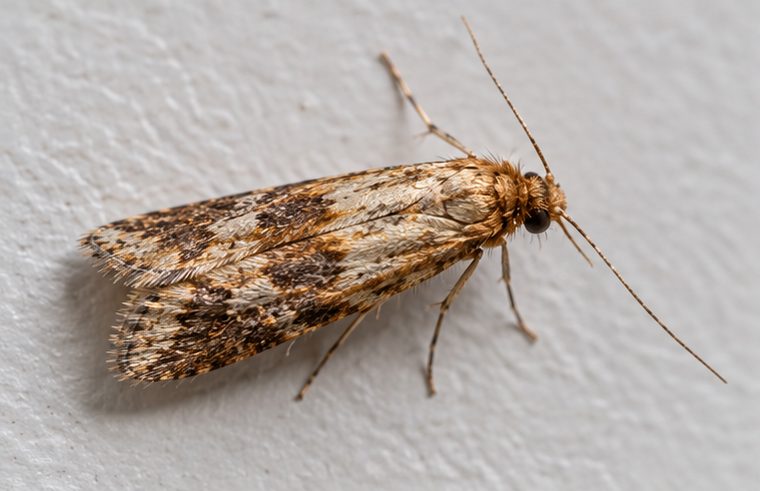
Clothes moths damage natural fabrics quietly, so by the time holes appear the problem has often been developing for weeks in a dark, undisturbed corner.
Read the guide →Moth larvae thrive on natural fibres left in dark, still places, so protecting wool and carpets comes down to cleanliness, airflow and sensible storage.
Read the guide →
Most household pests leave clues behind, and learning to read droppings, damage, noises and timing will help you decide what you are dealing with and what to do next.
Read the guide →Natural fibre stock such as wool, felt and carpet attracts clothes and carpet moths, while dry food, grain and seed attract pantry moths. Long storage, little movement and warm, dusty corners all help them. Regular stock checks catch problems early.
A look every few months is sensible, especially for stored wool and anything you do not wear often. Check folds, seams and the wardrobe floor for webbing, cases or droppings. Catching it early means far less damage and simpler treatment.
No. They attract adult male moths and are mainly a monitoring tool, showing whether moths are present and whether numbers fall after treatment. Larvae still need to be found and dealt with, which is why we use traps alongside inspection and treatment.
Tell us what you have found and roughly where it is. We will come back to you — or call 01245 327 274 if it is urgent.
