
If you have found small holes in knitwear, a thinning patch of carpet or tiny moths in the pantry, you want an answer rather than guesswork. We provide moth control in Wickford for householders and small businesses, and we begin by identifying the type of moth and tracing where the larvae are feeding.
Wickford is a commuter town with a high street, newer estates and open land around it. Busy households mean wardrobes are packed, and stored clothes can be left alone for months. That quiet is what moths need, so we look in the places that are seldom opened.
 BPCA Member
 CHAS Accredited
 Buy With Confidence
 Three Best Rated 2026
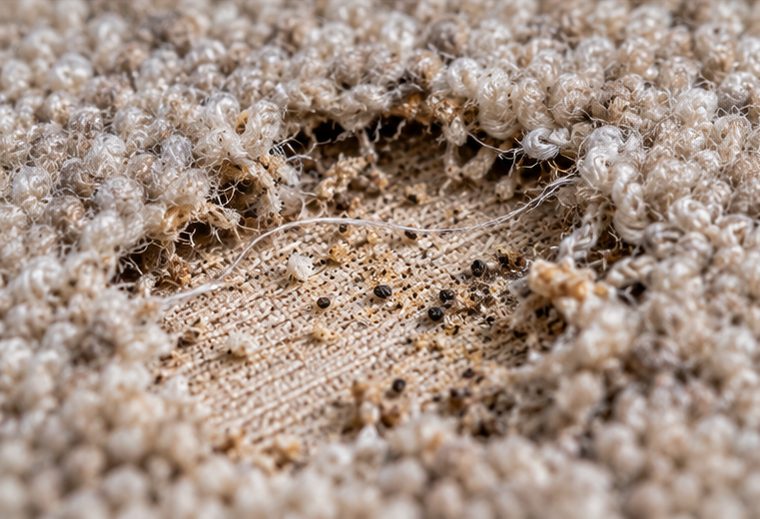
Modern houses are well insulated and heated, with fitted wardrobes, carpeted bedrooms and often a loft full of boxes. For clothes moths and carpet moths that is a comfortable environment all year round. A bag of second-hand clothes, a charity-shop rug or a secondhand sofa is enough to bring them in, and from there they spread slowly from room to room, mostly unnoticed until a favourite jumper is ruined.
We work through the house in a sensible order: bedrooms and wardrobes first, then carpet edges, under furniture, stairs, spare rooms and the loft. We look for ragged holes, silky webbing, tiny larval cases and droppings. In Wickford, where many households commute and rooms may go unused through the week, an infestation can be well advanced before anyone spots it, with damage spread across several wardrobes.
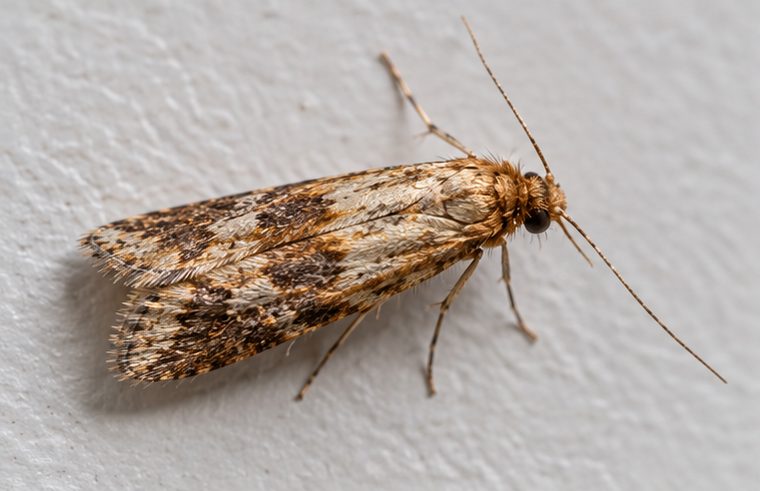
We explain what we found, where it is likely to have started and which areas need treatment. Then we treat the affected wardrobes, carpets and furniture with professional products, applied carefully and away from food, children and pets. If you prefer, we talk you through the washing and freezing needed so that you can do it yourself at your own pace, and tell you which items are worth saving.
Sealed storage is the final piece. Clean clothes in zipped bags or boxes with tight lids give moths nothing to reach. We use pheromone traps to monitor activity in the weeks after treatment, and we return if the traps keep catching. Honest follow-up matters more to us than a quick job in Wickford that turns out not to hold once the weather warms and the larvae become active again.
Moths in the kitchen are a separate matter. Pantry moths breed in flour, cereals, rice, pasta and dried fruit, and the cure starts with checking and clearing every packet. We help homes and food businesses with that in Wickford, SS11 and SS12, and we also visit Basildon and Billericay. Describe what you are finding and we can tell you what it probably is.
We cover towns and villages across Essex. Choose your area to see how moth control works locally.
Clothes moths damage natural fabrics quietly, so by the time holes appear the problem has often been developing for weeks in a dark, undisturbed corner.
Read the guide →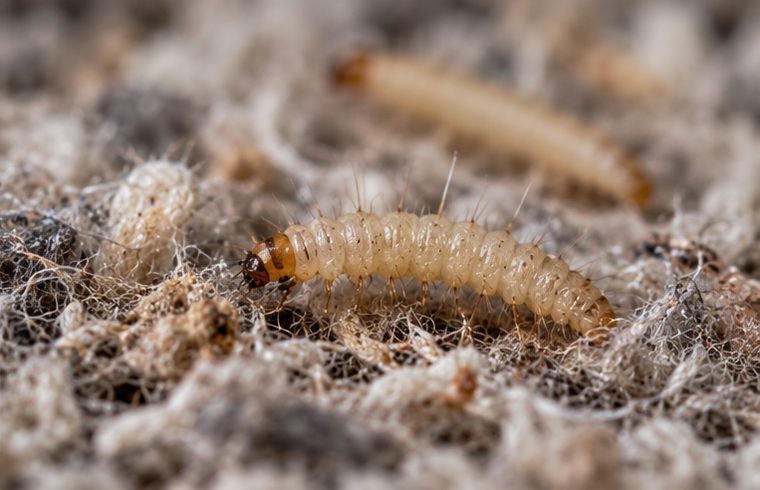
Moth larvae thrive on natural fibres left in dark, still places, so protecting wool and carpets comes down to cleanliness, airflow and sensible storage.
Read the guide →
Most household pests leave clues behind, and learning to read droppings, damage, noises and timing will help you decide what you are dealing with and what to do next.
Read the guide →They can. Moths do not mind the age of the house, only whether there is wool, fur or other natural fibre to eat and a dark, undisturbed corner. Clothes stored for long periods at the bottom of a wardrobe are the usual target.
Not always. Many moths are harmless outdoor species that wander in. It becomes a concern if you also see webbing, cases or damage on stored woollens, blankets or insulation-adjacent fabrics. We can inspect and tell you which it is.
Cleaning helps, particularly vacuuming carpet edges and wardrobe floors, but a tidy house can still have moths if stored woollens are infested. Regular checks, sealed storage and washing before packing away do the most to prevent a problem.
Tell us what you have found and roughly where it is. We will come back to you — or call 01245 327 274 if it is urgent.
