
Flying ants are the winged males and young queens of an ant colony, and their sudden summer swarms are usually short lived and harmless.
Flying ants are not a separate kind of ant. They are the winged reproductive males and new queens from a mature colony, leaving the nest to mate. Once the nuptial flight is over, the males die and each fertilised queen sheds her wings and looks for a place to start a new colony. Because the colony sends them all out at once, the effect can be dramatic, with hundreds of insects on a pavement, window or wall in a single afternoon, which is often what alarms people. Knowing this makes them far less worrying.
Swarms usually follow warm, humid, still weather in summer, often after rain. Neighbouring colonies tend to release their winged ants at about the same time, which improves the chance of mating. That is why a whole street, or an Essex town and its surrounding fields, can seem to fill with them within hours of each other. The event is often over within a few hours, though some years bring several flights over a few weeks, each one triggered by another spell of warm and muggy weather.
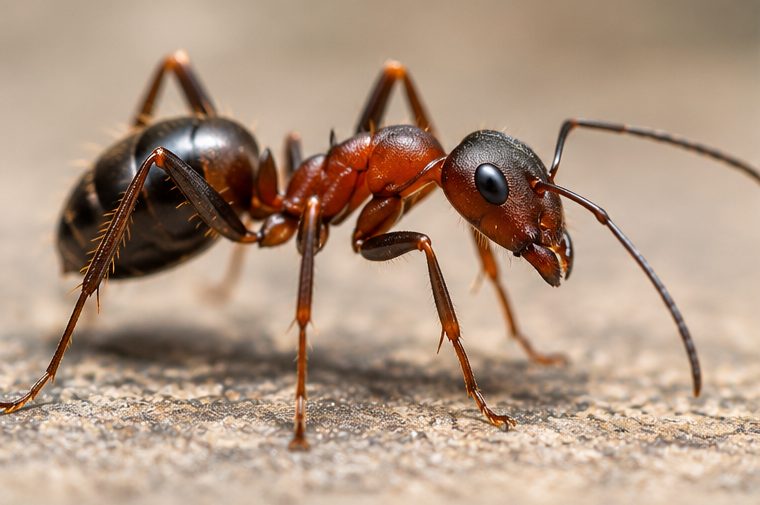
People sometimes worry that flying ants are something more serious. Ants have a narrow, pinched waist, elbowed antennae and two pairs of wings of unequal size, the front pair longer. Termites have a thick, straight body and wings of equal size. Termites are not a normal worry in Essex homes. If you are unsure, catch one on sticky tape and send us a clear photo, and we can tell you quickly what you are dealing with and whether anything needs doing.
If they come inside, stay calm. Close the windows nearest the swarm, switch off lights that draw them at dusk, and gently vacuum up the insects, emptying the cleaner into a sealed bag outside. They are not dangerous and rarely bite. Wipe any surfaces they have crossed and sweep up the wings that drop. Resist the urge to spray the room heavily, because the winged ants will be gone soon enough and the spray only adds chemicals to your home.
Outdoor swarms from patios, lawns and paving are normal and do not need action. The concern is when winged ants emerge indoors, from skirting boards, windowsills, a kitchen or a loft. That points to a colony nesting inside the building, which will not stop on its own. Repeated emergences in the same room, piles of discarded wings, or ants appearing out of season are all signs that the nest is within the structure and should be looked at.
We trace where the ants are entering or emerging, identify the species, and treat the colony itself rather than only the visible insects. This is particularly worth doing when the nest is in a wall cavity, under a floor or against the foundations, where DIY products seldom reach. Please do not try to dig out or flood a nest near the house. It can push the colony into the building and makes the problem harder to trace and treat. Early action also stops a colony growing large enough to send out repeated swarms.
To lower the chance of a repeat, seal gaps around doors, windows and pipes, repair crumbling mortar, and keep paving joints and borders tidy near the house. Fixing damp areas also makes the building less attractive to nesting ants. Older houses with worn brickwork and newer homes with settling gaps both offer ways in, so a yearly walk round the outside, ideally before summer, is a sensible habit. Tidy borders and clear leaf litter against walls, since colonies often nest where the ground is sheltered and warm.
If you would rather not deal with it yourself, call us on 01245 327 274 or send an enquiry below. You can also read more about our ant control service.
 BPCA Member
 CHAS Accredited
 Buy With Confidence
 Three Best Rated 2026
We cover towns and villages across Essex. Choose your area to see how ant control works locally.

A line of ants across the worktop usually means a scout found food and told the nest, and a few simple habits can break that chain.
Read the guide →
Most household pests leave clues behind, and learning to read droppings, damage, noises and timing will help you decide what you are dealing with and what to do next.
Read the guide →
Rats are secretive and mostly active after dark, so the first clues are usually small marks and sounds rather than a sighting of the animal itself.
Read the guide →Flying ants of the common garden type rarely bite and are not dangerous. A few may nip if handled, but it is mild. The main nuisance is their numbers and the wings that drop onto windowsills, pavements and floors during a swarm.
Usually only a few hours, and often less. Winged ants leave the nests when conditions suit them, mate, and disperse. There can be further flights over a couple of weeks, but each one tends to be brief and then fades away entirely.
Not necessarily. If they appear outside, the nest is likely under paving or lawn nearby and is part of normal ant life. If they emerge from inside your home in numbers, a nest may be within the building and deserves a proper inspection.
You can reduce it. Keep windows closed during a swarm, fit fine mesh to vents, seal gaps around frames and pipes, and turn off bright lights near open doors. These steps help but cannot promise that none will wander in during a heavy flight.
Tell us what you have found and roughly where it is. We will come back to you — or call 01245 327 274 if it is urgent.
