
A line of small black ants crossing the kitchen floor is one of the most common calls we get in Billericay, and it is rarely a one-off. The ants you see are workers sent out from a nest, and until that nest is found and treated they will keep coming back, however often the trail is wiped away.
Billericay mixes an older high street and roads of homes from different periods with open countryside close to the edge of town. If you are in CM11 or CM12 and ants are in the house, the garden or a commercial premises, we will work out where they are living and what is drawing them in.
 BPCA Member
 CHAS Accredited
 Buy With Confidence
 Three Best Rated 2026

Properties of different ages give ants different opportunities. Older brickwork can have crumbling mortar, gaps behind pipes and loose air bricks, all of which give workers an easy route from a garden nest into a wall cavity or under a floor. Newer extensions bring their own joints, where new meets old and a thin gap can run the full height of the wall.
With fields and gardens close at hand in Billericay, nests are often in lawn edges, flower beds, raised borders and beneath paths, then spread towards the house as the weather warms. Ants tend to enter at ground level, so we start by checking door thresholds, drain covers, the base of walls and anywhere a pipe or cable passes through the brick, since those small openings are where ants most often slip inside unnoticed.
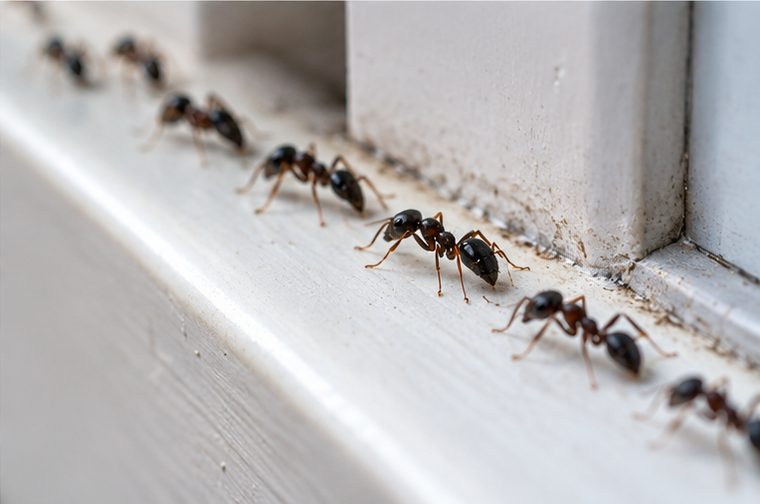
We begin by watching the trail and following it to both ends: where the ants come in and where they are heading out. That tells us whether the nest is in the garden, in the structure, or in some cases a warm part of the building. We confirm the species, because it changes the approach, and explain what we have found in plain terms before we start.
Treatment is aimed at the colony instead of the ants on view. Products are placed where workers will pick them up and carry them back, so the effect reaches the nest itself. Expect ant numbers to look worse before they improve, and please leave the trail alone rather than spraying across it. We will then seal what we can around the Billericay property and arrange to check in if the problem continues.
In a Billericay kitchen, the habits that matter most are simple: wipe up sugary spills straight away, store sweet foods and pet food in sealed tubs, and take the bin out before it overflows. In the garden, avoid piling old paving or timber against the house wall, because those piles shelter nests close to the building. We also cover Wickford and Brentwood, and we are glad to talk through your own situation before anyone visits.
We cover towns and villages across Essex. Choose your area to see how ant control works locally.
A line of ants across the worktop usually means a scout found food and told the nest, and a few simple habits can break that chain.
Read the guide →
Flying ants are the winged males and young queens of an ant colony, and their sudden summer swarms are usually short lived and harmless.
Read the guide →
Most household pests leave clues behind, and learning to read droppings, damage, noises and timing will help you decide what you are dealing with and what to do next.
Read the guide →Not always. Winged ants appear on warm summer days when a mature nest releases new queens and males, and the nest may be under a patio or lawn. If they emerge from a wall, floor edge or inside a room, the nest is probably in the structure and needs treating.
Garden ants do not eat timber or brick, so they rarely cause structural damage. Their problem is contamination of food and the nuisance of constant trails. Nests under floors or in cavity walls can loosen soil and fill gaps with debris, which is another reason to find the nest rather than only treat what you can see.
It varies with the size of the nest and the weather, but many people notice a drop in activity within days, with the trail fading over a week or two. A short rise in numbers at first is normal. If ants are still active after that, tell us and we will check again.
Tell us what you have found and roughly where it is. We will come back to you — or call 01245 327 274 if it is urgent.
