
Southend-on-Sea is a dense seaside city with rows of terraces, converted flats, guest houses and busy takeaways, and ants find their way into all of them. A trail in a flat kitchen may start in a yard three doors down, and one in a takeaway may come from the bin store. We follow the line and find the nest.
We work with residents, landlords, managing agents and business owners. Each has a slightly different concern, from speed to evidence of what was done. We explain what we find in plain terms, set out the plan and agree it with you before any treatment is carried out.
 BPCA Member
 CHAS Accredited
 Buy With Confidence
 Three Best Rated 2026

In a converted house or block in Southend-on-Sea, ants can travel between flats through shared walls, pipe runs and floor voids, so the kitchen where you see them may not be where they live. Small paved yards and shared front gardens often hold nests too, tucked under slabs or against a boundary wall. Warm, dry corners beside boilers and pipe ducting are popular with them too.
We start with where you have seen activity and work outwards, checking neighbouring walls, bin areas and communal spaces where we can. If the nest turns out to be in a shared area, we can give you a clear summary to pass to the landlord or agent. Treating one flat only may help briefly, but a lasting fix needs the source to be found.
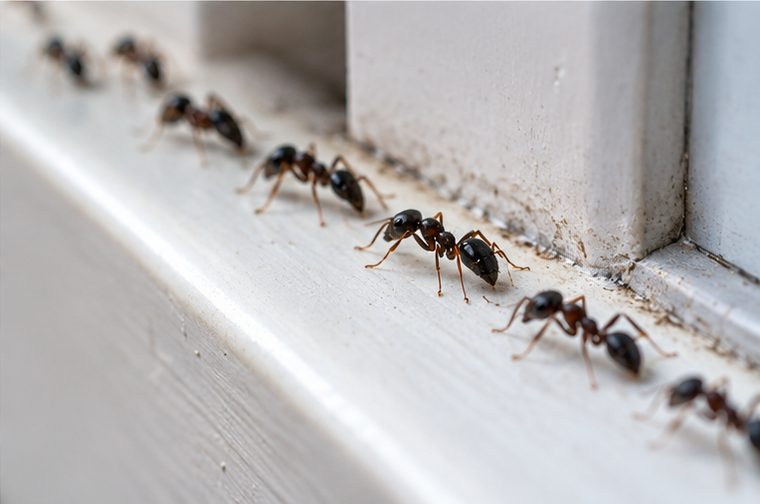
Food outlets along the Southend-on-Sea seafront and the busy streets behind it have sugar, grease, drinks and waste all day long, which is exactly what ants look for. Warm weather makes it worse, as colonies grow faster. Guest houses add breakfast rooms, laundry stores and rooms where guests leave snacks. One guest finding ants can be a bigger problem than the ants themselves.
Because of this, we aim to be discreet and efficient. We inspect kitchens, stores and bin yards, find the entry points and treat in a way that keeps preparation areas clear. We note what was found and done, which helps if you are asked about pest control. Where a problem returns, we look again at the cause. We try to keep any disruption to trading to a minimum.
Seal food, empty bins often and keep outside bin areas tidy and washed. Wipe tables and counters at close, and rinse drinks cans and bottles before recycling. If you are in Southend-on-Sea (SS0 to SS3) and ants keep appearing, ask us to check the building rather than treating one room at a time. We also cover Leigh-on-Sea and Rochford.
We cover towns and villages across Essex. Choose your area to see how ant control works locally.
A line of ants across the worktop usually means a scout found food and told the nest, and a few simple habits can break that chain.
Read the guide →
Flying ants are the winged males and young queens of an ant colony, and their sudden summer swarms are usually short lived and harmless.
Read the guide →
Most household pests leave clues behind, and learning to read droppings, damage, noises and timing will help you decide what you are dealing with and what to do next.
Read the guide →Ants follow food and warmth, so your kitchen may simply be the first or easiest place they have found. The nest is often outside or in a shared wall, and neighbours may see them soon. Tracing the trail shows whether the problem is yours alone or shared.
Inspectors look for signs of pests and for evidence that you deal with them. Keeping a note of visits and what was done is useful. We can tell you what we found and did, so you have a clear record to show if asked.
If ants are present, treatment should not wait, but it can usually be planned around room use. We check affected rooms, kitchens and stores, treat what is needed and tell you when rooms can safely go back into use. Early action avoids complaints.
Tell us what you have found and roughly where it is. We will come back to you — or call 01245 327 274 if it is urgent.
