
Ants turn up in Grays kitchens, bin stores and warehouse canteens alike, and they are rarely there by chance. Something sweet, a warm spot and a small gap are all they need. We follow the trail to the nest, treat it where it lives and show you what let them in, whether it is a home or a business.
Grays is a Thames-side town in Thurrock with a town centre, large estates, a busy riverside and industrial and logistics sites nearby. In RM16 and RM17 we are called to houses, flats and units, and the approach is always to identify the ants first and agree the plan before work begins.
 BPCA Member
 CHAS Accredited
 Buy With Confidence
 Three Best Rated 2026

Large estates mean rows of similar homes with similar gardens, so when ants start in one it is not unusual to find them in the next. Patios, paved drives and lawn edges give nests shelter and warmth, and the back door is usually the first place the trail meets the house. In flats, ants often travel along shared pipes and ducts, so the nest may be nowhere near the kitchen where you see them.
We follow the trail and look at the base of the walls, drain covers, pipe entries and door thresholds, then check likely nest sites in the garden or communal areas. Where a block has shared grounds or bin stores in Grays, we explain what we found so the landlord or residents' group can act on the part that sits outside your own front door.
Industrial and logistics sites near the river have loading bays, staff kitchens, vending machines and bin compounds, which give ants everything they need. Pallets and goods move in and out constantly, so a Grays site rarely stays still long enough for a trail to be noticed, and sealed cartons of sweet products or drinks that split in transit can create a trail across a warehouse floor in a single afternoon.
We inspect the building edge, the dock doors, drains and the areas where staff eat. Treatment is targeted at trails and the nest, so operations can carry on, and we give the site manager clear notes on what we found. If food or drink is stored on site, we advise on sealing and rotation so the cause is dealt with as well.
Properties by the Thames in Grays often have mature gardens, brick walls and old paving, with plenty of places for a nest to hide. The routine for stopping ants is straightforward: wipe up sugar, seal pet food, keep bins closed and fill gaps around doors and pipes. If a trail comes back, call us and we will return to look again. We also cover Brentwood, Basildon and Billericay.
We cover towns and villages across Essex. Choose your area to see how ant control works locally.
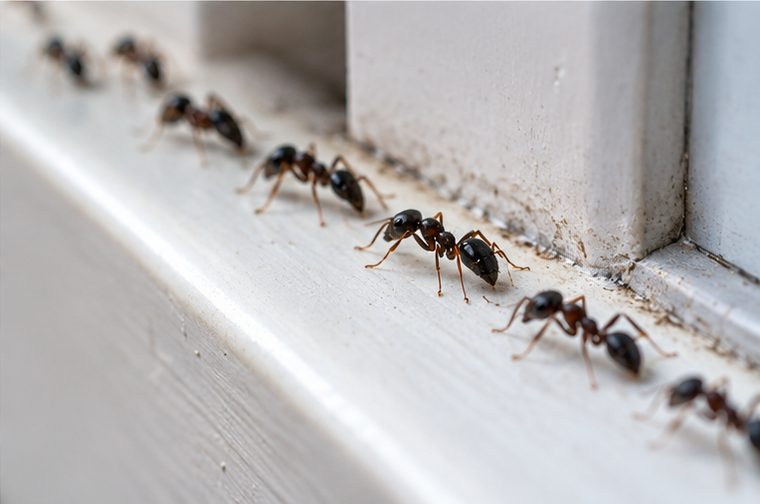
A line of ants across the worktop usually means a scout found food and told the nest, and a few simple habits can break that chain.
Read the guide →
Flying ants are the winged males and young queens of an ant colony, and their sudden summer swarms are usually short lived and harmless.
Read the guide →
Most household pests leave clues behind, and learning to read droppings, damage, noises and timing will help you decide what you are dealing with and what to do next.
Read the guide →Ants follow a scent trail laid by the first workers, so once they find a way in, hundreds more use it. Wiping the line away only breaks it for a while. Finding the nest and sealing that entry point is what stops the repeat route.
Usually, yes. Treatments are placed along trails, at entry points and near the nest instead of across working areas. We agree timings with the site manager and tell staff which spots to leave undisturbed for a short time.
If the ants seem to be coming from shared areas such as ducts, bin stores or outside walls, yes, it is worth telling the landlord or managing agent. We can explain what we found and where the source seems to be, which helps get it dealt with.
Tell us what you have found and roughly where it is. We will come back to you — or call 01245 327 274 if it is urgent.
