
Colchester has one of the busiest rental markets in Essex, and ants are a regular complaint in shared houses and flats once spring arrives. A tenant sees a trail, the landlord hears about it, and nobody is sure whose job it is. We aim to sort out the nest quickly and make clear what each side needs to do.
Colchester is a historic garrison city with an old centre, a university, a large student rental market and a wide mix of housing. In CO1 to CO4 we treat ants in terraces, flats, modern estates and period buildings, starting every job by finding the nest.
 BPCA Member
 CHAS Accredited
 Buy With Confidence
 Three Best Rated 2026
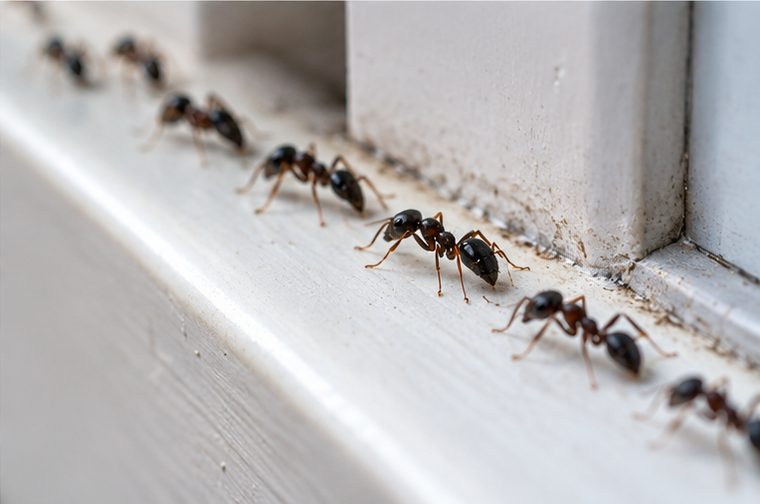
Shared kitchens are where ants thrive. Several people mean crumbs on worktops, open jars of jam or honey, unwashed plates and overflowing bins, and ants can pick up a trail within minutes of a spill landing on the floor. In a student let the problem is often at its worst at the end of term, when food is left behind and nobody is around to notice a trail.
In Colchester flats and converted houses, ants can travel between units through pipe ducts, floor voids and shared walls, so the nest is not always in the kitchen where it is seen. We follow the trail, check the outside edge of the building and explain whether the problem sits with the tenant, the landlord or the managing agent, so the right person acts on it.

Colchester's old centre has buildings of many ages, and older walls offer ants plenty of cracks, loose pointing and gaps around pipes. A nest in a courtyard, pavement edge or small back garden can feed trails into a house through a hundred small openings, and the narrow layout means neighbouring buildings are often only a wall away, so a trail can cross from one property to the next.
Our visit focuses on the practical: where do the ants enter, where do they go and where is the colony? We treat the nest directly and place targeted treatment along the trail. Then we point out the gaps worth filling. In older properties some repairs need a builder, and we tell you honestly which ones those are, so you do not pay for work that will not help.
Landlords and agents in Colchester can save themselves repeat call-outs by checking kitchens at each changeover, clearing out old food and noting any trails. We keep a record of what we find and treat, which helps when a tenant reports the same problem later. Tenants can help by sealing food and taking bins out regularly. We also cover Clacton-on-Sea, Witham and Braintree.
We cover towns and villages across Essex. Choose your area to see how ant control works locally.
A line of ants across the worktop usually means a scout found food and told the nest, and a few simple habits can break that chain.
Read the guide →
Flying ants are the winged males and young queens of an ant colony, and their sudden summer swarms are usually short lived and harmless.
Read the guide →
Most household pests leave clues behind, and learning to read droppings, damage, noises and timing will help you decide what you are dealing with and what to do next.
Read the guide →That depends on the tenancy agreement and the cause, so the first step is to ask your landlord or agent first. If you contact us, we will tell you what we found and what caused it, which makes it easier for you and the landlord to agree who deals with it.
Ants only need a small amount of sugar or grease, such as a crumb under a toaster or a sticky shelf. They can also come in from a nest outside through tiny gaps. A tidy kitchen helps, but the nest still needs finding and treating.
Yes. Ants use pipe ducts, gaps beside skirting boards and floor voids, so a trail can start in a neighbouring flat or from a nest at the base of the building. We follow the trail to find the entry point and explain where the source seems to be.
Tell us what you have found and roughly where it is. We will come back to you — or call 01245 327 274 if it is urgent.
