
A tidy lawn in Braintree can be pitted with molehills in a matter of days. Whether you have a back garden on one of the newer housing roads, a larger plot near the farmland that surrounds the town, or a patch of grass at a business, moles can cause real damage to turf, roots and bulb beds.
We confirm that moles are the cause, work out where they are tunnelling and trap them in those tunnels. Moles stay underground and do not enter buildings, so we keep our advice focused on the ground itself and how to repair it.
 BPCA Member
 CHAS Accredited
 Buy With Confidence
 Three Best Rated 2026

A mole digs constantly in search of worms and grubs. The loose soil pushed up becomes molehills, and the tunnels just under the surface lift and loosen the turf so roots dry out. Mowers catch on the heaps, cut uneven stripes and scalp the grass, and flower beds can be undermined so that young plants and bulbs end up sitting in air pockets.
Because Braintree has so much grass close to farmland, school grounds and playing areas as well as private gardens, we often see damage on larger stretches of lawn as well as small plots. Fresh, dark soil means the tunnel is live and the mole is still working it. Old, dry, flattened heaps usually mean the mole has moved elsewhere, so we always check which is which.

First we walk the area and confirm the signs belong to a mole. Then we find the main runs, the tunnels used again and again, because that is where a trap does its job. We place traps inside those tunnels, set so that the run is left as undisturbed as possible, and we visit regularly to check them rather than leaving them unattended.
Gardens in Braintree and across CM7 vary a great deal. A small enclosed lawn may be resolved quickly, while a long boundary beside open land can be slower because tunnels can run a long way. We tell you straight what we see and how many visits look likely, and we explain what to do if you notice new heaps appearing later on.
Once the work is done, rake the hills level, work the spare soil into low spots and press down collapsed runs. Sow grass seed over bare areas when the ground is damp but not frozen. If you are in Braintree and have a sports pitch or school field, the same steps apply on a larger scale. We also cover Witham and Great Dunmow if you need us nearby.
We cover towns and villages across Essex. Choose your area to see how garden mole removal works locally.
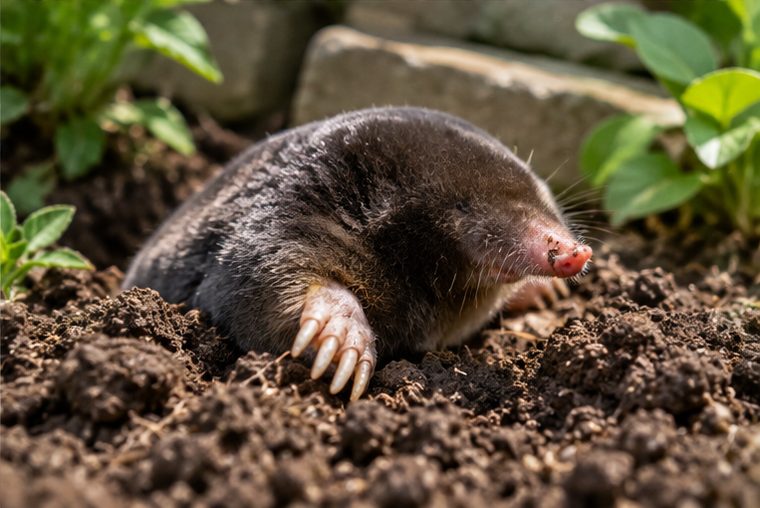
Fresh mounds of loose soil are the classic sign of a mole, but a few other things can look similar, so it pays to check properly.
Read the guide →If new molehills keep appearing after you have cleared the old ones, the cause is usually food, soft soil and a tunnel network that never really goes away.
Read the guide →
Most household pests leave clues behind, and learning to read droppings, damage, noises and timing will help you decide what you are dealing with and what to do next.
Read the guide →Moles leave rounded heaps of fine soil and ridges across the lawn. Animals such as rabbits leave scrapes and holes in the surface instead. If you are unsure, we can look at the pattern and tell you what is responsible before any work starts.
Yes, we deal with moles on playing fields, school grounds and other open grass as well as home gardens. Larger sites need more checks, so we plan the visits around the layout, the number of tunnels and the level of activity we find.
They can disturb soil near paths and edges, and tunnels beside hard surfaces may cause slight sinking. Serious structural harm from moles is unusual. The main concern is usually the lawn, the roots and the plants growing in it.
Tell us what you have found and roughly where it is. We will come back to you — or call 01245 327 274 if it is urgent.