
Molehills across a lawn are rarely a small nuisance for long. In Basildon, where so many family homes have tidy back gardens and front lawns on the big neighbourhood estates, one run of fresh soil heaps can spoil the turf within a few weeks. We trap garden moles carefully and leave the lawn tidy, and we explain what we find as we go.
Moles live underground and never come into houses, so this is purely a garden and grounds problem. Our job is to confirm that moles really are responsible, locate the tunnels they use most, and remove the animals so you can start repairing the damage with confidence.
 BPCA Member
 CHAS Accredited
 Buy With Confidence
 Three Best Rated 2026
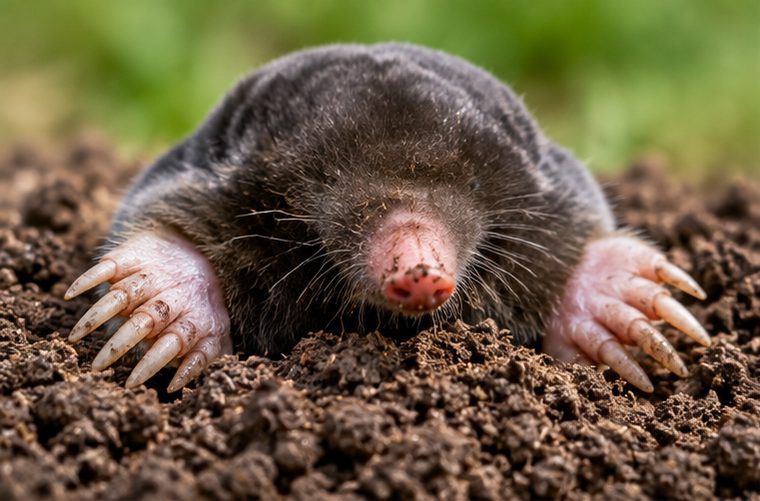
The classic sign is a mound of loose, finely crumbled soil, often in a loose line across the grass. Look too for raised ridges where the turf has been pushed up by a shallow tunnel just beneath the surface. Fresh heaps are darker and softer than old ones, which tells us a tunnel is still in use, and that is common across the SS13 to SS16 area.
Not every heap is a mole. Worms, ants and the odd burrowing animal can leave marks that look similar, so we check the shape of the hills and follow the ridges before we set anything. In Basildon's estate gardens, a mole often enters from a neighbouring plot or open verge, so the activity may be on a boundary rather than the middle of the lawn.
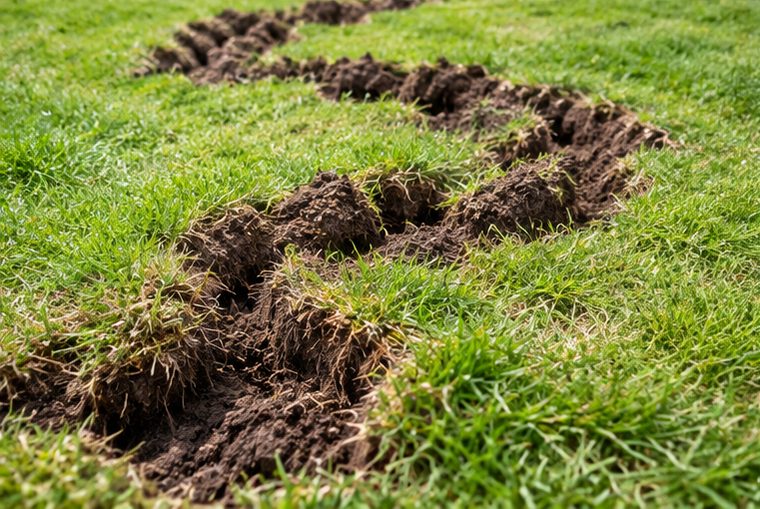
Once we are sure of the cause, we walk the garden and work out where the main runs are. These are the deeper, well-used tunnels the mole travels through every day, as opposed to the short feeding branches that fill up with fresh soil. We set traps in those main runs, positioned so they sit snugly in the tunnel and the mole cannot simply dig around them.
We then return to check the traps regularly rather than leaving them and hoping. Most Basildon gardens are small enough that one or two visits settle things, but a long lawn backing onto open ground can take longer, because new moles sometimes move in once a patch is vacant. We tell you plainly what to expect. We also cover Billericay and Wickford if a neighbour has the same trouble.
When the moles have gone, the hills can be flattened with a rake or the back of a spade and the soil spread thinly or used to fill low patches. Tunnels that have collapsed may need firming down, and bare areas can be reseeded in spring or autumn. We give you simple advice on all of this so your Basildon lawn recovers well, and we are happy to talk it through on site.
We cover towns and villages across Essex. Choose your area to see how garden mole removal works locally.
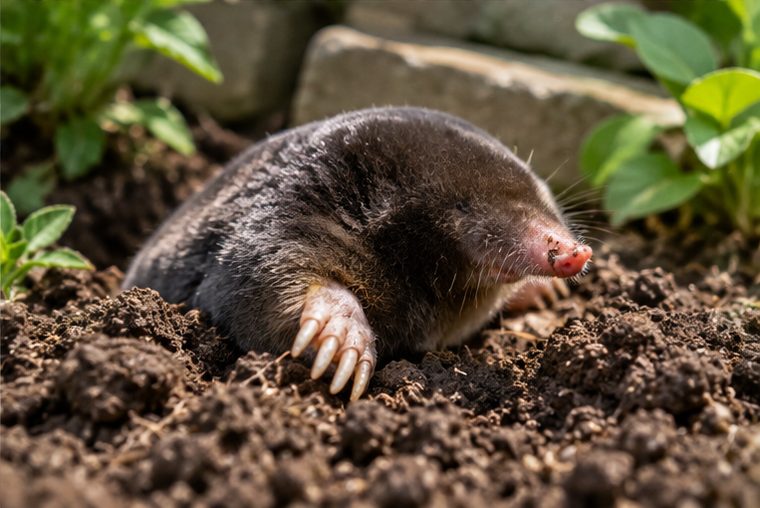
Fresh mounds of loose soil are the classic sign of a mole, but a few other things can look similar, so it pays to check properly.
Read the guide →If new molehills keep appearing after you have cleared the old ones, the cause is usually food, soft soil and a tunnel network that never really goes away.
Read the guide →
Most household pests leave clues behind, and learning to read droppings, damage, noises and timing will help you decide what you are dealing with and what to do next.
Read the guide →Fresh turf over soft, worm-rich soil is attractive to moles because there is plenty to eat and easy digging. A new estate lawn can be tunnelled quickly. We confirm it is a mole, find the main runs and trap there, then you can firm and reseed the damaged turf.
No. Moles live underground and feed on worms and grubs, so they do not enter buildings. If you are hearing noises indoors, it is likely to be a different animal such as a rat or mouse, and we can look at that separately for you.
A few hills usually mean one mole, and one mole can still wreck a whole lawn by digging long runs. It is much easier to deal with early, before the tunnels spread and before the turf becomes uneven underfoot. We can tell you quickly whether it looks active.
Tell us what you have found and roughly where it is. We will come back to you — or call 01245 327 274 if it is urgent.
