
Rochford is a market town close to Southend, with an older centre, newer housing and farmland around it. That mix of gardens and open fields is just what moles like. If you are seeing hills across a lawn, a sports pitch or a patch of rough grass in Rochford, we can trap the animal responsible.
We deal with moles in ordinary back gardens, but also on larger lawns where the damage is harder to ignore: club grounds, school fields and smallholdings. The method is the same whatever the size, though bigger sites need more time and sometimes more than one visit.
 BPCA Member
 CHAS Accredited
 Buy With Confidence
 Three Best Rated 2026
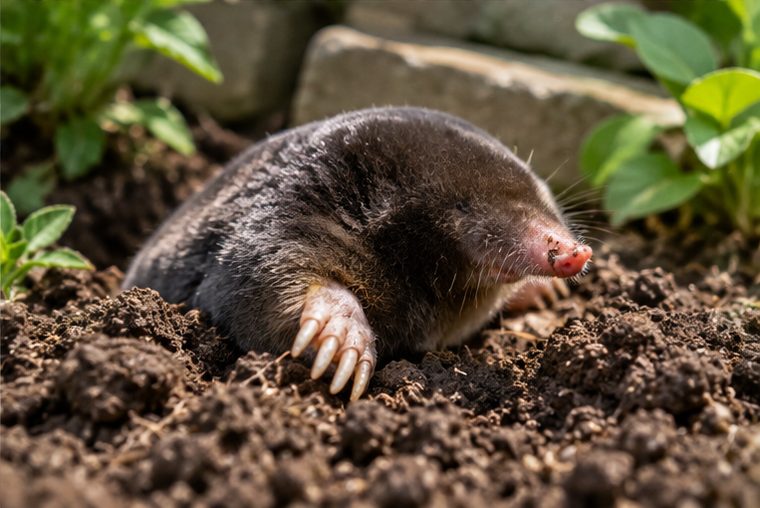
On a small garden, a mole is an irritation. On a sports field, it is a hazard, because the tunnels beneath can give way underfoot and the hills foul mowing and ball bounce, which matters for anyone playing on it. Greenkeepers and volunteers often spend hours flattening heaps each week, only for fresh ones to appear overnight, and that tiring cycle only ends when the animal is trapped.
Where Rochford gardens meet farmland, moles can travel in along hedgerows and field margins. Turf on the boundary is usually hit first. Look for crumbly cones of soil, long raised ridges and patches of grass that have gone yellow or lifted. Those signs help us decide where the main runs lie before we set a single trap or disturb any more of the ground than we need to.
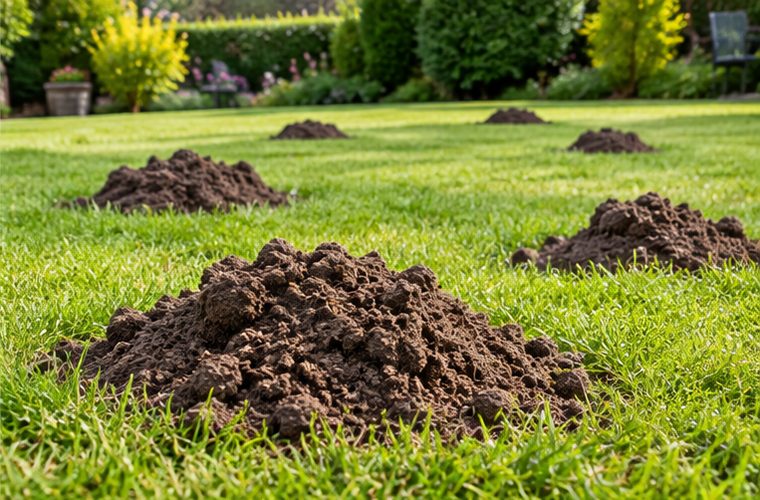
We begin by confirming the animal is a mole and walking the site to follow the pattern of the hills. Traps are set in the main tunnels, which are deeper and straighter than the feeding runs near the surface. Each opening is covered over after the trap goes in so the run stays dark, and we return to check regularly, never leaving anything unattended for long.
For clubs and schools around SS4 we are happy to plan visits around when the ground is in use, so players and pupils are not near open traps. We also point out where hills can be flattened and where turf needs lifting and relaying. Moles never enter buildings, so this is all about grass and soil, not about anything inside your premises.
Once the runs go quiet, flatten the hills and use the loose soil to top up hollows. On a pitch, roll or firm the tunnels and reseed worn patches in good growing weather. On a Rochford garden lawn, a small amount of seed and watering will usually be enough. We also cover Southend-on-Sea and Wickford if you manage more than one site.
We cover towns and villages across Essex. Choose your area to see how garden mole removal works locally.
Fresh mounds of loose soil are the classic sign of a mole, but a few other things can look similar, so it pays to check properly.
Read the guide →
If new molehills keep appearing after you have cleared the old ones, the cause is usually food, soft soil and a tunnel network that never really goes away.
Read the guide →
Most household pests leave clues behind, and learning to read droppings, damage, noises and timing will help you decide what you are dealing with and what to do next.
Read the guide →Yes. Larger areas simply take more time and sometimes a second visit. We plan visits so that traps are not in the way of play, and we explain which parts of the grounds are marked off while trapping is under way.
Blocking tunnels rarely works, because a mole simply digs around the obstacle or pushes it out. Trapping in the main run is the dependable way to remove the animal, and it avoids putting anything harmful into the soil.
Often just one or two, because moles are solitary and defend their patch. A big lawn near farmland may hold more. The pattern of the hills gives a good idea, and we adjust as the traps are checked.
Tell us what you have found and roughly where it is. We will come back to you — or call 01245 327 274 if it is urgent.
