
Leigh-on-Sea is better known for its old town and estuary than its lawns, but plenty of gardens here have grass, and moles do not mind a steep street. If you have noticed heaps of fine soil on the lawn or ridges across a border, we can find out whether a mole is the cause and trap it.
Our work is simple and quiet. We look at the signs, trace the main tunnels, set traps in them and come back to check. We also tell you honestly if the damage turns out to be something else, such as worm casts or a digging animal that needs a different approach.
 BPCA Member
 CHAS Accredited
 Buy With Confidence
 Three Best Rated 2026

Many Leigh-on-Sea gardens sit on a slope, with terraces, retaining walls and awkward corners. Moles cope with that better than people expect. They follow earthworms, and worms gather in damp, shaded lawn at the bottom of a bank, so the lowest part of the garden is often hit first. Hills often show up along the lower edge of a garden, or where a lawn meets a flower bed.
On a slope, rain can wash loose molehill soil downhill and bury grass or low plants beneath it. Raised ridges may also weaken the edges of a path or step if the tunnel runs close by. If you can see fresh, crumbly soil and a line of mounds, there is probably an active run, and we can follow it from there and work out where to place the first trap.
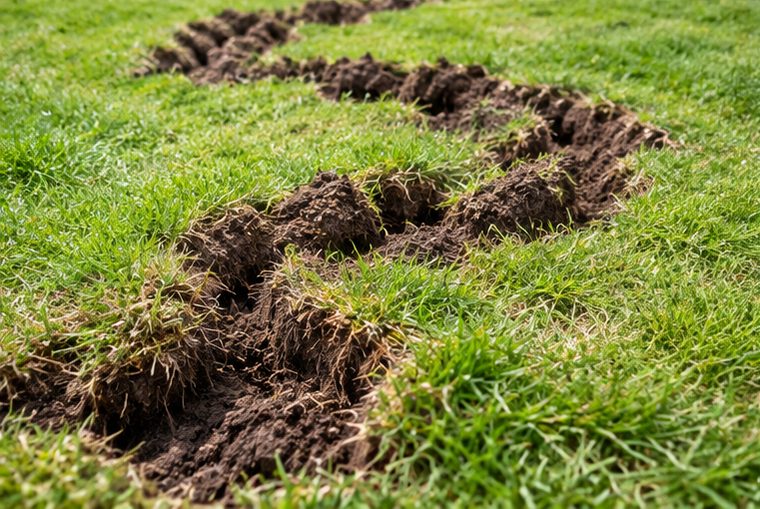
We begin by walking the garden to confirm the signs and judge where the main runs are. Those are the straighter tunnels the animal uses daily, as opposed to shallow feeding tunnels it may only use once. We open a short length, set a trap in the run, close the gap and return to inspect the trap on a sensible schedule, moving it if the run goes cold.
Gardens in Leigh-on-Sea can be small and overlooked, so we keep disturbance low and take care around borders, steps and containers. Moles do not enter homes and are not a threat indoors. The aim is just to protect the lawn and stop the soil being thrown up, and we explain what we have done and what we expect at the end of each visit.
After the last catch, rake the hills flat and use the soil to fill dips. Firm any hollow tunnels with your foot, then overseed bare patches and water if the weather is dry. Leigh-on-Sea gardens that slope may need a little extra care so seed does not wash away. We also cover Southend-on-Sea and Rochford if you want a neighbour's lawn looked at too.
We cover towns and villages across Essex. Choose your area to see how garden mole removal works locally.
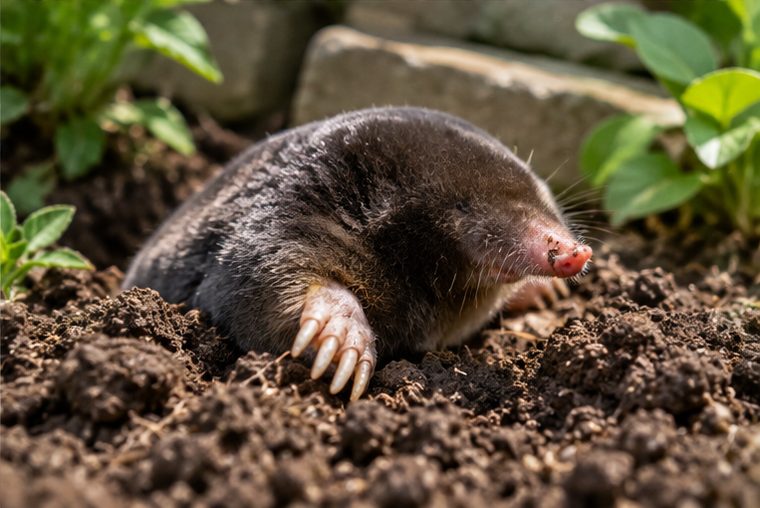
Fresh mounds of loose soil are the classic sign of a mole, but a few other things can look similar, so it pays to check properly.
Read the guide →If new molehills keep appearing after you have cleared the old ones, the cause is usually food, soft soil and a tunnel network that never really goes away.
Read the guide →
Most household pests leave clues behind, and learning to read droppings, damage, noises and timing will help you decide what you are dealing with and what to do next.
Read the guide →They can. Moles go wherever there are earthworms and soil soft enough to dig. Slopes and sandy patches do not stop them, although very dry or compacted ground may push them towards damper parts of the lawn, often under shade or near a water butt.
Molehills are conical heaps of fine soil with no visible hole, whereas rats leave open burrow entrances and rarely heap soil. If you are unsure, tell us what you can see and we will check it on site.
Traps are set below ground, inside the tunnel, and the opening is covered over. We tell you where they are and check them regularly. Keep pets and children off the marked area while the traps are in place.
Tell us what you have found and roughly where it is. We will come back to you — or call 01245 327 274 if it is urgent.
