
If new molehills keep appearing after you have cleared the old ones, the cause is usually food, soft soil and a tunnel network that never really goes away.
You rake the soil flat on Saturday and by Tuesday there are three more heaps. It feels as though the problem is not shifting, and in a sense that is true. Clearing mounds only tidies the surface. What matters is the tunnel system underneath, and the reasons that animal found your lawn worth settling in. Understanding why they return is the first step towards a lasting solution, so it is worth knowing what is going on below ground before you spend time and money on the surface.
Moles eat worms and other soil creatures, so a healthy, moist lawn is exactly what they look for. Gardens that are well looked after, with good soil and plenty of worms, can be the most attractive of all. Tunnels near the surface act like traps, catching creatures that fall in, so the animal keeps patrolling and repairing them rather than moving away.
Even a lawn with very little visible damage can hold a busy tunnel network, because the animal spends most of its time well below the surface where you cannot see it. A garden that is watered regularly, or that has damp shaded corners, tends to hold worms close to the surface for longer, which keeps the animal interested for much of the year.
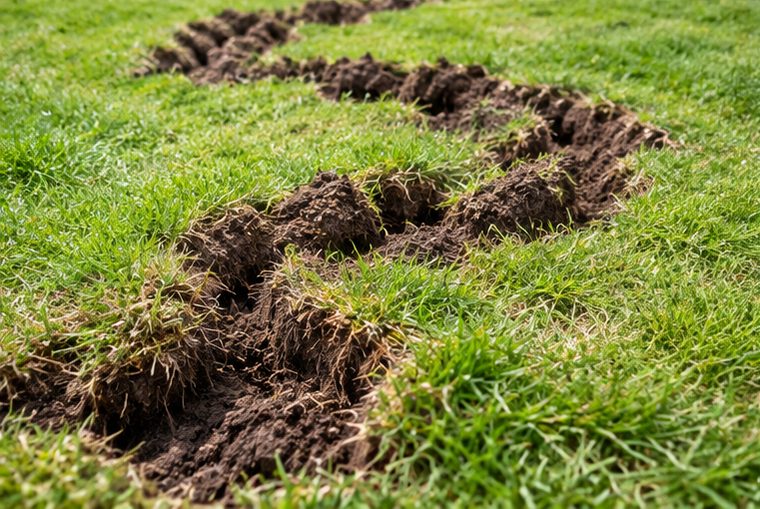
A working tunnel network is valuable. If one animal leaves or is removed, another can move into the same runs because the hard digging has already been done. This is why a lawn can seem to be cleared and then reinfested a few weeks later. In Essex it is common on gardens next to fields, verges and woodland edge, where there is always another animal nearby looking for territory.
Activity tends to rise in autumn and spring when the ground is damp and soft and worms are close to the surface. Mounds can also increase in the breeding season, when young animals leave their home territory looking for somewhere new. A dry summer may bring a quiet spell, but that does not always mean the animal has gone, only that it has dug deeper. Knowing the season helps you judge whether a quiet week is real progress or just a pause.
Keep a simple record of where and when fresh mounds appear, and take photos. Rake the soil flat each time so you can spot new activity clearly. Tidying quickly stops the grass underneath dying off and keeps mowing straightforward. Do not rely on noisy gadgets or smells to move the animal on. Results are inconsistent, and it may simply dig elsewhere in the same garden, so you end up with the same problem in a different corner.
If mounds keep returning, if the same patches are repeatedly hit, or if you are seeing activity near a patio, lawn edge or a prized border, it is time to ask for help. We can trace the active runs, work out how many animals are involved and deal with them safely. Where a neighbouring field or green space keeps supplying new animals, we can also talk through what is realistic. A short visit often saves weeks of repeated raking, and we will explain plainly what we find and what we recommend.
No garden can be made completely mole-proof, but you can reduce the damage. Repair tunnelled turf promptly, reseed bare patches, and check the boundary edges regularly so you catch new activity early. Acting at the first fresh mound is far easier than waiting until a whole lawn has been undermined. Regular checks through autumn and spring are particularly worthwhile. If you are not sure which patches matter most, we can walk the lawn with you and point out the busiest runs.
If you would rather not deal with it yourself, call us on 01245 327 274 or send an enquiry below. You can also read more about our garden mole removal service.
 BPCA Member
 CHAS Accredited
 Buy With Confidence
 Three Best Rated 2026
We cover towns and villages across Essex. Choose your area to see how garden mole removal works locally.
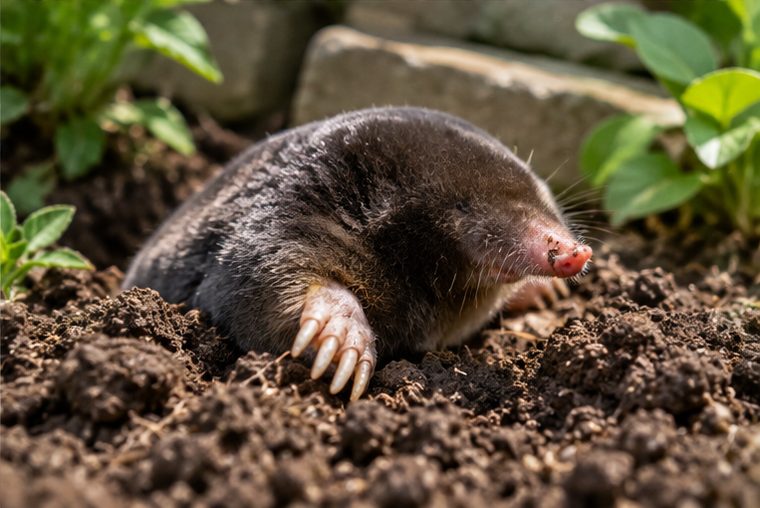
Fresh mounds of loose soil are the classic sign of a mole, but a few other things can look similar, so it pays to check properly.
Read the guide →
Most household pests leave clues behind, and learning to read droppings, damage, noises and timing will help you decide what you are dealing with and what to do next.
Read the guide →
Rats are secretive and mostly active after dark, so the first clues are usually small marks and sounds rather than a sighting of the animal itself.
Read the guide →Empty tunnels are valuable to any mole looking for territory, and good lawns hold plenty of worms. When one animal is removed, another nearby can move into the existing runs. This is especially common beside fields and open land, where there is a steady supply of animals looking for a home.
Sometimes activity eases when food runs short or the soil dries out, but the animal has usually only moved or dug deeper. Mounds often return when the ground softens again. If new mounds keep appearing over several weeks, waiting is unlikely to solve it.
Rake the soil flat and firm down collapsed tunnels as you go, since leaving heaps on grass can kill it. Hold off on major reseeding until the activity has stopped, otherwise fresh tunnelling can undo the work. A professional can tell you when it is safe to repair.
Moles dig through soil and do not normally harm solid foundations. The more common problems are undermined lawns, damaged flower beds, uneven ground and tunnels beside paths or patios that can settle. If you are worried about structural effects, a builder is the right person to ask.
Tell us what you have found and roughly where it is. We will come back to you — or call 01245 327 274 if it is urgent.
