
Southend-on-Sea is a dense city of terraces, flats and short back gardens, so moles are less common here than in the villages around it. When heaps do appear on a lawn, it is worth checking that a mole is the cause before spending money. We visit, look at the signs, and trap only if the evidence is there.
That honest first look suits Southend-on-Sea well. Small gardens, communal lawns, school fields and green spaces between roads can all hold a mole, but they can also suffer from worms, ants or foxes digging. We tell you which it is and what to do about it.
 BPCA Member
 CHAS Accredited
 Buy With Confidence
 Three Best Rated 2026
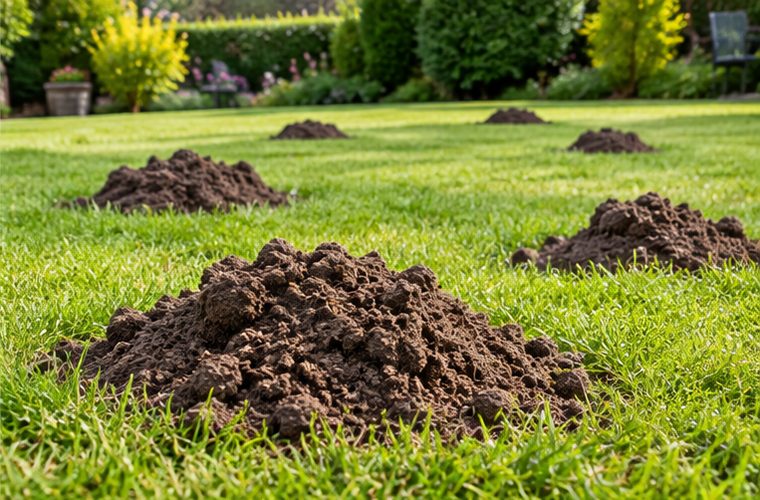
A mole leaves a cone of loose, fine soil, usually with no obvious hole, and often a line of them. Earthworms leave small coiled casts spread thinly across the grass. Ants build tiny sandy mounds, and foxes or badgers scratch and tear the turf rather than pushing soil up from below. The shape and spread of the damage tells most of the story, which is why photographs help.
Moles reach a city garden by following open ground, such as a railway bank, a park edge, a playing field or an overgrown plot next door. In Southend-on-Sea, a mole in a small yard is often a stray that has wandered in from larger ground nearby. Press a ridge down: if it rises again within a day, something is using that tunnel and may still be there.
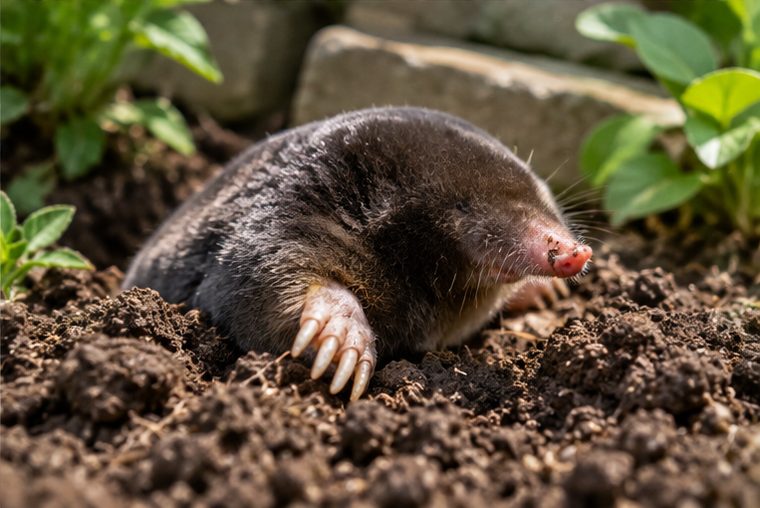
Tight spaces call for neat work. Once we have confirmed the signs, we find the main run and set a trap inside it, covering the opening again so the tunnel stays dark. In a short garden there may be only one useful run, which makes the placement of that trap especially important. We check the trap regularly and remove it as soon as the job is done.
If your lawn is shared or part of a block of flats, it helps to speak to neighbours or the managing agent before we start, so everybody knows traps are in place. Across SS0 to SS3 we also cover schools and club grounds. Moles never enter flats or houses; this is a lawn and soil problem only, and nothing is needed inside your home.
When the traps stop catching, rake the hills flat and fill hollows with the loose soil. Press down any soft tunnels and sow seed on thin patches. A small Southend-on-Sea garden recovers quickly with a little water. If new heaps appear later, tell us. A neighbouring garden can send in another mole. We also cover Leigh-on-Sea and Rochford, if you are comparing options across the area.
We cover towns and villages across Essex. Choose your area to see how garden mole removal works locally.
Fresh mounds of loose soil are the classic sign of a mole, but a few other things can look similar, so it pays to check properly.
Read the guide →
If new molehills keep appearing after you have cleared the old ones, the cause is usually food, soft soil and a tunnel network that never really goes away.
Read the guide →
Most household pests leave clues behind, and learning to read droppings, damage, noises and timing will help you decide what you are dealing with and what to do next.
Read the guide →Less than in villages, but they do turn up where there is open ground nearby. Many reports in dense areas turn out to be worm casts, ants or foxes, so we check the evidence on site before trapping anything and say so if it is not a mole.
Rat burrows have open holes and rarely heap fine soil in cones. If you see holes, droppings or gnaw marks, tell us and we can look at rats instead. A cone of soil with no hole points to a mole.
It is worth watching your lawn, as moles can cross boundaries below ground. Treating only one garden may not stop the problem coming back, so we suggest speaking to the neighbour or managing agent about it early on.
Tell us what you have found and roughly where it is. We will come back to you — or call 01245 327 274 if it is urgent.
