
Fresh heaps of soil across a lawn usually mean a mole is working underneath it. If that sounds familiar in Great Dunmow, we can come out, confirm the signs and set traps in the active tunnels. This page explains what moles do to a garden, how we trap them, and what you can do about the damage once the tunnels are quiet.
Great Dunmow has an older centre, newer estates and farmland all around it, so moles are never far from a garden edge. Whether you have a small back lawn or a large plot beside open fields, the approach is the same: find the runs that are really in use and deal with those.
 BPCA Member
 CHAS Accredited
 Buy With Confidence
 Three Best Rated 2026
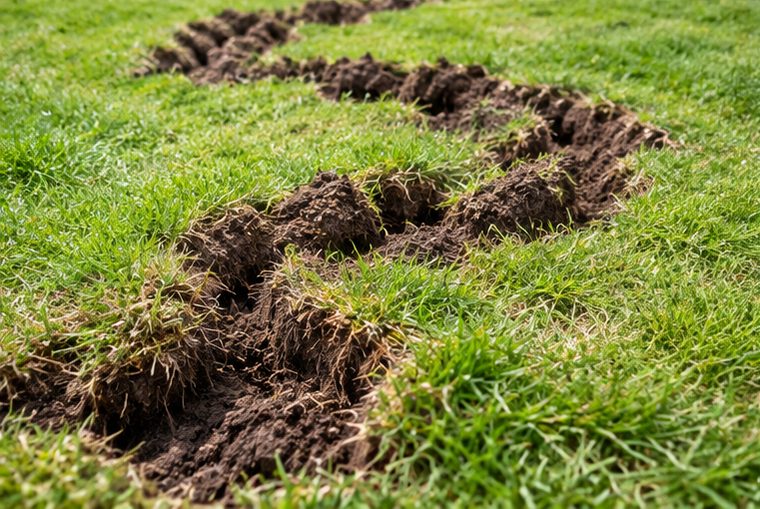
Not every bump in the grass is a mole. Worm casts are tiny and scattered, and ants leave fine sandy piles. A molehill is a conical heap of loose, crumbly soil, often with a plug of earth in the middle, and it tends to appear in a rough line because the animal is digging a tunnel beneath it. Several hills in a row are a strong clue.
Raised ridges running across the turf show where a shallow run sits just under the surface. If the ridge springs back up after you press it down, the tunnel is being used. Around Great Dunmow, where gardens often back onto fields, new hills can appear overnight after rain when the soil is soft, so a lawn that looked fine on Friday can look rough by Monday.

Once we are sure it is a mole, we look for the main runs rather than the side tunnels. These are the deeper, straighter routes the animal patrols every day. We open a short section, set a trap in the tunnel and restore the cover so light and draughts do not put the mole off. Placing traps well matters far more than how many we use.
We come back to check the traps regularly, because they should never be left unattended for long. If a run goes quiet we move on to the next one and record what we find. Moles are not a pest indoors and never enter houses, so this work is purely about protecting the lawn, borders and any playing space you look after in the CM6 area.
When the trapping is finished, the soil from the hills can be raked flat or kept as fine topsoil for filling low patches. Press sunken tunnels down, reseed any bare areas and keep them watered until the grass takes. Great Dunmow gardens vary a lot, so we are happy to talk through a sensible order of jobs. We also cover Braintree and Saffron Walden if you have a second property nearby.
We cover towns and villages across Essex. Choose your area to see how garden mole removal works locally.
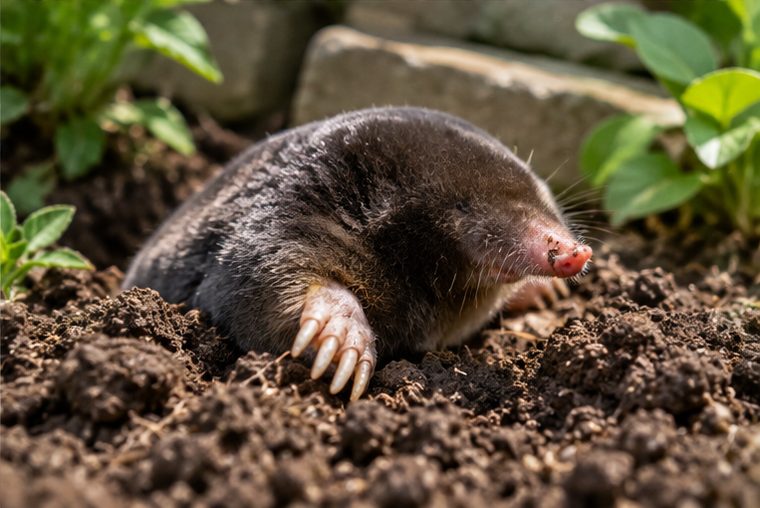
Fresh mounds of loose soil are the classic sign of a mole, but a few other things can look similar, so it pays to check properly.
Read the guide →If new molehills keep appearing after you have cleared the old ones, the cause is usually food, soft soil and a tunnel network that never really goes away.
Read the guide →
Most household pests leave clues behind, and learning to read droppings, damage, noises and timing will help you decide what you are dealing with and what to do next.
Read the guide →It depends on how many moles are present and how active the runs are. Often the fresh heaps stop within days once the animal is caught, but a neighbour's land can bring a new mole in later. We will tell you what to watch for.
Please leave them for the first visit. Fresh heaps show us which tunnels are active, which helps us place traps in the right spots. Once the trapping is done you can level the soil and repair the turf.
Yes, they can. A mole tunnels out of sight, so the first sign is often heaps of soil, lifted turf or disturbed roots and bulbs. Seeing damage on your lawn is usually the only way to know one has moved in.
Tell us what you have found and roughly where it is. We will come back to you — or call 01245 327 274 if it is urgent.
